Artemisia Gentileschi came to London as the court tried to remake itself through art

When Artemisia Gentileschi arrived in London towards the end of the 1630s, she entered a court that was trying to define itself through art as much as politics.
By that stage in her career, Artemisia was already working at the highest level across Europe. Her reputation had travelled well beyond Italy, and her presence in England reflected how far Charles I of England was willing to go to attract leading artists. His court had become a place where painting, architecture and collecting were tied closely to royal ambition.
The connection was not new. Artemisia’s father, Orazio Gentileschi, had been in London since the 1620s, working under royal patronage alongside her brothers. Yet her own journey to England appears to have been complicated. Invitations had been issued more than once, and there are signs that she hesitated before accepting. Their relationship had not been straightforward, and distance had not improved it.
More reporting from EyeOnLondon
Film, theatre and cultural stories shaping London’s creative life.
Even so, by around 1638 she reached London, likely travelling along the Thames into a city that was expanding in trade and influence. What she found at Whitehall was uneven. Much of the royal residence retained its Tudor character, but one building stood apart.
The Banqueting House, designed by Inigo Jones, presented a more modern image of monarchy. Its classical form aligned the English court with continental Europe, and its painted ceiling, commissioned from Peter Paul Rubens, made that ambition visible. Installed only a few years before Artemisia’s arrival, it placed London within a wider artistic network that stretched across the continent.
Artistic patronage extended beyond Whitehall. The queen, Henrietta Maria of France, was developing her own cultural setting at the Queen’s House. Designed again by Jones, it was conceived as a place where art would define the space. Works by both Artemisia and her father were displayed there, contributing to a carefully constructed image of refinement and authority.
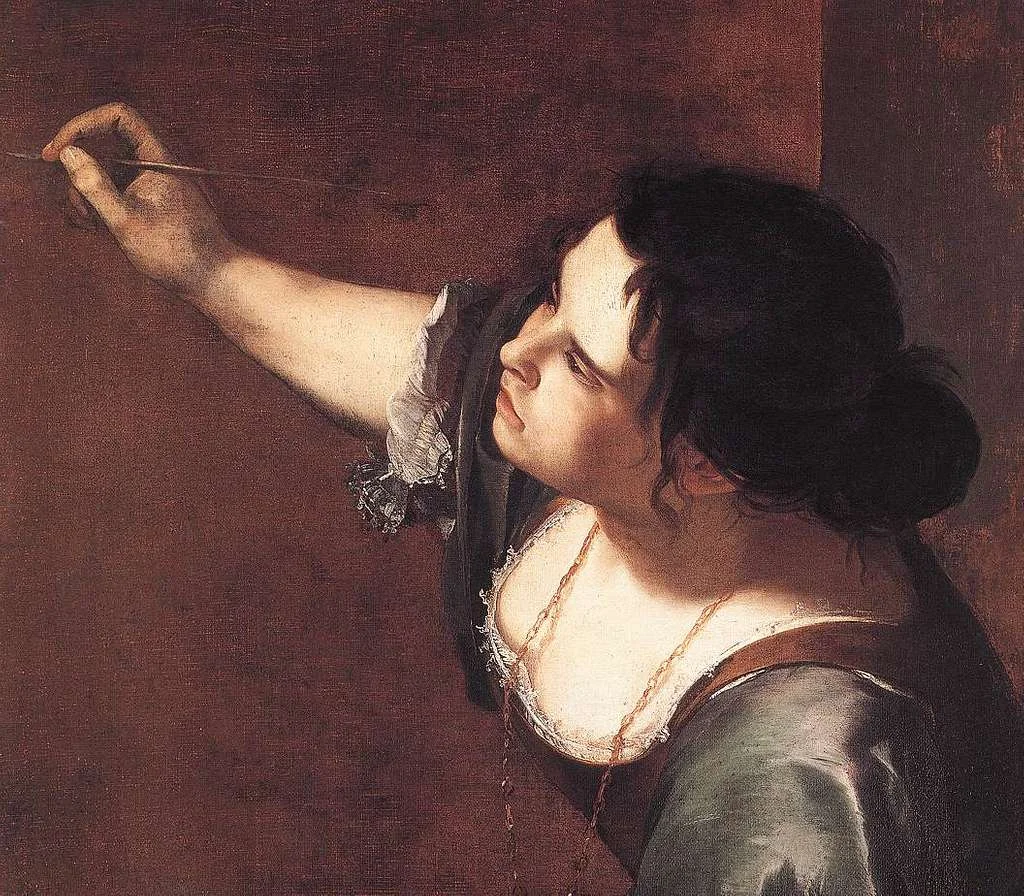
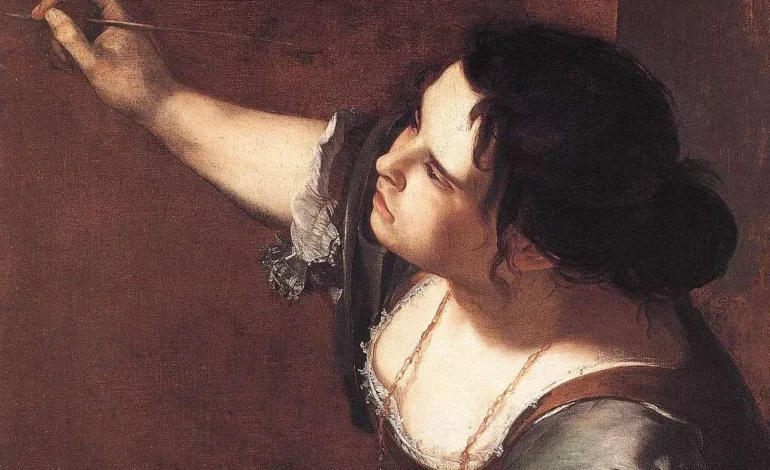
Within this environment, Artemisia appears to have been recognised for her work. Her Self Portrait as the Allegory of Painting is often associated with this period and reflects the confidence of an artist fully aware of her standing. In a letter written from London, she referred to the honours she had received at court, though her remarks suggest that recognition alone did not settle her.
Her stay was short. By 1640 she had returned to Naples. The decision, in retrospect, placed her just outside a turning point in English history. The death of Anthony van Dyck in 1641 removed one of the court’s leading figures, and the civil war that followed reshaped the political and cultural landscape entirely.
What remains today is fragmentary but telling. The Banqueting House still stands, and works connected to Artemisia’s time in England can be found in collections such as the National Gallery. These traces point to a moment when London was actively positioning itself within a European cultural world, drawing in artists whose reputations extended far beyond the city.
For further context on Artemisia’s work and her time in Britain, see this overview from the Royal Collection Trust.
Explore how artists and ideas have shaped London’s identity across centuries, and what those connections still reveal today at EyeOnLondon.
Follow us on:



Subscribe to our YouTube channel for the latest videos and updates!

We value your thoughts! Share your feedback and help us make EyeOnLondon even better!