William Caxton and the moment printing arrived in London

Before books became widely available, they were created slowly by hand.
For centuries in England, texts were copied line by line, often on parchment, with each volume taking months to produce. By the late 14th century, paper had begun to replace parchment, arriving through trade routes linking London with European centres such as Genoa and the Rhine. Even then, books remained limited in number and largely confined to institutions and wealthy patrons.
This began to change in the second half of the 15th century.
More reporting from EyeOnLondon
Film, theatre and cultural stories shaping London’s creative life.
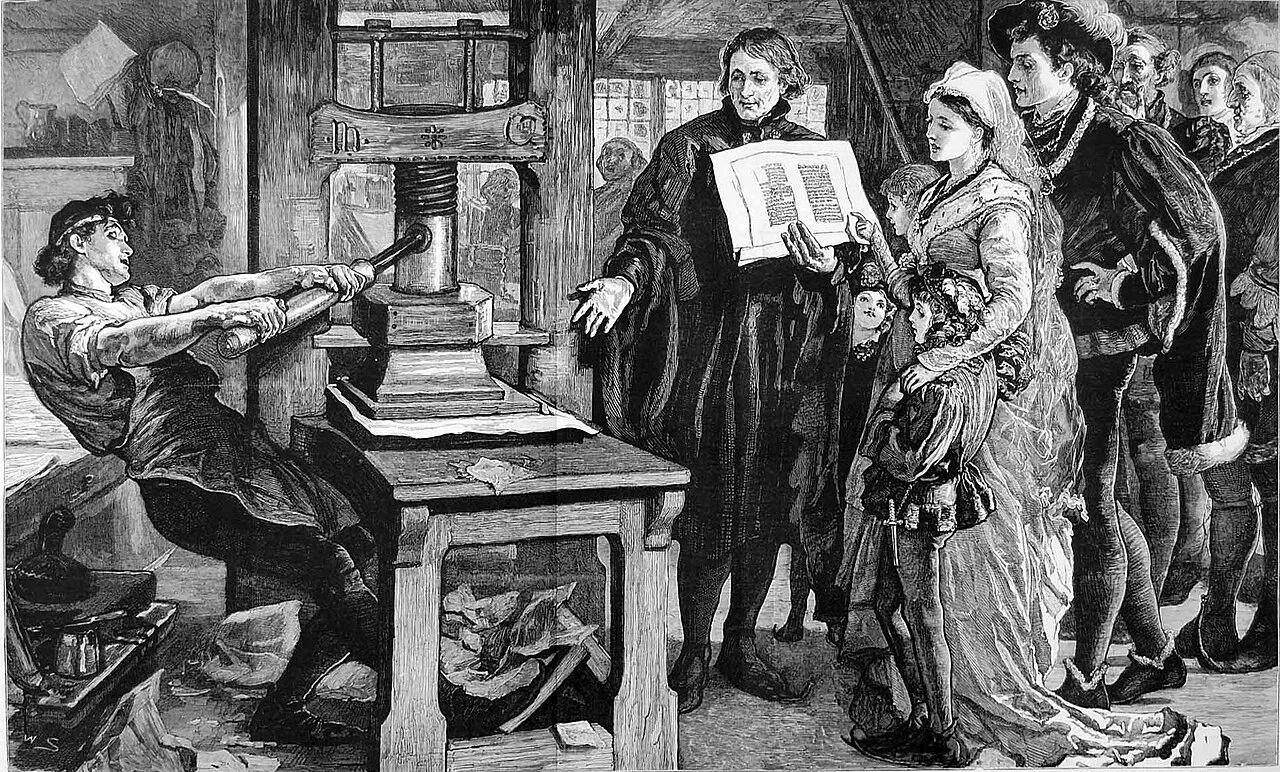
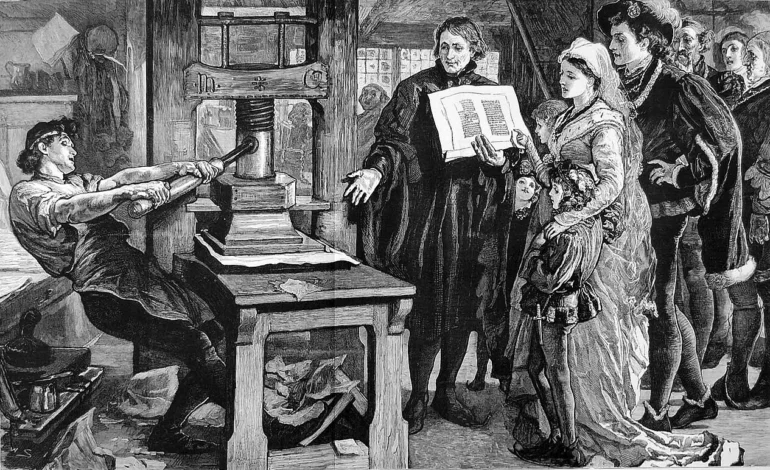
The introduction of printing to England is closely linked to the work of William Caxton, whose activities in Westminster marked a shift in how knowledge was produced and shared in London.
Caxton was not originally a printer. Born in Kent in the early 1400s, he began as an apprentice in London before moving to Bruges, a major hub for European trade. There, he worked within networks that connected English merchants to the continent. Over time, his focus moved towards literature and translation.
His first major project was a translation of a French text completed for the Duchess of Burgundy. It was during this period that he encountered printing technology, most likely in Cologne, where the methods developed by Johannes Gutenberg were spreading across Europe.
By the mid-1470s, Caxton had set up a printing press in Bruges and produced what is widely recognised as the first book printed in English. He soon returned to England, bringing both the equipment and the skills needed to establish printing in London.
He based his operation in Westminster, close to Westminster Abbey. The location placed him near the political and administrative centre of the country, where officials, clerics and members of Parliament regularly passed. This provided a natural audience for printed material.
In 1477, Caxton produced the first book printed in England in the English language. Over time, his output grew to around 100 works. These included translations, popular narratives and literary texts such as editions of Chaucer.
What changed was not only how books were made, but who could access them. Printed books could be produced more quickly and in greater numbers. A broader readership began to form, particularly among merchants and professionals in London. Records from the period show increasing imports of books, suggesting that demand was rising alongside local production.
Printing also began to reshape the city itself. Although Caxton worked from Westminster, many of his customers were based in the City of London. After his death in the early 1490s, his assistant Wynkyn de Worde continued the business and later moved operations closer to Fleet Street.
This shift helped establish a lasting connection between London and the printing trade, centred around St Paul’s and Fleet Street, which would remain a hub for publishing for centuries.
The transition from handwritten manuscripts to printed books was gradual, but Caxton’s work marked a clear turning point. Books became more available, and ideas could circulate more widely.
The arrival of printing in Westminster changed how knowledge moved through London, and who could take part in it.
Follow EyeOnLondon for clear reporting on London, culture and the wider world.
Follow us on:



Subscribe to our YouTube channel for the latest videos and updates!

We value your thoughts! Share your feedback and help us make EyeOnLondon even better!