A south London music school holds its ground as community support steps in

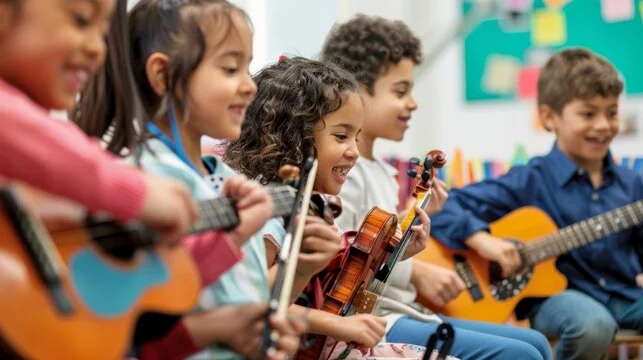
Inside The Music Boutique, learning begins before language.
Children as young as five months sit among instruments, toys and objects collected over decades. Sound comes first. Structure follows later. What looks like play settles into rhythm.
For nearly 30 years, the school has worked this way, shaping an approach to music education built on imagination, repetition and early exposure. It is informal in appearance, but deliberate in method.
More reporting from EyeOnLondon
Film, theatre and cultural stories shaping London’s creative life.
Its founder, James Osho, describes music as something that arrived early in his own life and stayed. That experience now informs the space he has created. Lessons move between piano, percussion and voice, but the emphasis is less on performance than on attention and discipline.
The setting reflects that thinking. Shelves carry objects from different eras, including toys and artefacts that give the room a sense of continuity. It feels closer to a studio or archive than a classroom.
That environment came close to being dismantled.
After years of financial pressure following the pandemic, the school faced eviction earlier this month. A rise in rent just before lockdown reduced its margin for recovery. As a small, unincorporated enterprise, it fell outside the scope of much of the financial support available at the time, reflecting wider pressures on cultural organisations highlighted by Arts Council England.
Arrears accumulated. Attempts to restructure payments did not hold. A court order set a deadline for repayment.
In the final days before closure, families gathered expecting the school to shut. Instruments were packed away. Some of the collection was already in storage.
The outcome changed at the last moment. A private lender stepped in to cover the outstanding amount, allowing the school to remain in place while repayment is arranged over time.
Support had already begun to form around it. A local crowdfunding effort raised close to £18,000 within weeks, reflecting a level of attachment that goes beyond routine classes.
What is being preserved is not only a business. It is a particular way of introducing music to early childhood.
The question now is what comes next. For institutions like this, survival is rarely a single event. It is a sequence of adjustments, often made quietly.
For now, the doors remain open. The room is still in use. The work continues.
Follow EyeOnLondon for clear reporting on London, culture and the wider world.
Follow us on:



Subscribe to our YouTube channel for the latest videos and updates!

We value your thoughts! Share your feedback and help us make EyeOnLondon even better!