Can Nato withstand another crisis

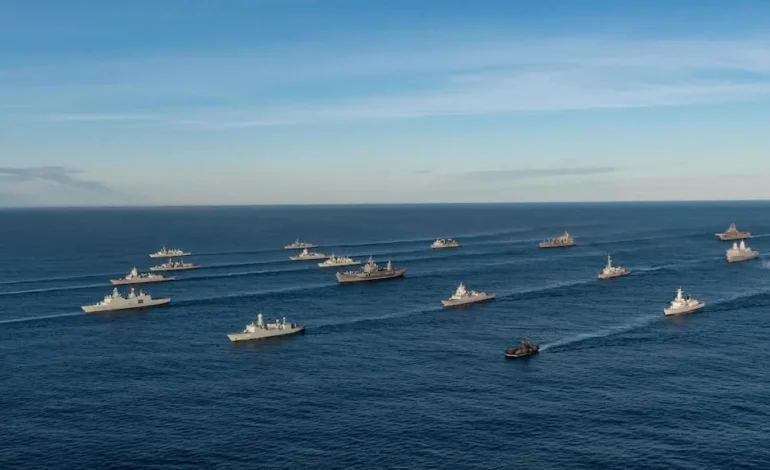
In March 2026, Donald Trump warned that a lack of European support in securing the Strait of Hormuz would be “very bad for the future of Nato”. His remarks came as Iran moved to close one of the world’s most critical energy routes, placing the alliance under pressure at a moment that feels both immediate and historically familiar.
The response from European allies has been cautious. That hesitation reflects not only the risks of escalation in the Middle East, but the unease created earlier in the year when Washington raised the prospect of asserting control over Greenland, a territory belonging to fellow Nato member Denmark. The episode unsettled assumptions about cohesion and revived a longstanding question. Is Nato facing a genuine crisis, or repeating a pattern it has managed before?
More reporting from EyeOnLondon
Policy, science and global developments shaping London’s wider world.
To understand that pattern, it is worth stepping back to Nato’s formation in 1949. The alliance emerged from a period of deep instability following the Second World War, shaped by concern over Soviet expansion. Winston Churchill had already warned that an “Iron Curtain” had descended across Europe, while Harry S. Truman committed the United States to supporting democratic states under pressure. The Berlin Blockade of 1948–49 made clear that confrontation was no longer theoretical, prompting twelve nations to formalise their collective defence.
What emerges across the decades that followed is not a story of unity, but of managed disagreement.
The Suez Crisis exposed early fractures. Britain and France, acting with Israel, launched military action to regain control of the canal after its nationalisation by Gamal Abdel Nasser. The United States, excluded from the decision, forced a withdrawal. The crisis demonstrated that shared strategic interests did not guarantee shared judgement.
A similar tension surfaced during the Cuban Missile Crisis, when European governments found themselves sidelined in decisions that directly affected their security. A few years later, Charles de Gaulle withdrew France from Nato’s integrated military command, asserting national control over defence policy and forcing American forces to leave French soil.
Even the US–UK relationship showed limits. During the Vietnam War, Britain declined repeated requests to send troops, revealing that alignment within the alliance had boundaries.
The end of the Cold War did not remove these tensions. Instead, it changed their context. Without a single defining adversary, Nato faced questions about its purpose. Those questions sharpened after the September 11 attacks, when the alliance invoked Article 5 for the first time. Initial unity gave way to division during the Iraq War, as France and Germany opposed the US-led intervention while others offered support.
The record shows something more structural. Periods of tension are not interruptions to Nato’s history. They are part of how it functions.
That helps explain the present moment. The disagreement between Washington and its European allies reflects real political and strategic distance. Trust has been strained. Priorities do not always align. Yet the underlying logic of the alliance remains intact. Security across the North Atlantic region is shared, and no member can fully detach from that reality. The framework of collective defence, set out in the North Atlantic Treaty Organization, still provides the basis for cooperation.
Nato has endured disputes over strategy, leadership and war. Each time, it has absorbed the shock rather than breaking under it. The same dynamic appears to be at work again.
As Churchill observed in the early years of the Cold War, there is only one thing worse than fighting with allies. That is fighting without them.
For more reporting on London and the decisions shaping the wider world, follow EyeOnLondon.
Follow us on:



Subscribe to our YouTube channel for the latest videos and updates!

We value your thoughts! Share your feedback and help us make EyeOnLondon even better!