DNA study reveals extended family burials in Stone Age Gotland community

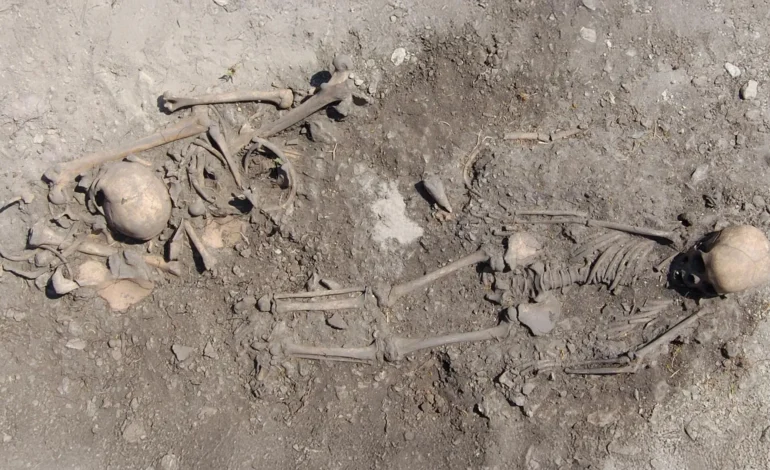
DNA analysis of 5,500-year-old graves on the Swedish island of Gotland suggests that Stone Age hunter-gatherers buried extended relatives together rather than only members of the immediate family.
Researchers studying a burial ground at Ajvide found that individuals placed in shared graves were often second or third degree relatives, rather than parents, children or siblings. The findings challenge long-standing assumptions about how prehistoric families organised their burial practices.
More reporting from EyeOnLondon
Policy, science and global developments shaping London’s wider world.
The research, led by scientists at Uppsala University, examined four shared graves at the Ajvide site. Genetic analysis revealed complex family relationships between individuals buried together. The results were published in the journal Proceedings of the Royal Society B, where researchers describe how DNA evidence revealed the importance of extended kinship within the community.
Ajvide is one of Scandinavia’s most important Stone Age archaeological sites, known for its well preserved graves and rich archaeological material. Around 5,500 years ago the coastal community lived primarily from seal hunting and fishing. Although farming had already spread across much of Europe by that time, groups in northern regions such as Gotland continued to follow traditional hunter-gatherer lifeways and remained genetically distinct from neighbouring farming populations.
The burial ground contains 85 known graves. Eight of them contain more than one individual. Researchers extracted DNA from ten individuals buried in four of these graves in order to determine how the people were related.
Archaeogeneticist Helena Malmström, who designed the study, said the findings revealed a broader understanding of family connections than had previously been assumed.
“Surprisingly enough, the analysis showed that many of those who were buried together were second or third degree relatives rather than first degree relatives such as parent and child or siblings,” she said. “This suggests that these people had a good knowledge of their family lineages and that relationships beyond the immediate family played an important role.”
Burials involving children and extended relatives
At least one child was present in most of the graves examined.
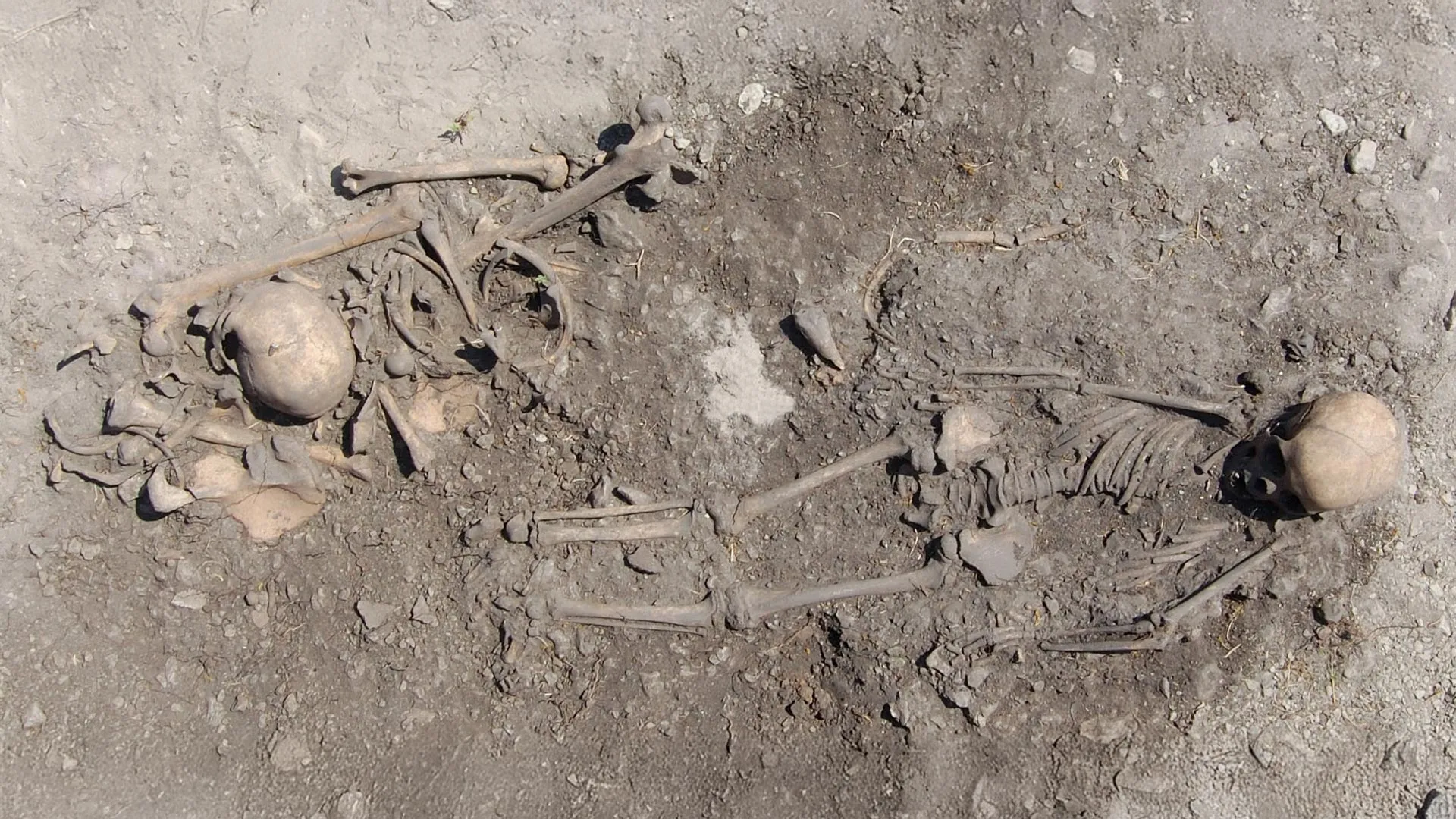
In one burial, the remains of a woman aged about 20 were found lying on her back with two small children beside her. A four year old child rested on one side and a toddler aged about 18 months on the other. DNA testing showed that the children, a boy and a girl, were full siblings. The woman was not their mother. Researchers believe she may have been their father’s sister or possibly their half sister.
In another grave, a young girl was buried alongside an adult man whose remains appear to have been moved there from another location. Genetic analysis showed that the man was her father.
A third burial contained two children, a boy and a girl, whose DNA indicated a third degree relationship. This suggests they were most likely cousins.
In the fourth grave, a girl and a young woman were buried together. They were also third degree relatives, suggesting a relationship such as cousins or a great aunt and niece.
What the graves reveal about Stone Age society
Well preserved hunter-gatherer burial sites are relatively rare, meaning that detailed studies of family relationships in such communities are uncommon.
Population geneticist Tiina Mattila, who led the genetic analysis, said the research provides rare evidence of social organisation among prehistoric hunter-gatherers.
“As it is unusual for these kinds of hunter-gatherer graves to be preserved, studies of kinship in archaeological hunter-gatherer cultures are scarce and typically limited in scale,” she said.
Paul Wallin, professor of archaeology and an expert on the Ajvide burial ground, said the results help illuminate how prehistoric communities organised themselves socially.
“The analyses provide insight into social organisation in the Stone Age,” he said.
The project represents a pilot study exploring family connections among Scandinavian Neolithic hunter-gatherers using archaeogenetic techniques. Researchers now plan to analyse DNA from more than 70 additional individuals from the burial site.
By expanding the dataset, they hope to build a clearer picture of family structures, life histories and burial traditions within these ancient coastal communities.
How researchers determined kinship
Scientists determined biological sex and family relationships by analysing DNA extracted from teeth and bones belonging to the ten individuals included in the study.
Because the sex of children cannot always be determined reliably from skeletal remains alone, researchers examined chromosomes to identify whether individuals carried two X chromosomes or one X and one Y chromosome.
To determine relatedness, scientists measured how much DNA individuals shared. First degree relatives such as parents and children share about half of their DNA. Second degree relatives share around one quarter, while third degree relatives such as cousins share roughly one eighth.
Follow EyeOnLondon for thoughtful reporting on archaeology, history and the discoveries shaping our understanding of the past.
[Photo Credit | Uppsala University: Johan Norderäng]
Follow us on:



Subscribe to our YouTube channel for the latest videos and updates!

We value your thoughts! Share your feedback and help us make EyeOnLondon even better!