Political thriller One Battle After Another dominates Oscars with six awards

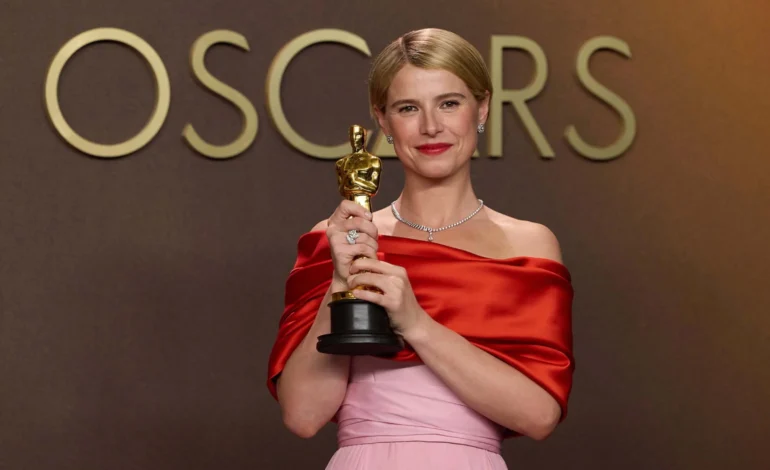
A political thriller exploring extremism and generational responsibility dominated this year’s Academy Awards, with One Battle After Another winning six prizes including best picture.
The film also secured the first Oscar victories for director Paul Thomas Anderson, who took both best picture and best director honours. Despite decades of critical acclaim and multiple nominations, the American filmmaker had never previously won an Academy Award.
More reporting from EyeOnLondon
Film, theatre and cultural stories shaping London’s creative life.
Accepting the award, Anderson joked that the Academy had made him “work hard for one of these”, before describing the making of the film as a “wonderful, wonderful journey”.
The film’s awards haul also included best adapted screenplay and best supporting actor for Sean Penn, marking the third Oscar of the veteran actor’s career.
Penn plays a white supremacist immigration commander whose actions return years later to confront an anti-government activist, played by Leonardo DiCaprio, and his teenage daughter. Notably, Penn was absent from the ceremony and has largely avoided awards events this season following his appearance at the Golden Globes in January.
During his screenplay acceptance speech, Anderson suggested the film was partly inspired by concerns about the future being inherited by younger generations.
“I wrote this movie for my kids, to say sorry for the housekeeping mess we left in this world we’re handing off to them,” he said.
“But also with the encouragement that they will be the generation that hopefully brings us some common sense and decency.”
The film’s casting director Cassandra Kulukundis also won the Academy Award for best casting in the category’s first year at the ceremony. She thanked the Academy for introducing the award and acknowledged the long campaign by casting directors for greater recognition within the industry.
Elsewhere in the acting categories, Michael B Jordan won best actor for his performance in Sinners. The film follows twin brothers whose plans to open a music venue in 1930s Mississippi unravel after encountering a sinister force.
Jordan used his speech to acknowledge the legacy of previous Black Academy Award winners.
“I stand here because of the people who came before me,” he said, naming Sidney Poitier, Denzel Washington, Halle Berry, Jamie Foxx, Forest Whitaker and Will Smith.
“I’m honoured to be amongst those giants.”
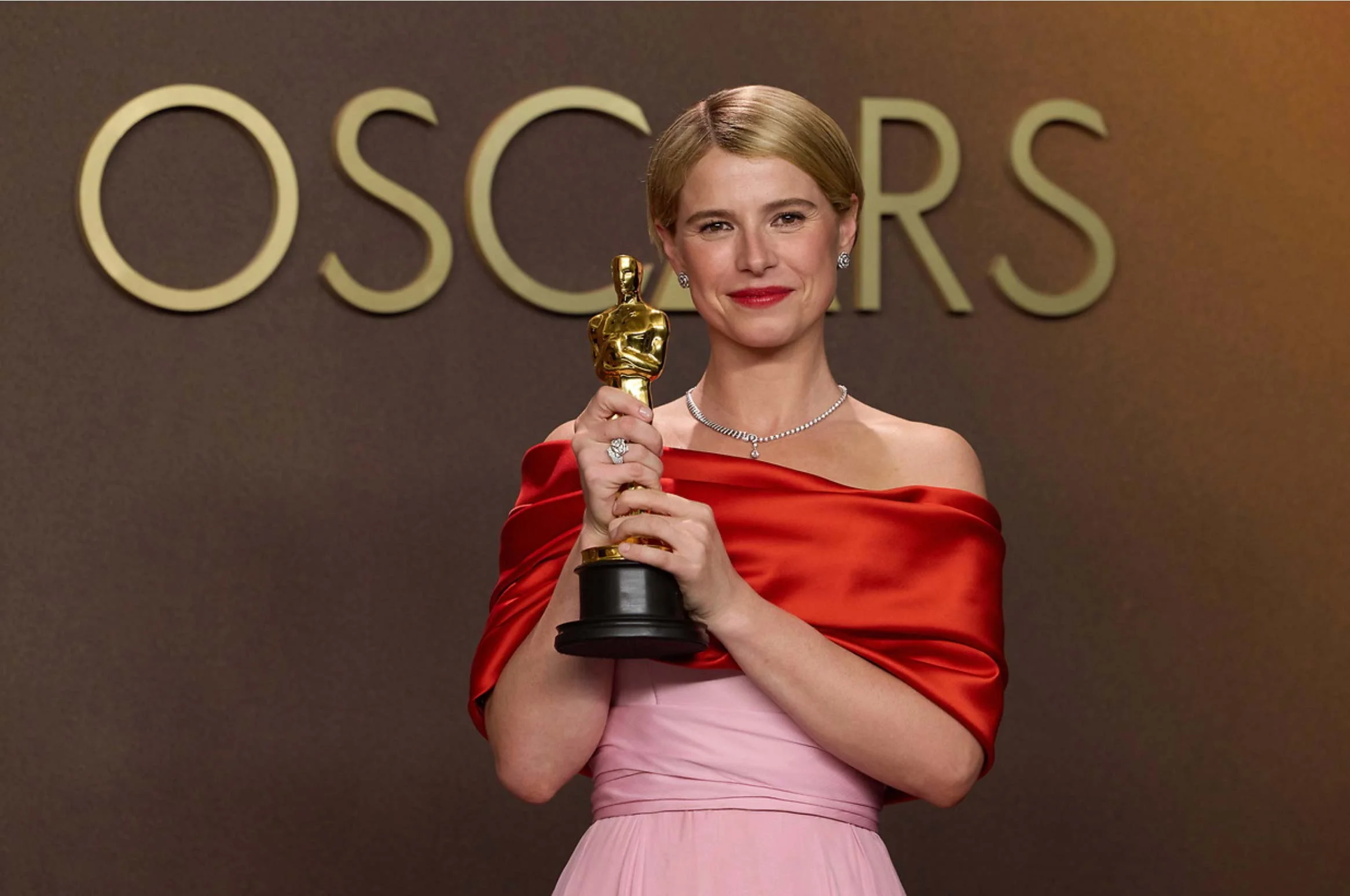
Irish actress Jessie Buckley received the first Oscar of her career for her performance in Hamnet, portraying Agnes Shakespeare as she grapples with grief following the death of her young son.
Accepting the award, Buckley noted that the ceremony coincided with Mother’s Day in the United Kingdom.
“This is really something,” she said. “It’s Mother’s Day in the UK today. I’d like to dedicate this to the beautiful chaos of a mother’s heart.”
“We all come from a lineage of women who continue to create against all odds.”
Amy Madigan won best supporting actress for the horror film Weapons, becoming the first performer from a horror production to win the category since Ruth Gordon for Rosemary’s Baby in 1969.
Madigan said she felt “very overwhelmed” by the win and praised director Zach Cregger for writing what she described as “a dream part”.
“We had a ball,” she added.
History was also made in the technical categories when Autumn Durald Arkapaw became the first woman to win the Academy Award for best cinematography for her work on Sinners. The category had never previously had a female winner.
The animated feature KPop Demon Hunters also enjoyed a successful night, winning both best animated feature and best original song for “Golden”.
Producer Maggie Kang described the moment as culturally significant.
“For those of you who look like me, I am sorry that it took so long for us to see ourselves in a film like this,” she said.
“But it is here now, and that means the next generation don’t have to go longing.”
Norwegian director Joachim Trier won best international feature for Sentimental Value, joking in his speech that he was “just a film nerd from Norway”.
In a ceremony that was otherwise relatively light on political remarks, Trier closed his speech with a reminder that “all adults are responsible for all children”.
Spanish actor Javier Bardem was one of the few other stars to make a political comment on stage while presenting an award, saying simply: “No to war, and free Palestine.”
Elsewhere, the film Frankenstein won three technical awards for costume design, production design, and make-up and hairstyling, while racing drama F1 won best sound.
The ceremony also produced the first tie in more than a decade, with the best live action short award shared between The Singers and Two People Exchanging Saliva.
The traditional In Memoriam segment paid tribute to figures including Val Kilmer, Michael Madsen, Terence Stamp, Diane Ladd, Robert Duvall and Tom Stoppard.
Barbra Streisand closed the segment with a tribute to her former co-star Robert Redford, who died last year aged 89.
“Bob had real backbone,” she said. “He was thoughtful and bold. I called him an intellectual cowboy who blazed his own trail.”
Follow EyeOnLondon for thoughtful reporting on film, theatre and the cultural stories shaping London and the wider world.
Photo: Academy of Motion Picture Arts and Sciences
Follow us on:



Subscribe to our YouTube channel for the latest videos and updates!

We value your thoughts! Share your feedback and help us make EyeOnLondon even better!