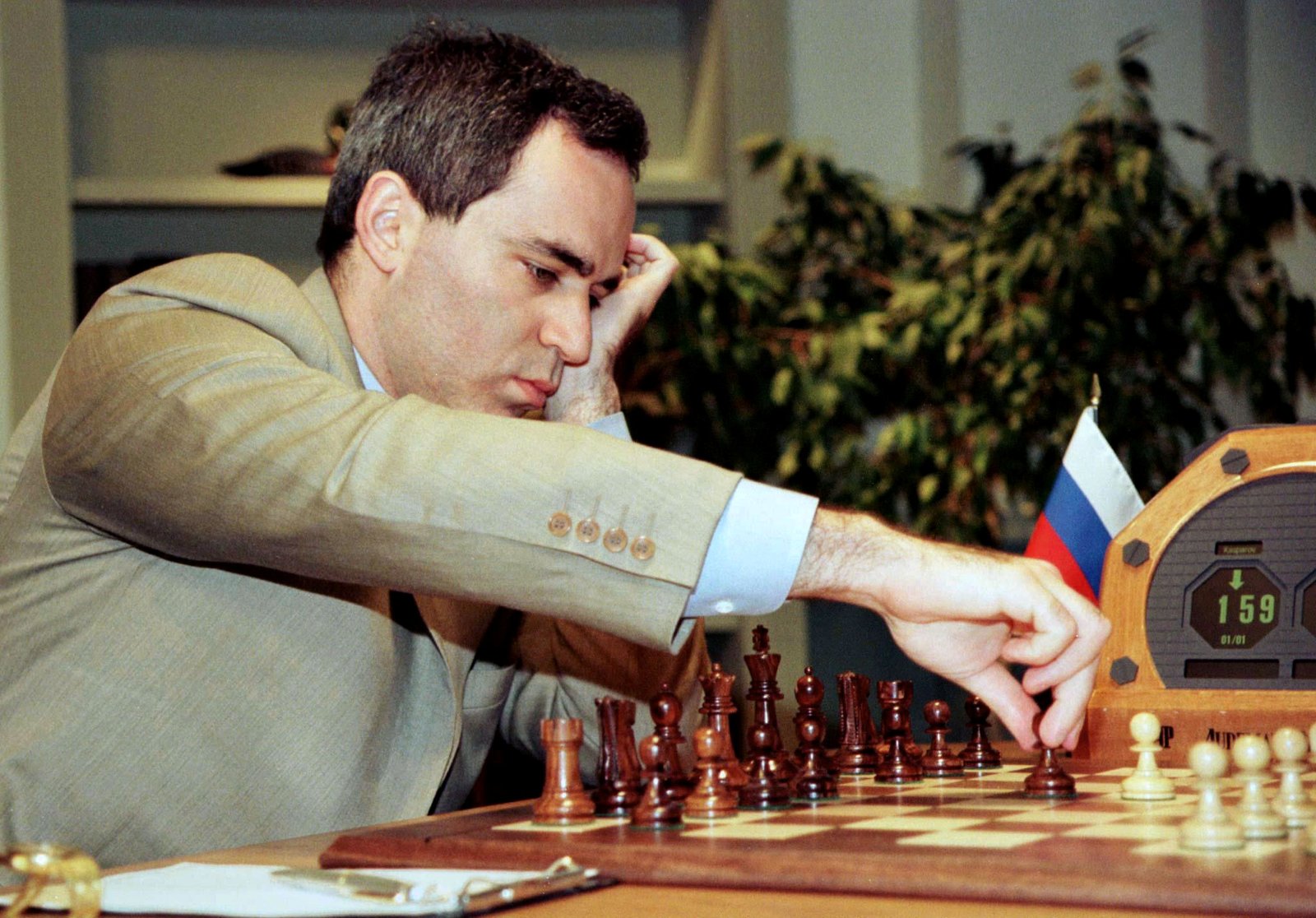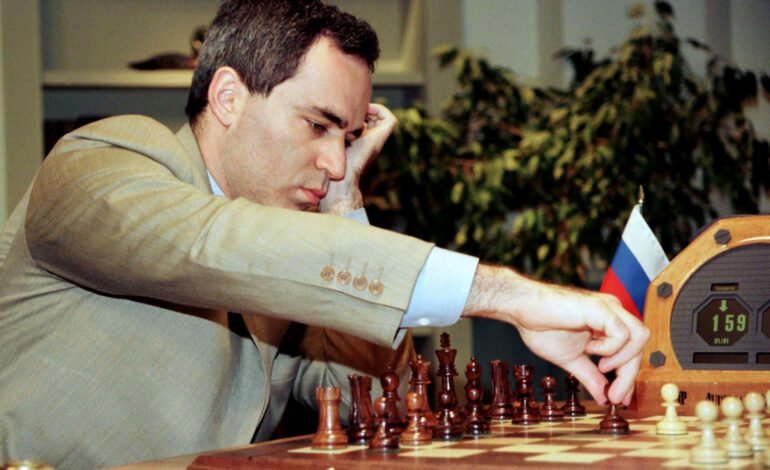
Have you ever wondered what makes chess games great? The speed of the attack, the unexpected turnarounds, the deflections and sacrifices, the sheer offensive power, all manoeuvred across one board. Few games illustrate this better than Kasparov’s Immortal Game against Veselin Topalov. In January 1999, Garry Kasparov delivered the ultimate example in Wijk aan Zee during the Hoogovens Tournament, the prestigious event that began in 1938 as a small Dutch-only competition and later became the Corus and now Tata Steel Chess Tournament.
The world outside the hall was in turmoil. President Bill Clinton’s impeachment trial gripped America, the euro currency had just been introduced, Y2K computer-bug panic was everywhere, and tensions in Kosovo were about to explode into NATO action. On the board, Kasparov, still burning to prove human intuition after losing to IBM’s Deep Blue in 1997, faced rising star Veselin Topalov in a sharp Pirc Defence. The stakes were simple but huge: clear first place in one of chess’s most elite super-tournaments. Kasparov would go on to win the event by a narrow margin and later hit a record rating of 2851.
More reporting from EyeOnLondon
Film, theatre and cultural stories shaping London’s creative life.
After 19 moves of tense buildup, Kasparov ignited everything with the thunderbolt 24. Rxd4! This rook sacrifice was the key turning point. Topalov accepted, and the position exploded into one of the longest, most brilliant king-hunts ever seen. Kasparov sacrificed two rooks in succession, driving the black king from a7 all the way across the board in a relentless cascade of checks and mating ideas.
Why does this game matter so profoundly? Kasparov himself has repeatedly called it the best of his career. It showcased pure intuition, moves so deep that even today’s engines initially fail to grasp their full beauty without deep analysis. Topalov later admitted he could calculate nine moves ahead but missed the tenth. The encounter teaches timeless lessons: defending dubious openings is risky, the defender’s task is almost always harder, and you should be optimistic whenever you can separate the enemy king from its forces.
Fast-forward to March 2026. The same Wijk aan Zee stage just crowned Nodirbek Abdusattorov champion in the latest Tata Steel edition, while the world again watches high-stakes drama unfold amid escalating US-Iran conflict in the Middle East and rapid AI breakthroughs in every field, including chess. Yet Kasparov’s masterpiece carries a snappy reminder that still rings true: machines may calculate faster, but it still takes human vision and daring to see that tenth move when everyone else stops at nine.
The Challange
White to move after 23…Qd6. Black’s king looks safe on a7, material is balanced, and the centre seems stable. How does White launch one of the most spectacular attacks in chess history
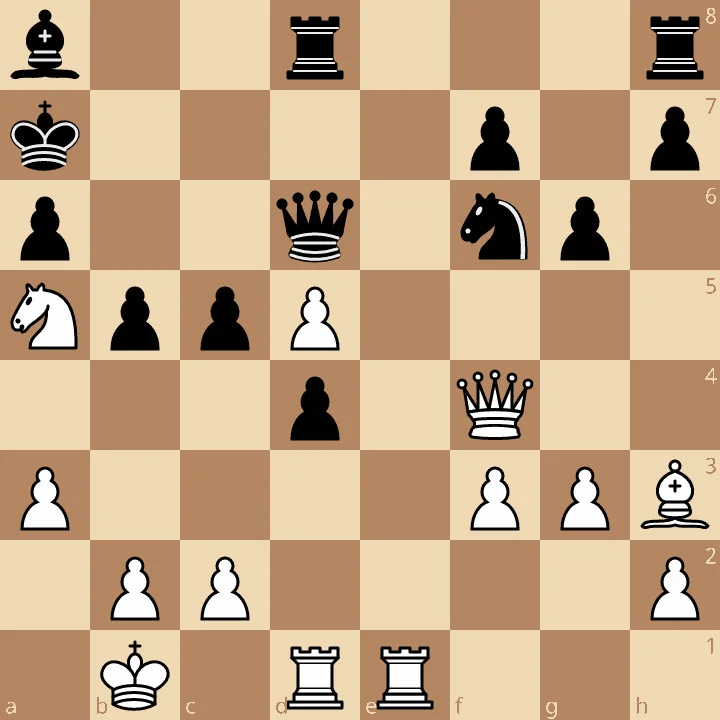
The Solution
24.Rd4!!
The brilliant key move and one of the most famous sacrifices in chess history. Kasparov offers a rook to rip open the position and expose the black king.
Topalov accepted with 24…cxd4, but the real storm now begins.
25.Re7+! Kb6
26.Qxd4+ Kxa5
27.b4+ Ka4
The black king is dragged into the open and the hunt begins in earnest. Every move comes with tempo, forcing the king further from safety while White’s pieces flood into the attack.
What followed was pure genius. Kasparov sacrificed a second rook and maintained relentless pressure with precise checks and quiet moves that cut off every escape. The black king was driven across the board while White’s pieces coordinated perfectly for the final attack.
Each sacrifice either deflected a defender or opened new lines. One inaccurate move would have allowed Black to escape, yet Kasparov repeatedly found the only move needed to keep the attack alive.
The king was eventually forced all the way to e1, where the mating net became unavoidable.
The game ended 1–0 after 44 moves.
Topalov later admitted he could calculate nine moves ahead but missed the tenth. The game remains a timeless demonstration of how separating the enemy king from its army can transform a balanced position into a decisive attack.
Bold sacrifices, supported by complete calculation and intuition, turned this encounter into one of the most celebrated attacking masterpieces ever played.
Stay connected with EyeOnLondon for thoughtful journalism on London, culture and global affairs.
Photo: REUTERS/Mike Segar
Follow us on:



Subscribe to our YouTube channel for the latest videos and updates!

We value your thoughts! Share your feedback and help us make EyeOnLondon even better!