Experimental cancer immunotherapy triggers whole-body tumour response in early trial

An experimental cancer immunotherapy that is injected directly into a tumour has triggered body-wide tumour destruction in an early clinical trial, raising new hopes for treatments that mobilise the immune system against metastatic disease.
The therapy, a redesigned CD40 agonist antibody, produced tumour shrinkage in half of the patients who received it during a phase-1 clinical trial. Two patients experienced complete remission, meaning all detectable cancer disappeared.
More reporting from EyeOnLondon
Policy, science and global developments shaping London’s wider world.
Researchers reported the findings in the journal Cancer Cell, describing how the treatment appeared to stimulate a systemic immune response even when only a single tumour was injected.
Among the 12 patients enrolled in the study, six experienced measurable tumour shrinkage across the body. The two patients whose cancer disappeared entirely had metastatic melanoma and metastatic breast cancer.
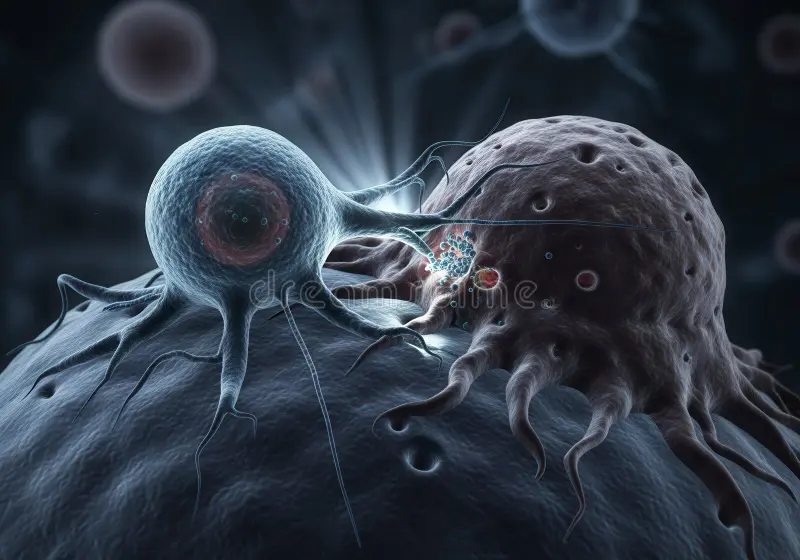
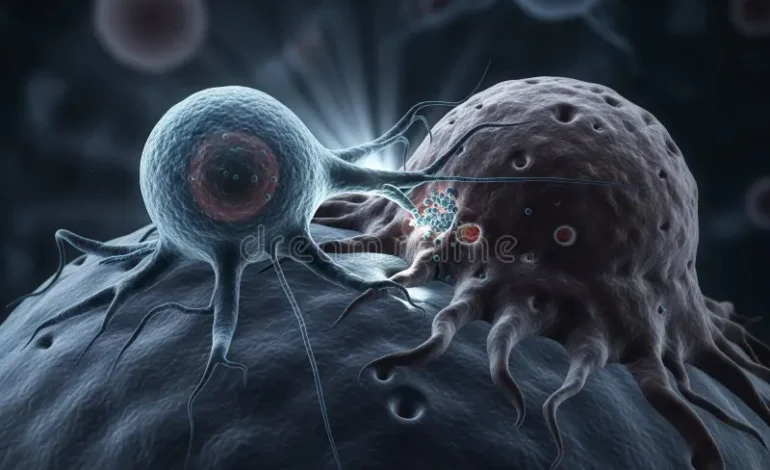
The treatment is designed to activate CD40, a receptor found on certain immune cells that helps trigger anti-tumour immune responses. When stimulated, the receptor can activate dendritic cells and generate cancer-targeting T cells capable of attacking malignant cells.
For more than two decades, scientists have investigated CD40 agonist antibodies as potential cancer therapies. Early studies suggested the drugs could powerfully stimulate the immune system. But clinical trials in patients produced only modest results and often triggered serious side effects including widespread inflammation, liver toxicity and dangerously low platelet levels.
Researchers led by immunologist Jeffrey V. Ravetch at Rockefeller University redesigned the antibody to improve how it interacts with immune receptors. Laboratory studies suggested the modified antibody could activate immune responses far more effectively than earlier versions.
The team also changed the way the therapy is delivered. Instead of administering the drug through intravenous infusion, which exposes many healthy cells to the treatment, researchers injected the antibody directly into tumours.
This local delivery appeared to reduce toxicity while still triggering a powerful immune reaction.
One patient with melanoma had dozens of metastatic tumours on her leg and foot, yet only a tumour in the thigh was injected. After repeated injections, all visible tumours disappeared.
A similar pattern occurred in a patient with metastatic breast cancer. Although only a tumour in the skin was treated directly, tumours in the liver, lung and other areas also disappeared.
Analysis of treated tumours revealed a dramatic transformation of the tumour microenvironment. Tumours became densely infiltrated with immune cells, including dendritic cells, T cells and mature B cells.
Researchers observed that these immune cells formed structures resembling lymph nodes inside the tumours. Known as tertiary lymphoid structures, these formations are often associated with stronger immune responses against cancer.
Evidence of these immune structures was also detected in tumours that had not been injected, suggesting that once activated, immune cells travelled throughout the body to attack cancer elsewhere.
The small study involved patients with several types of metastatic cancer including melanoma, renal cell carcinoma and breast cancer. None experienced the severe side effects historically associated with CD40 therapies.
Scientists caution that the trial was designed primarily to test safety and dosage rather than long-term effectiveness. Larger clinical trials are now underway to better understand how the therapy works and which patients are most likely to benefit.
Current phase-1 and phase-2 studies involving nearly 200 patients are examining the treatment across several difficult-to-treat cancers including bladder cancer, prostate cancer and glioblastoma.
Researchers say one of the key challenges will be identifying which patients are most likely to respond to the therapy.
Across cancer immunotherapy more broadly, only about a quarter of patients typically benefit from existing treatments. Understanding the immune characteristics that predict response could help guide future therapies and improve outcomes.
Stay connected with EyeOnLondon for thoughtful journalism on London, culture and global affairs.
[Credit | Rockefeller University / Scientific illustration]
Follow us on:



Subscribe to our YouTube channel for the latest videos and updates!

We value your thoughts! Share your feedback and help us make EyeOnLondon even better!