Sir Adrian Boult and the Sound of an Orchestral Age

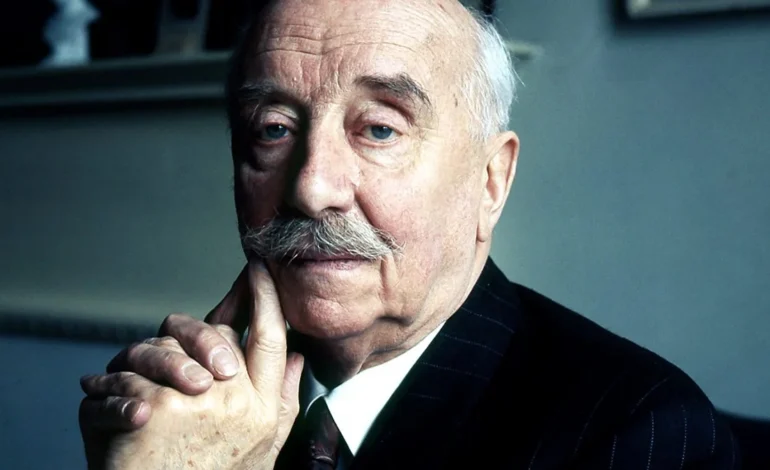
Sir Adrian Boult | The collected stereo recordings 1956 – 1978
Warner Classics 5021732585042
79 CDs
So much about this collection is extraordinary, not least the sheer amount of work Sir Adrian did in the studio in a period of only 22 years; he was already in his late sixties at the start. There is even more out there because this only includes the recordings he made for the labels now controlled by Warner Classics (HMV, Parlophone, EMI, Pye Nixa etc.), so nothing he made, for example, for Decca. It is such a magnificent box that I’m devoting this month’s column to it completely, partly because there is so much of value in it and partly because for the last dozen years of his life Sir Adrian was my mentor, as was the producer of many of the later discs, Christopher Bishop.
Another reason why it is fascinating is that it charts the shifting sands of London’s orchestras through the 1950s and 60s. In 1956 Boult had already been forced to leave the BBC Symphony Orchestra, which he had founded, because he had reached the corporation’s mandatory retirement age of 60 in 1949, an absurd decision that would now be illegal. Instead the London Philharmonic took him in and remained devoted to him for the rest of his career. Sir Malcolm Sargent went to the BBC, having been one of the founders of the LPO with Sir Thomas Beecham. Appointing Boult to the LPO in Beecham’s stead was a huge slap in the face for Beecham, who was ten years older. He and Boult loathed each other (Boult told me that the difference between them was that he ‘conducted sane performances’). They came from similar well-off Victorian industrial families either side of the Mersey: Boult from Birkenhead (Valvoline Oil), Beecham from St. Helens (Beecham’s Powders). Beecham went to Rossall School in Lancashire, Boult to Westminster. Both went on to Oxford where Boult thrived, Beecham did not. Boult went to study conducting in Leipzig with the great Artur Nikisch (as Elgar had done), Beecham studied with no-one and when and after he controlled Covent Garden made sure Boult was never engaged.
More reporting from EyeOnLondon
Film, theatre and cultural stories shaping London’s creative life.
Beecham was so furious with the LPO for kicking him out after the Second World War that he started the Royal Philharmonic in revenge. But the RPO started making recordings with Boult when asked by soloists or the record companies, as can be heard from early on in this box, and when Beecham was ill. The results were impressive. In the 1960s the Philharmonia Orchestra, formed as a recording orchestra for HMV, wanted to break away from their contracts and Boult supported them as they became the New Philharmonia. These twists and turns are reflected through the discs. Boult was the safe pair of hands all London players felt comfortable with. He was also available because he refused to fly, meaning that he was not off touring the US or even much further than Amsterdam. Famously, when the LPO became the first British orchestra to play in the Soviet Union as relations thawed after Stalin’s death, Sir Adrian travelled for three days by train each way.
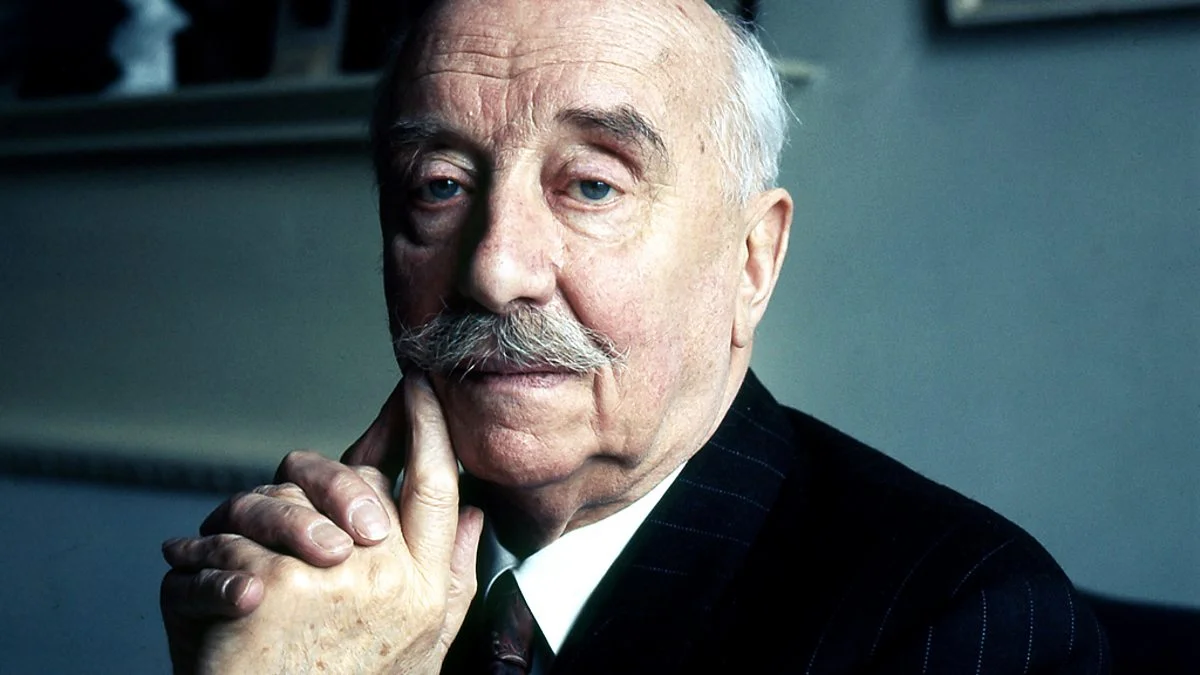
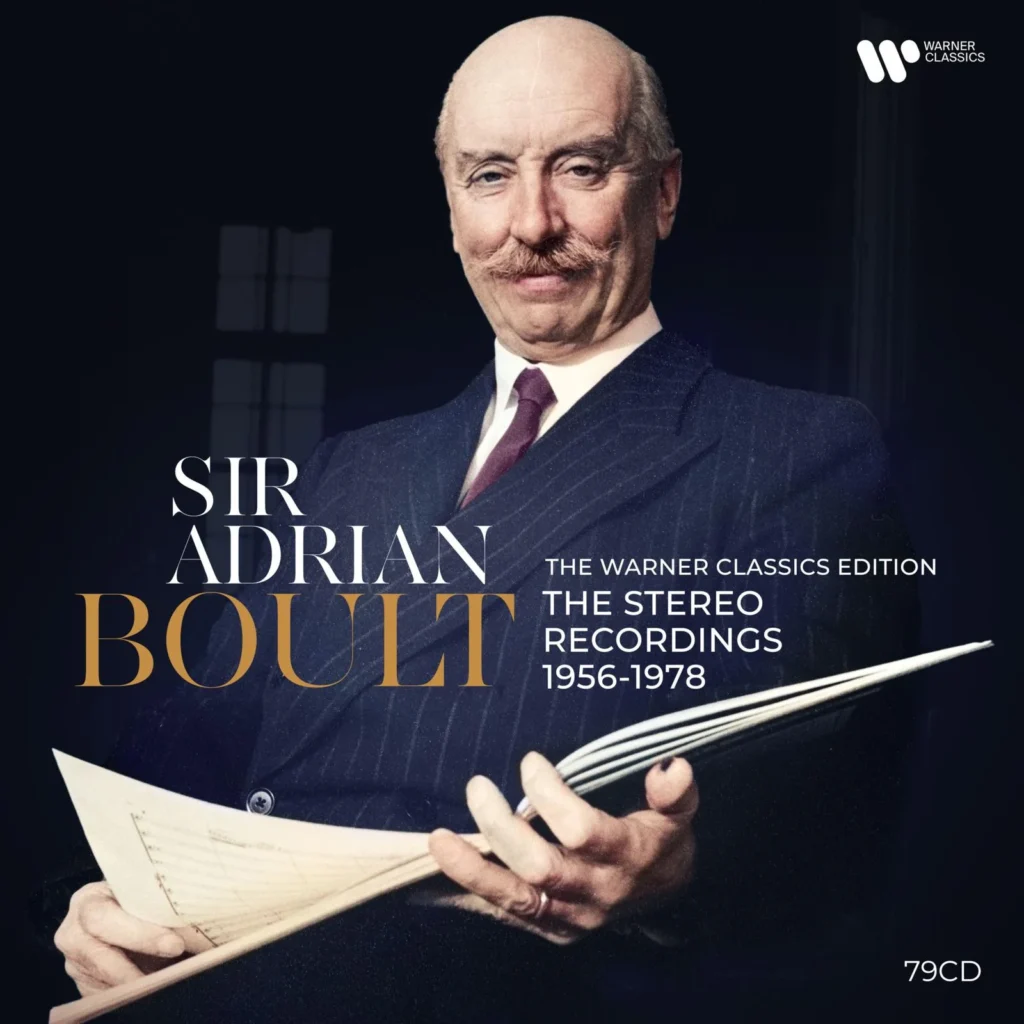
Boult was over six foot tall, sported a luxurious moustache and conducted with an exceptionally long baton which tended to whip through the air. People mistook his upright bearing for militaristic and matter-of-fact conducting. In reality it was anything but. He was emotional and sensitive, though he often hid it behind the stiff upper lip. The main characteristic that leaps out of his recordings is the lyrical breadth, the ability to find the romantic heart of any movement.
There are so many examples of this. Of course there are the superb accounts of Holst’s, Vaughan Williams’ and Elgar’s music for which he was especially famous, but listen too for the way he shapes Brahms’ symphonies and Schubert’s Ninth. The real discoveries, though, are his recordings accompanying concertos. There is Rostropovich in a raw and passionate reading of Dvořák’s Cello Concerto, Ernst von Dohnányi playing his own Second Piano Concerto and the tongue-in-cheek Variations on a Nursery Rhyme. Mindru Katz in the piano concerto by Khachaturian and Prokofiev’s First (very unusual repertoire for Boult), Menuhin playing Tchaikovsky’s Violin Concerto in 1959. Best of all are the gorgeous performances of Grieg and Schumann’s Piano Concertos made with Shura Cherkassky and the LPO in 1965.
Most of the recordings were made in Studio 1, Abbey Road (opened by Elgar himself in 1932) and Kingsway Hall, Holborn – the latter unused after CDs came in because of the rumble of the nearby Piccadilly Line, which analogue equipment did not pick up but digital did. Boult’s great good luck was in his HMV/EMI recording team: fellow conductor (and pupil of Glazunov) Lawrence Collingwood as producer early on and Christopher Bishop later and, for a remarkable number of the discs, the sound engineer Christopher Parker, who knew just how to find the balance Boult wanted. This is a magnificent box and, in its way, an utterly reliable library of 150 years of great orchestral music, interpreted by a master.
Follow EyeOnLondon for thoughtful coverage of classical music, culture and the ideas shaping London.
[Image Credit | BBC]
Follow us on:



Subscribe to our YouTube channel for the latest videos and updates!

We value your thoughts! Share your feedback and help us make EyeOnLondon even better!