Melsonby Hoard discovery reshapes Iron Age Britain


More than 800 objects buried in a field near Melsonby, North Yorkshire, are now offering a fresh perspective on Iron Age Britain. The Melsonby Hoard discovery, excavated by archaeologists from Durham University, has been hailed as one of the most significant finds of its kind, suggesting the north was far more connected and powerful than previously thought.
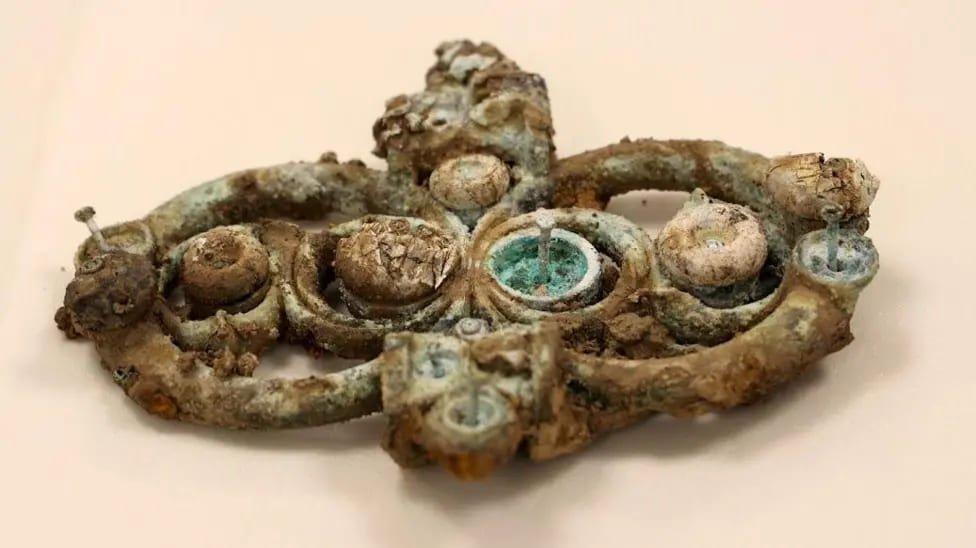
The discovery began when metal detectorist Peter Heads unearthed early signs of the hoard. What followed was a full excavation, backed by the British Museum and a major grant from Historic England. Among the finds were two large cauldrons, horse harnesses, bridle bits, ceremonial spears and 28 iron tyres, likely from chariots or wagons. There were also fittings decorated with red coral and glass, materials suggesting long-distance trade.

“This is one of the most important and exciting Iron Age discoveries made in the UK,” said Duncan Wilson, Chief Executive of Historic England. “It sheds new light on life in the north during the Iron Age and highlights connections with continental Europe.”
The scale of the find has stunned historians and researchers. Speaking from Durham University, Professor Tom Moore explained:
“The size and scale of the Melsonby Hoard is exceptional for Britain and probably even Europe. It changes how we understand elite society in the north of England at this time.”
Many of the objects from the Melsonby Hoard appear to have been deliberately burnt or broken before being buried, perhaps as part of a ritual or to display power and wealth. No human remains were found, but there’s strong evidence that a funerary pyre may have been involved.
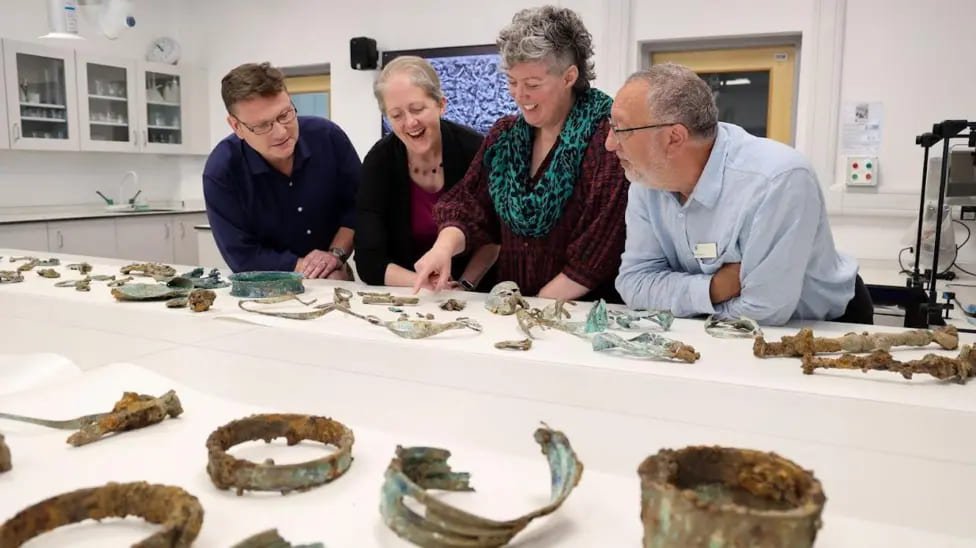
Inside the university’s conservation lab, the atmosphere is electric. Spread out on long tables in a climate-controlled room, the objects might be rusted and faded, but they’re providing archaeologists with a once-in-a-generation research opportunity.
“The destruction of so many high-status objects, evident in this hoard, is of a scale rarely seen in Iron Age Britain,” said Moore. “It shows that the elites of the north were just as influential as their southern counterparts.”
Some of the objects share design features with items found in Mediterranean and Roman territories. One cauldron in particular blends British and southern European styles and was likely used for mixing wine – a luxury product at the time. Others hint at previously unknown technologies, such as four-wheeled wagons, rarely confirmed in Britain before now.
Andrew Woods, senior curator at the Yorkshire Museum, said:
“This hoard is unprecedented in the north. It will help us understand more about this remarkable period in our history. By acquiring and exhibiting it, we’ll be able to ask bigger questions, who buried it, why, and what it meant to them?”
The Yorkshire Museum has launched a fundraising campaign to secure the Melsonby Hoard for public collections, and a selection of objects will go on display from 25th March 2025.
Experts at the University of Southampton used advanced scanning technology to identify the objects and plan the excavation, helping to preserve their condition. However, with a find of this size, secrecy is paramount. The precise location remains undisclosed to deter illegal treasure hunting.
If you’re curious about how archaeological finds like this are conserved, Historic England’s conservation resources offer a behind-the-scenes look at how artefacts are studied and protected.
Original article Archaeologists find ‘unprecedented’ Iron Age hoard can be read on the BBC website.
For more articles on archaeology, culture, and historical finds across the UK, visit EyeOnLondon.
[Image Credit: Durham University]
Follow us on:



Subscribe to our YouTube channel for the latest videos and updates!

We value your thoughts! Share your feedback and help us make EyeOnLondon even better!