A Prom That Misfired

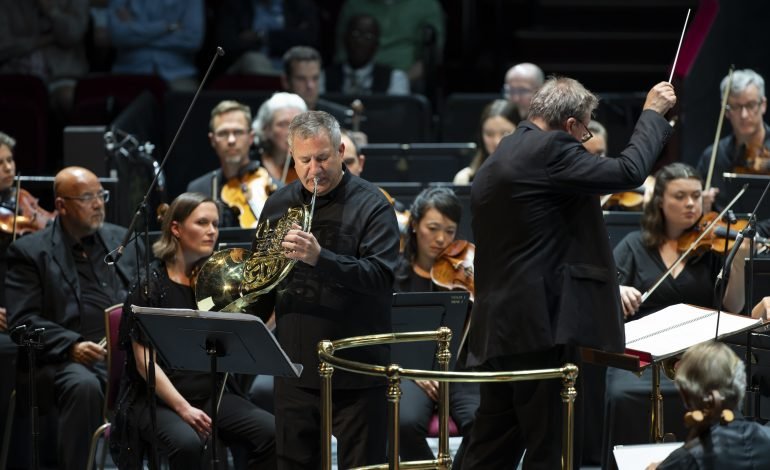
BBC Prom, Royal Albert Hall
7 August 2024
Music by Schumann, Sibelius, Hans Abrahamsen, and Tchaikovsky
- Stefan Dohr (Horn)
- BBC Philharmonic Orchestra
- John Storgårds (Conductor)
There are not many occasions when the programming at the Proms comes up with a misconception, but this was one of them. The first half held three very average works that Storgårds and the Salford-based BBC PO were not inspired enough to invest with greater quality. Schumann’s Genoveva Overture is one of his few really dull pieces: workmanlike at best. Sibelius was at his most gloomy in his tone poem about Pohjola’s Daughter, a story of an old wizard infatuated by a young woman who (not surprisingly) tells him to get lost. The music requires a conductor with an idea of how to unlock an elusive sense of shape and direction, and sadly Storgårds did not manage to find the key. By the time Hans Abrahamsen’s Horn Concerto, premiered in 2020 by the same soloist, took its turn, the mood in the hall was subdued.
Sadly, neither the concerto nor Stefan Dohr did much to raise the spirits. The music starts statically and goes no great distance in 20 minutes, and I doubt if other horn players will take the trouble to add it to their repertoire. The horn part consists of a succession of long notes, rarely breaking into a trot. The hope that these might lead to something more interesting proved to be forlorn. In the slow-moving monochrome textures, it did not help that Dohr’s accuracy was not always reliable, and the orchestra was given nothing much to get their teeth into. There are some wonderful composers writing at the moment. On this showing, I cannot claim that Abrahamsen is one of them. The interval drink came as a welcome relief.
That, then, left Tchaikovsky’s Fourth Symphony to rescue the evening in the second half, and thank heavens it did, but only to an extent. This is music the BBC PO knows well and is at home in. The string pizzicato third movement is always the test of an orchestra’s mettle, and in this, the playing was attentive and compelling; Storgårds was far more expressive when he put down his baton and just used his fingers to draw out the phrasing. Even so, though, the other movements were efficient rather than remarkable under his direction. There was too little attention paid to the blending in the woodwind, and too many small lapses in string and horn ensemble. Storgårds supplies energy and heft, but too often he looks at his music stand, not the players, and so their contributions become isolated, particularly between flute, clarinet, and oboe. The passion was there, but the iridescent detail of Tchaikovsky’s orchestration remained unrevealed.
For more information on upcoming performances, visit the BBC Proms official page.