The UK Supreme Court has ruled on how the word ‘woman’ should be interpreted under the Equality Act 2010, settling a long-running legal dispute that could reshape the application of sex-based rights across England, Scotland, and Wales. The judgment follows a case brought by For Women Scotland, who challenged the Scottish Government’s approach to defining legal sex, particularly in public appointments and representation.
At the heart of the debate is whether the term ‘woman’ in UK law refers exclusively to biological sex, or if it includes individuals with a Gender Recognition Certificate (GRC) under the Gender Recognition Act 2004. The Scottish Government argued that those who hold a GRC legally become the sex they identify with and are entitled to corresponding legal protections. For Women Scotland disagreed, stating that ‘woman’ should reflect biological sex only.
The Supreme Court concluded that the legal definition of a woman under the Equality Act cannot be altered by devolved legislation, meaning that the word ‘woman’ refers to biological sex in contexts where sex-based rights are protected. This outcome could affect how laws and policies are designed around single-sex services such as hospital wards, prisons, sport, and domestic violence refuges.
This judgment was the result of a legal journey that began in 2018 when the Scottish Parliament passed a bill aimed at improving gender balance on public boards. The law included transgender women in female quotas, prompting the legal challenge. Today’s ruling clarifies that only those born female can be included under the protected characteristic of sex in specific legal contexts, even if a person has transitioned and holds a GRC.
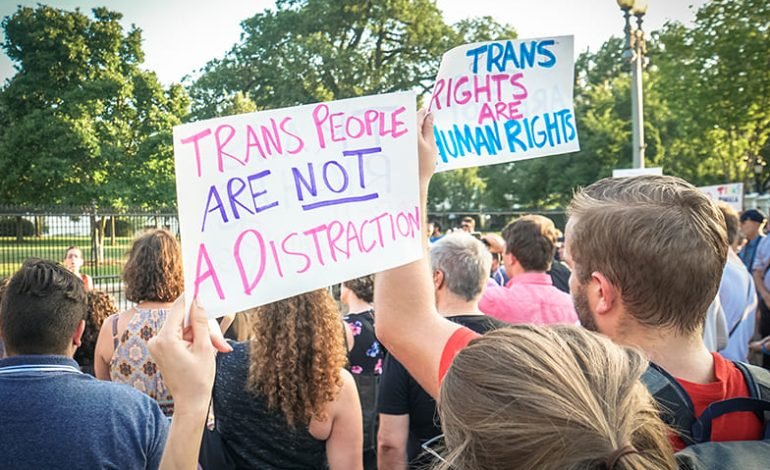
While supporters of the ruling say it upholds the clarity and intent of the Equality Act, critics, including LGBTQ+ rights advocates, fear the judgment may undermine protections for transgender people. Amnesty International warned that narrowing legal definitions could set a precedent affecting the rights of other minority groups, while the Equality and Human Rights Commission has said that reform is likely needed to resolve ongoing tensions between sex and gender protections.
The court made clear that its role was to interpret the law as it stands, not to make new policy, and called on policymakers to consider clearer legislative language going forward. With the government’s block on Scotland’s proposed reforms to simplify the process for acquiring a GRC, the broader debate over gender, sex, and identity in law is far from over.
For now, the UK legal system defines a woman as a person of biological female sex, unless otherwise specified in legislation. This outcome reinforces the original structure of the Equality Act 2010, which protects against discrimination on the basis of sex and gender reassignment, but now draws a firmer line between those two characteristics.
For those navigating policy, equalities law, or even planning single-sex services, this ruling from the UK Supreme Court is likely to be the new benchmark.
For more updates on Equality Act rulings, legal reforms, and what they mean for everyday life in the UK, visit EyeOnLondon. We’d love to hear your views in the comments.