SeaCURE Carbon Capture Begins on England’s Coast

A new SeaCURE carbon capture project is quietly underway off the Dorset coast, where a pilot scheme in Weymouth is testing whether removing carbon directly from seawater might become a viable solution in the fight against climate change. It’s a small-scale setup for now, but the science behind it could have wide-reaching implications for the UK’s environmental future.
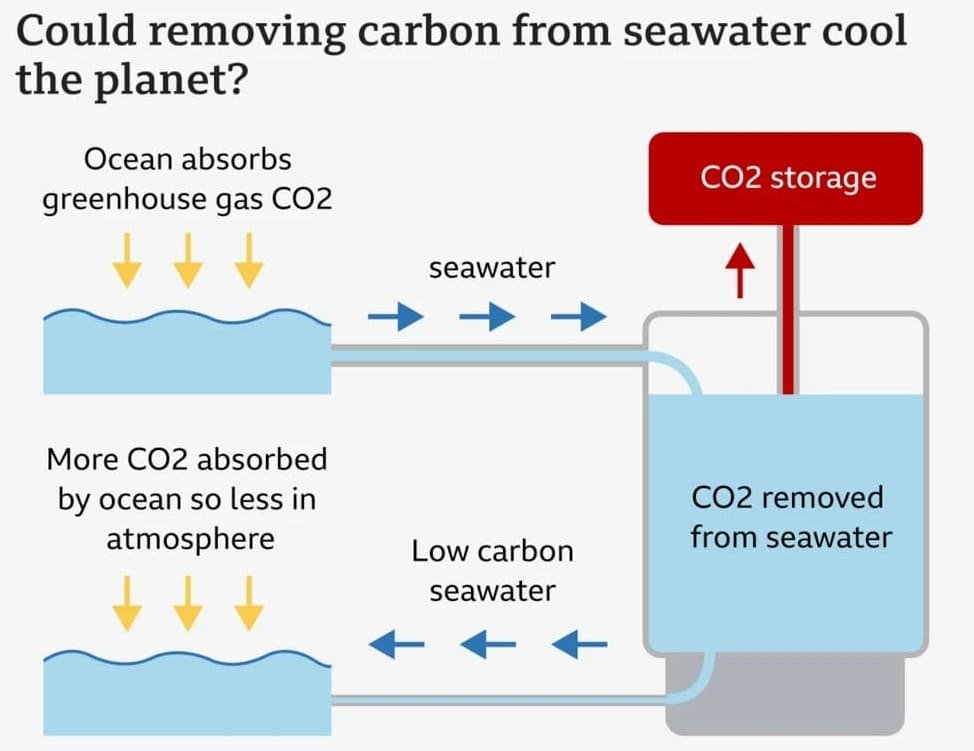
Tucked behind Weymouth’s Sealife Centre, and down a path marked by a slightly alarming sign about moray eels, sits the SeaCURE facility. It draws in seawater from the English Channel through a pipe under the pebbled shore, removes some of the carbon it carries, and then returns it to the sea, ready to absorb more from the air. What makes this different from typical carbon capture methods is the focus on seawater instead of the atmosphere. Scientists involved in the project say water contains far higher concentrations of carbon, around 150 times more, making it potentially a more efficient place to focus efforts.
The SeaCURE carbon capture method works by lowering the pH of the seawater to release carbon dioxide, a bit like opening a bottle of fizzy water. That carbon is then trapped using filters made from coconut husks, while the seawater is treated with alkali to neutralise the process and returned to the sea. The idea is that once it’s back, it begins soaking up fresh CO2 from the air all over again.
At the moment, it’s a modest operation, removing only around 100 tonnes of carbon a year, roughly the same as a single long-haul flight. But the team behind it believes the process has potential to scale. If even one percent of the ocean’s surface water could be processed this way, they suggest it could remove billions of tonnes of carbon dioxide from the atmosphere annually. Of course, that would require an enormous infrastructure powered by green energy. Floating solar platforms have been suggested as one possible way to achieve that.
The SeaCURE pilot is one of 15 projects being supported by UK government funding to develop low-carbon technology. The £3 million in funding helps cover costs for testing environmental effects as well as technical performance. One important part of the research is exploring how the changed seawater might affect marine life. Shellfish, plankton and other creatures rely on carbon in various ways, from building shells to photosynthesising, and any large-scale change to seawater composition needs close scrutiny.
So far, early lab tests show the impact on marine life is minimal at the current scale, but researchers at the University of Exeter are already investigating what might happen with wider rollout. There’s an ongoing conversation around how to limit any ecological downsides, including possible ways to dilute the treated water before it re-enters the sea.
While the debate about the most effective carbon removal method continues, projects like this offer a glimpse into how innovation and marine science are coming together to support climate goals. And for those wanting to understand more about how these techniques work or how carbon capture compares to other solutions, a helpful overview is available here.
For related coverage of UK science and environmental innovation, take a look at EyeOnLondon’s feature on the first ever footage of a colossal squid, a reminder that our oceans still hold as many questions as answers.
For more updates on climate research and UK-led innovation, visit EyeOnLondon. We’d love to hear your views in the comments.
Follow us on:



Subscribe to our YouTube channel for the latest videos and updates!

We value your thoughts! Share your feedback and help us make EyeOnLondon even better!