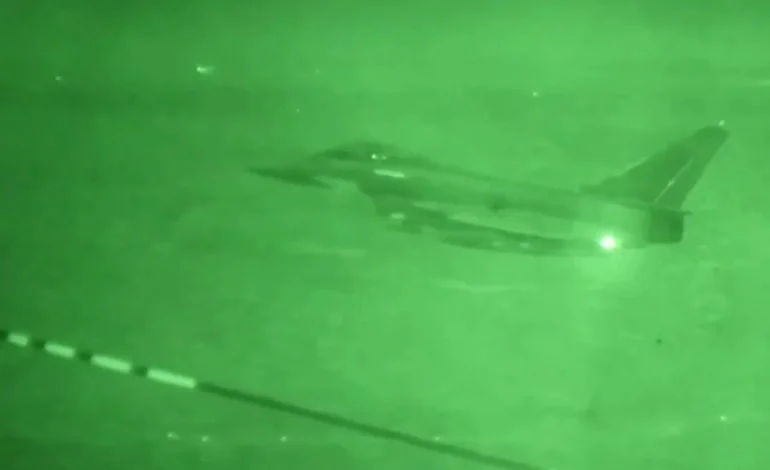
RAF strikes in Syria were carried out overnight as British Typhoon jets joined French aircraft in a precision operation targeting a suspected Islamic State weapons facility near the ancient city of Palmyra, the Ministry of Defence has confirmed.
The strike focused on a series of underground access tunnels in a remote, mountainous area north of the city. Defence officials said the site had previously been used by Islamic State to store weapons and explosives and was deliberately chosen because it lay well away from civilian populations.
UK News — More from EyeOnLondon
Three recent stories, selected to keep you reading beyond the headline.
London New Year’s Eve fireworks 2026
What’s been announced, what to expect, and the key details for Londoners planning ahead.
Read the storyMore UK News
GB News Trump interview draws Ofcom pressure
A closer look at the complaint, the regulator’s role, and what happens next.
Read the storyMore UK News
Channel Tunnel power outage hits Eurostar services
How the disruption unfolded, who was affected, and what travellers need to know.
Read the storyMore UK News
According to the Ministry of Defence, RAF Typhoon FGR4 aircraft released Paveway IV guided bombs during the operation, supported by a Voyager air-to-air refuelling tanker. All aircraft returned safely, and there was no indication of any risk to local civilians.
In a statement issued after the strike, the Defence Secretary said the operation was intended to prevent any renewed momentum by the extremist group. “This action was designed to eliminate dangerous terrorists who threaten our way of life,” he said.
“It demonstrates the UK’s determination to stand shoulder to shoulder with our allies to prevent any resurgence of Daesh and its violent ideology.”
Daesh, another name for Islamic State, once controlled large areas of Syria and Iraq before being driven back by Western-led coalition forces in 2019. Since then, allied aircraft have continued patrols and targeted strikes to disrupt attempts by the group to reorganise and rearm.
The latest RAF strikes in Syria come amid continued international concern about dormant militant networks exploiting instability in the region. In December, US forces also launched strikes aimed at destroying Islamic State fighters, infrastructure and weapons sites.
The Typhoon, a fourth-generation multirole fighter capable of speeds approaching Mach 2, has been a mainstay of UK air operations for more than a decade. First deployed in combat over Libya in 2011, the aircraft has since been used extensively in Iraq and Syria and remains central to Britain’s air defence posture. More detail on the aircraft’s operational role is available through the RAF’s official overview of the Typhoon programme, published on the Royal Air Force website.
Despite competition from newer stealth aircraft such as the F-35, the Typhoon continues to be regularly deployed on operations ranging from ground strike missions to intercepting and shadowing Russian aircraft near UK airspace. It is expected to remain in service until at least 2035, when it is due to be replaced by the Tempest sixth-generation fighter currently under development.
For more stories on Britain’s defence, security, and international role, follow EyeOnLondon for informed and independent reporting.
[Image Credit | MoD]
Follow us on:



Subscribe to our YouTube channel for the latest videos and updates!

We value your thoughts! Share your feedback and help us make EyeOnLondon even better!