Kew Gardens Carbon Garden to Open in July


This summer, Kew Gardens Carbon Garden will officially open, providing visitors with a thought-provoking exploration of how plants and fungi can help mitigate climate change. Located in one of London’s most celebrated green spaces, the new permanent garden is designed to demonstrate the essential role carbon plays in sustaining life while addressing the urgent need for sustainable solutions in a warming world.
The concept behind Kew Gardens Carbon Garden goes beyond traditional horticulture. It is a living example of how the natural world interacts with carbon, absorbing, storing, and even reducing its harmful effects. Through innovative planting schemes, sustainable design, and carefully curated landscapes, the garden highlights both the challenges posed by climate change and the ways in which nature can help counteract its impact.
Upon arrival, visitors will be greeted by an arresting visual: a planting scheme of blue and red perennials, inspired by the well-known climate stripes that depict rising global temperatures. This bold representation serves as a stark reminder of the increasing urgency of climate action. Surrounding this striking feature, a variety of planting zones demonstrate different ways in which nature can adapt to extreme weather conditions and shifting climates.
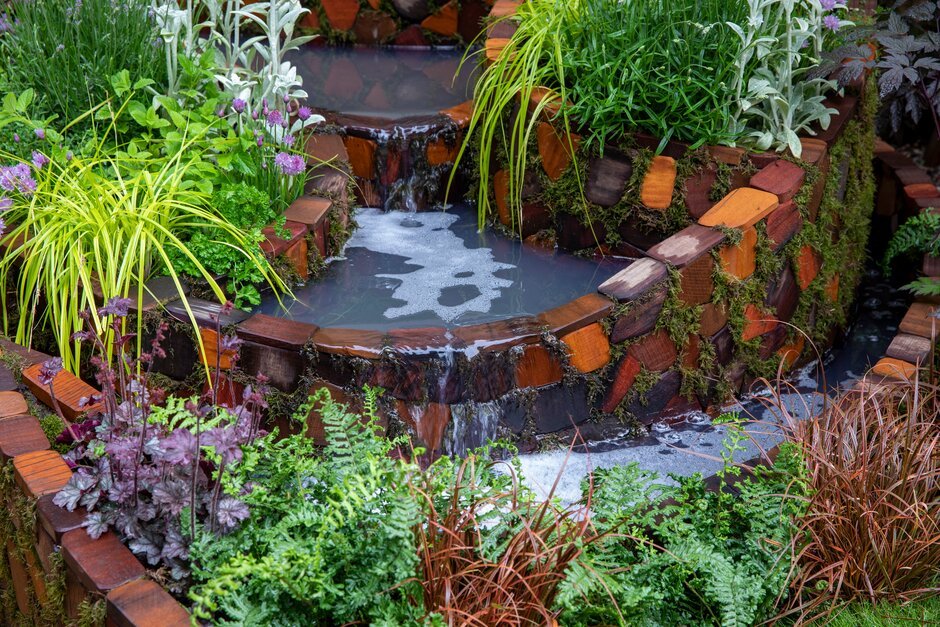
One of the standout features is a dry garden, filled with drought-resistant Mediterranean species. With London’s summers expected to become hotter and drier in the coming decades, these plants offer a glimpse into what might become common in future city gardens. In contrast, a rain garden and bioswale, a planted trench designed to absorb and filter stormwater, showcase how nature can help mitigate flooding, an increasing concern for urban areas experiencing more frequent heavy rainfall. The bioswale’s vegetation will not only prevent water-logging but also act as a natural filter, removing pollutants before the water re-enters the ecosystem.
At the heart of Kew Gardens Carbon Garden stands a striking pavilion, designed to resemble a fungal fruiting body, a nod to fungi’s crucial role in breaking down organic matter and cycling carbon back into the soil. Built using low-carbon, natural materials, the pavilion’s forward-tilted canopy will channel rainwater directly into the rain garden, further reinforcing the theme of sustainability. This central hub is expected to host educational programmes, talks, and events aimed at deepening public understanding of carbon’s role in the environment.
In addition to these features, Kew Gardens Carbon Garden will see the planting of 26 new trees, carefully selected for their carbon-capturing abilities and resilience to changing weather patterns. These trees will work alongside wildflower meadows, hedgerows, and grasslands, all contributing to the garden’s wider goal of promoting biodiversity. The combination of diverse habitats and sustainable planting will create a thriving ecosystem that not only supports wildlife but also serves as a model for urban green spaces looking to adapt to the challenges of climate change.
As climate change continues to reshape our landscapes, the importance of sustainable, climate-adaptive planting has never been clearer. The opening of Kew Gardens Carbon Garden is an invitation for Londoners to reimagine the role of green spaces in urban settings. By showcasing innovative and practical solutions, Kew hopes to encourage visitors to think about how they can implement similar approaches in their own gardens, neighbourhoods, and communities.
The Carbon Garden opens this July, giving visitors a chance to see how nature, smart design, and sustainable planting can work together to tackle climate change. To learn more about climate-adaptive gardening and how to make your own outdoor space more sustainable, this guide on eco-friendly gardening offers practical tips and insights.
For more updates on London’s gardens and environmental news, visit EyeOnLondon.
[Image Credit: UNESCO World Heritage]
Follow us on:



Subscribe to our YouTube channel for the latest videos and updates!

We value your thoughts! Share your feedback and help us make EyeOnLondon even better!