Jumping workouts may help astronauts to Mars and Moon

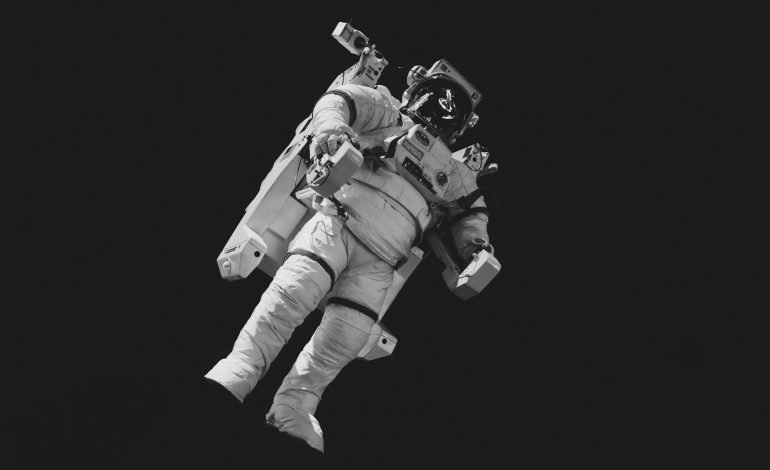
A study from John Hopkins University and published in the journal the journal npj Microgravity, has suggested that jumping workouts could help astronauts prevent the type of cartilage damage they may endure on lengthy missions. This could be crucial if plans to send humans back to the Moon and to Mars are achieved.
The research supports ongoing efforts from space agencies to protect astronauts against deconditioning. This refers to the low gravity forcing the astronauts out of shape, hindering their abilities to perform crucial tasks such as spacewalks, handling equipment and repairs, along with other physically demanding tasks.
The study was conducted in mice. It showed that knee cartilage grew healthier after jumping workouts.
“Since the next step in human exploration of space is going to Mars and spending long periods of time in permanent bases on the moon, cartilage damage is a really major issue that space agencies need to address despite how very poorly understood it is,” study author Marco Chiaberge, an astrophysicist at Johns Hopkins University, the Space Telescope Science Institute, and the European Space Agency said. “The positive effect we saw in these mice is huge, and the magnitude of it was unexpected. They can basically make their cartilage thicker if they jump. Maybe astronauts could use similar training before their flight as a preventive measure.”
Healthy cartilage is vital for pain-free movements, helping to cushion joints and decreasing bone friction. But it heals slowly and cannot regenerate as quickly as other tissue. Prolonged periods of inactivity, either due to bed rest or space travel, can accelerate cartilage breakdown. Space radiation has also been shown to accelerate this.
Experiments from the European Space Agency have found signs of cartilage degradation among astronauts who spent months on the International Space Station.
“Think about sending somebody on a trip to Mars, they get there and they can’t walk because they developed osteoarthritis of the knees or the hips and their joints don’t function,” Chiaberge said. “Astronauts also perform spacewalks often. They serviced the Hubble Space Telescope five times, and in the future, they will need to spend more time in space and the Moon, where we will build larger telescopes to explore the universe and where they will need to stay as healthy as possible.”
Stay tuned to EyeOnLondon for the latest news and expert opinions.
Follow us on:



Subscribe to our YouTube channel for the latest videos and updates!

We value your thoughts! Share your feedback and help us make EyeOnLondon even better!