Stonehenge’s Altar Stone Transported from Scotland, New Study Reveals

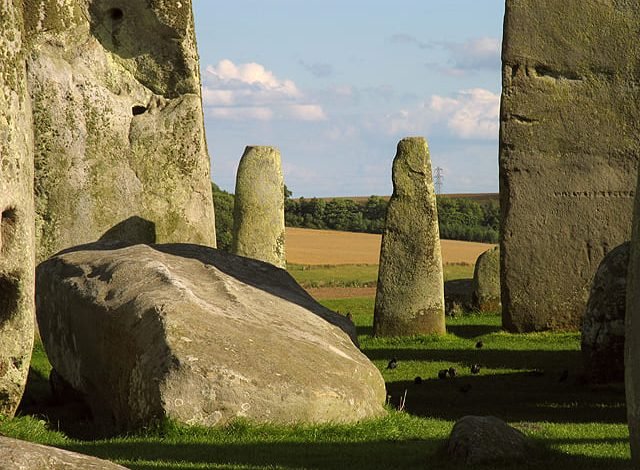
The recent discovery regarding Stonehenge’s Altar Stone has captured the attention of both the scientific community and the general public, as it significantly alters our understanding of this ancient monument’s construction. For centuries, the origin of the Altar Stone, a massive six-tonne slab at the heart of Stonehenge, was believed to be in Wales, similar to other stones at the site. However, groundbreaking research published in Nature has revealed that the stone actually hails from the Orcadian Basin in northeast Scotland, over 700 kilometres away from Salisbury Plain.
This discovery was made through detailed geochemical analysis, which identified a match between the mineral composition of the Altar Stone and the sandstone found in Scotland’s Orcadian Basin. This finding has overturned long-held beliefs and sparked new questions about the technological capabilities and social organisation of Neolithic societies. The fact that this stone was transported such a vast distance, possibly using a combination of overland and marine routes, suggests a highly advanced and connected society in Britain around 2,500 BC.
Experts have expressed their astonishment at the discovery. The research team, including scientists from Aberystwyth University, University College London, and Curtin University in Australia, emphasised that this is the longest recorded journey for any stone used in a monument during that period. The implications of this find extend beyond the stone’s origin, raising new questions about the purpose and significance of such an effort, and what it tells us about the communities that built Stonehenge.
While this discovery answers the question of where the Altar Stone came from, it also opens up new avenues of inquiry. Researchers are now calling for further studies to pinpoint the exact quarry in Scotland and to explore how such a massive stone was transported over such a long distance with the limited technology available at the time.
This revelation is likely to change how we view Stonehenge and its builders, highlighting a level of sophistication and connectivity that was previously unappreciated. It also underscores the monument’s significance, not just as a local or regional site, but as part of a broader cultural and geographical network that spanned much of the British Isles.
For a deeper exploration of the Stonehenge altar stone discovery, you can refer to the detailed coverage in sources such as Nature or ScienceDaily.
Timeline of Stonehenge’s Altar Stone
- c. 2,500 BC: Construction of Stonehenge begins, including the placement of the Altar Stone at the monument’s centre on the solstice axis.
- c. 2,500 BC: The Altar Stone, weighing approximately six tonnes, is transported from northeast Scotland (Orcadian Basin) to Salisbury Plain, covering a distance of around 750 kilometres (465 miles).
- 19th Century: Initial speculations arise about the origins of the Altar Stone, with many assuming it came from Wales, like other stones at Stonehenge.
- 20th Century: Various geological tests fail to confirm the Welsh origin theory, leading to further uncertainty about the stone’s provenance.
- 2023: Researchers from Curtin University, University College London, and Aberystwyth University expand their search and conduct detailed geochemical analyses on the Altar Stone.
- 2024: Publication in the journal Nature reveals that the Altar Stone originates from the Orcadian Basin in northeast Scotland, marking the longest known transportation of any stone during that era.
- Future Research: Calls for additional studies to pinpoint the exact quarry location in Scotland and to understand the methods used by prehistoric people to transport such a large stone over vast distances.