Prehistoric dinosaur journey recreated digitally

A dinosaur’s prehistoric 40-second journey, over 120 million years ago, has been recreated by a research team from the University of Queensland, using advanced digital modelling techniques. Dr Anthony Romilio from UQ’s Dinosaur Lab analysed and reconstructed the Phoenix trackway, the longest documented collection of dinosaur footprints from a two-legged predator in East Asia.
“For the first time this dinosaur’s movements have been reconstructed step by step, revealing how it walked, changed pace and responded to its environment,” Dr Romilio said. “This sequence of 80 consecutive footprints extends for 70 metres in Sichuan Province, China and is a fleeting moment frozen in stone. “Through digital animation, we can observe that moment as it unfolded, getting unprecedented insights into the animal’s behaviour and biomechanics.”
Using measurements, the team revealed that the prehistoric animal walked on two legs, stood 1.13 metres tall at the hip, and weighed up to 292 kilograms.
“The footprints show this dinosaur moved at a steady 5.3 km/h which is equivalent to a brisk human walk and then briefly accelerated into a light trot before returning to its regular pace,” Dr Romilio said. “This wasn’t just a dinosaur wandering aimlessly, it was moving with purpose in a nearly perfectly straight line.”
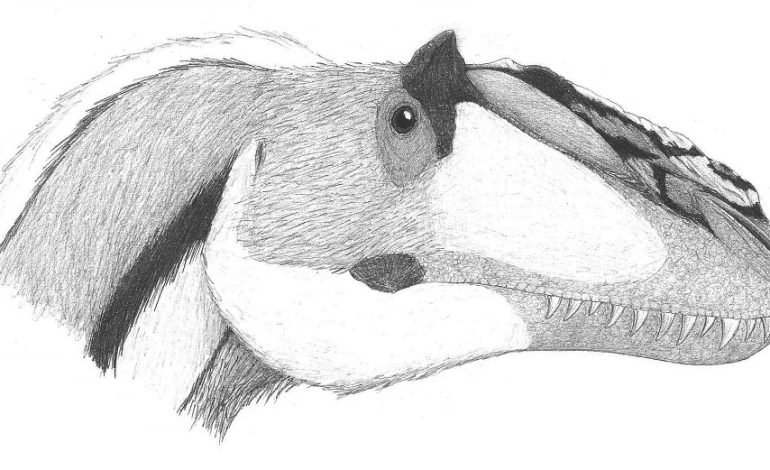
Local legend once believed the footprints belonged to a mythical phoenix but scientific research found that it belonged to a prehistoric predator, similar in size to the feathered Yutyrannus, whose fossils have been discovered in China dating back to the Cretaceous period.
“Trackways can reveal behavioural information and stories that fossilised bones alone cannot provide,” Dr Romilio said. “But long trackways such as this have historically been understudied due to the logistical difficulties of measuring them in detail in the field. “Our entirely digital approach allows us to capture, interpret and preserve all the measurements and calculations of fossil track sites on computer to provide a glimpse into the dynamic life of an ancient creature.”
The study was co-authored by Dr Lida Xing of China University of Geosciences, Beijing, and published in Geosciences.
Stay tuned to EyeOnLondon for the latest news and expert opinions.
Image: Pilsator, http://pilsator.deviantart.com/
Follow us on:



Subscribe to our YouTube channel for the latest videos and updates!

We value your thoughts! Share your feedback and help us make EyeOnLondon even better!