Isle of Skye was “stomping grounds” for Jurassic dinosaurs

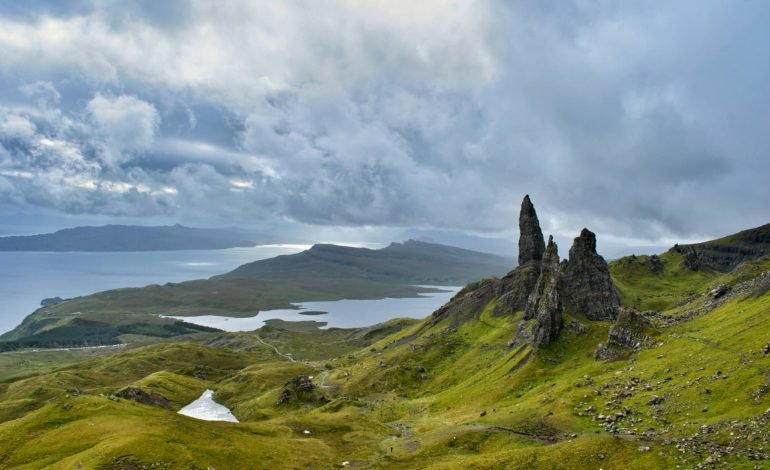
Jurassic-era dinosaurs left as many as 131 footprints at a newly discovered “stomping grounds” on the Isle of Skye in Scotland. That’s according to a study published earlier this month in the journal PLOS One by Tony Blakesley and colleagues at the University of Edinburgh.
The rocks on the Isle of Skye reveal an abundance of dinosaur footprints. This gives insight into their distribution and behaviour at a crucial moment in their evolution. The prints were left in the rippled sands of what was once a subtropical lagoon, dating back to the middle of the Jurassic period, around 167 million years ago.
The footprints are between 25 and 60cm long and comprise of three-toed tracks left by carnivorous theropods, and rounder “tyre-size” tracks left by four-legged long-necked sauropods. Compared with other fossil finds, the carnivore was likely a creature related to Megalosaurus, while the long-necked herbivore was possibly a relative of Cetiosaurus. Both dinosaurs are known from remains in the UK.
The longest trackway is over 12m long, making it among the longest known fossil footprint trackway on the Isle of Skye. The spacing and orientation suggests slow waling gaits and no consistent direction or interaction. The different creatures likely passed by the lagoon at different times.
It supports evidence of Jurassic-era sauropods being present at Scottish lagoons. This site contains a higher proportion of theropod tracks than similar locations. This likely indicates environmental differences between the different locations.
Tracks left by other dinosaurs including Stegosaurus are absent from the site, unlike elsewhere. Whether they were absent from the Isle of Skye or they just didn’t leave any footprints there is unknown.
“The footprints at Prince Charles’s Point provide fascinating insight into the behaviors and environmental distributions of meat-eating theropods and plant-eating, long-necked sauropods during an important time in their evolution,” the authors said. “On Skye, these dinosaurs clearly preferred shallowly submerged lagoonal environments over subaerially exposed mudflats. Intriguingly, the site also has some historical significance, as a place on Skye where Bonnie Prince Charlie landed and hid during his flight across Scotland following the Battle of Culloden.”
Stay tuned to EyeOnLondon for the latest news and expert opinions.
Follow us on:



Subscribe to our YouTube channel for the latest videos and updates!

We value your thoughts! Share your feedback and help us make EyeOnLondon even better!