How Galactic Collisions Sparked the Universe’s Most Magnificent Galaxies

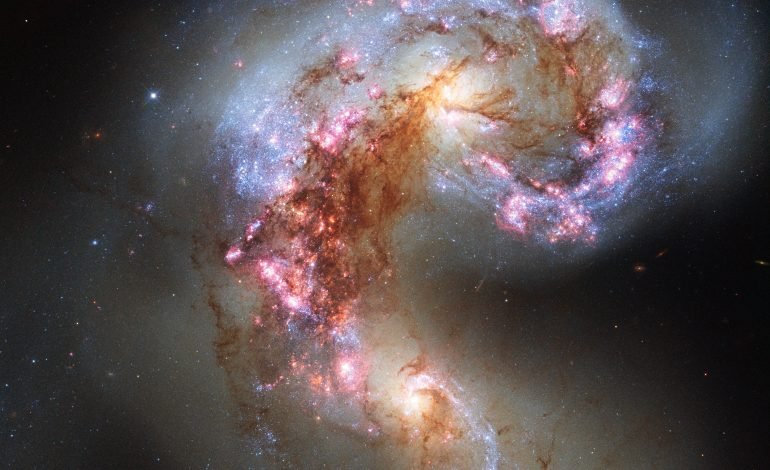
Galaxies crashing together 12 billion years ago may hold the key to the creation of the universe’s largest galaxies, according to groundbreaking research from the University of Southampton. The study, published in Nature, investigates the formation of elliptical galaxies, which differ in shape from the flat disc structure of the Milky Way, resembling bulging footballs instead. Astronomers have long sought to unravel this “intergalactic mystery,” and this research represents a significant step forward in understanding how these celestial giants emerged.
The findings suggest that intense cosmic collisions between disc galaxies caused vast quantities of gas—essential for star formation—to flow toward their centres, creating trillions of stars in bursts of activity. These events are thought to have occurred eight to twelve billion years ago, during a more turbulent phase of the universe’s evolution. Dr Annagrazia Puglisi, one of the lead researchers, explained:
“These cosmic collisions generated new stars at an extraordinary rate, redefining how we understand the early formation of galaxies.”
Explore the Wonders of Astronomy
NASA Astronaut Captures Stunning Images of Starlink Satellites
The study involved collaboration with the Purple Mountain Observatory and the Chinese Academy of Science, using data from Alma, the world’s largest radio telescope located in Chile’s Atacama Desert. Dr Qing-Hua Tan of the Purple Mountain Observatory highlighted the breakthrough:
“For the first time, we have real evidence that spheroids, the building blocks of elliptical galaxies, form through intense star formation episodes in the cores of distant galaxies.”
These findings demonstrate that gas was rapidly funneled into the centres of galaxies, feeding black holes and sparking star formation at rates up to 100 times faster than in the Milky Way. The researchers now aim to combine these insights with data from advanced telescopes onboard the James Webb and Euclid satellites, as well as the Chinese Space Station, to map the components of early galaxies and deepen their understanding of how the universe evolved.
Dr Puglisi added: “This work brings us closer to understanding the universe’s origins, providing a more complete picture of how galaxies were created during its formative years.”
For more insights into groundbreaking space research and updates on the latest astronomical discoveries, visit EyeOnLondon.
Follow us on:



Subscribe to our YouTube channel for the latest videos and updates!

We value your thoughts! Share your feedback and help us make EyeOnLondon even better!