Solar-Powered Data Centre Built in Farm Field Sparks UK Interest in Off-Grid Computing


A small off-grid solar data centre built in a rural field is now running 24/7 on solar power and Starlink satellite internet – with no need for grid electricity. Developed by a team of clean energy engineers and software developers, the project shows how advanced computing can be powered in remote locations using recycled hardware, smart planning, and natural light. As interest grows in low-emission digital infrastructure, off-grid compute models are now being explored by researchers and climate technology initiatives such as those tracked by Carbon Brief, which focuses on the intersection of energy, climate and policy.
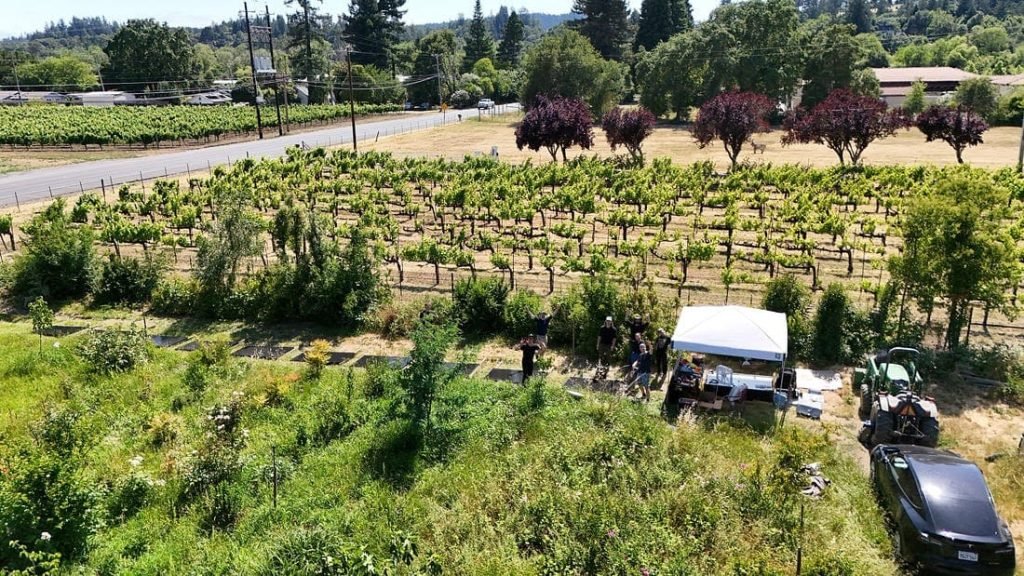
Assembled over several days on a rural site in California, the project was led by engineer Ben James and brought together contributors with experience in solar, battery systems, software, and high-performance computing, including several with backgrounds at Tesla and other clean tech companies.
The team used twenty surplus solar panels from a commercial site, borrowed GPUs and battery packs, and deployed satellite internet to build a system that now runs continuously, with no wired infrastructure.
Off-Grid, Online and Operational
The unit is housed in a converted grow-tent fitted with thermal management systems, filtration, batteries and server hardware. With efficient cooling and power balancing, the setup dissipates around 700 watts of heat. That’s enough to keep the high-performance hardware running reliably in field conditions.
At its centre is a workstation equipped with an RTX 4090 GPU. The team is currently running notebook servers, language models including Llama and DeepSeek, Docker jobs, and has begun preparing protein synthesis workloads. The entire platform is accessible via Starlink satellite internet and runs continuously using solar power and battery storage.
Despite its modest appearance, the setup demonstrates how a functional data centre can be built and operated without grid access or diesel generators – a capability that may soon become more valuable as demand for flexible, low-emission infrastructure increases.
A Collaborative Build, From Tweet to Tent
The idea for the build was sparked by a simple social media post. Within days, engineers, developers and hardware specialists had assembled online to plan and coordinate the project. Components were sourced through donation and loan, from solar panels and battery packs to GPUs, servers and structural hardware.
Contributors included battery engineers with years of experience designing solar storage systems, as well as software developers and data scientists familiar with managing high-performance compute environments.
The team set up the system in a farm field, working over several days to assemble, test and refine the power and heat controls. The result is a fully functional, energy-independent computing platform running live workloads.
New Possibilities for Remote and Temporary Use
While the system was built in the United States, the wider concept has begun to resonate with energy and infrastructure observers elsewhere.
Lightweight, rapidly deployable compute systems, especially those powered by solar and satellite, could be well suited to temporary field sites, environmental monitoring stations, creative projects, or mobile labs. The ability to deliver power and processing capacity without fixed infrastructure opens up new use cases across a wide range of industries.
As grid demand continues to grow in urban centres, and clean energy targets become more urgent, decentralised micro-compute solutions such as this may start to attract more serious attention.
Open Access Until June End
The team is currently offering access to the platform through the end of June, and inviting researchers, developers and creative practitioners to test its capabilities. AI experiments, modelling tasks and other data-heavy jobs can be submitted directly to the system – with no need to manage the backend infrastructure.
Ben James, reflecting on the project, said the goal was to show how solar, batteries and off-the-shelf hardware could be combined into a viable alternative to diesel generators or long grid wait times.
“We wanted to see if it was possible to build something fast, that works, using what’s already out there,” he said. “And it turns out, with the right people and a bit of space, it is.”
At EyeOnLondon, we cover stories where innovation meets everyday life – from clean tech to culture, science, and beyond. If you value independent reporting and intelligent insight, follow us for more. Subscribe at www.eye-on-london.com or join the conversation across our platforms.
Follow us on:



Subscribe to our YouTube channel for the latest videos and updates!

We value your thoughts! Share your feedback and help us make EyeOnLondon even better!