Lasers could be used to build structures in orbit

University of Florida (UF) engineering students, their professor, NASA’s Marshall Space Flight Center, and the Defense Advanced Research Projects Agency (DARPA) are working on a new technique using lasers to bend metal and build structures in orbit.
“We want to build big things in space,” UF engineering associate professor Victoria Miller, Ph.D.. “To build big things in space, you must start manufacturing things in space. This is an exciting new frontier.”
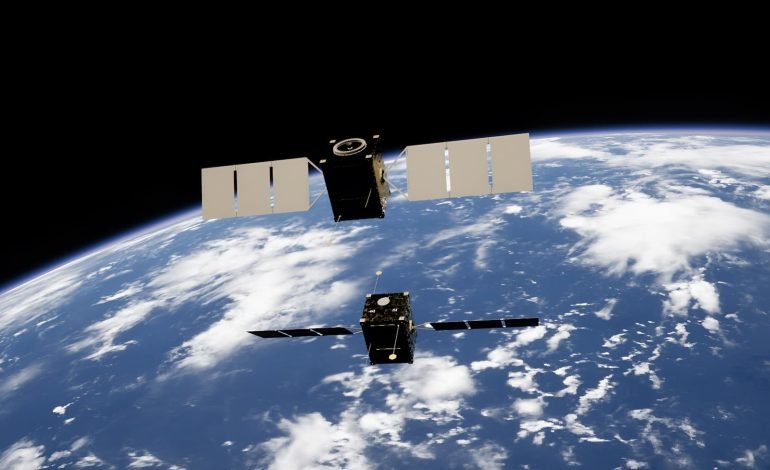
Miller said the project, known as NOM4D or Novel Orbital and Moon Manufacturing, Materials, and Mass-efficient Design, hopes to transform how we think about space infrastructure development. It could lead to a future large structures are constructed in space using advanced laser technology.
“We’d love to see large-scale structures like satellite antennas, solar panels, space telescopes or even parts of space stations built directly in orbit. This would be a major step toward sustainable space operations and longer missions,” team member Tianchen Wei, a third-year Ph.D. student in materials science and engineering, said.
UF was given a $1.1 million DARPA contract to carry out this unique research over three phases. While other universities are exploring various aspects of space manufacturing, only UF is focusing on lasers for space applications, Miller said.
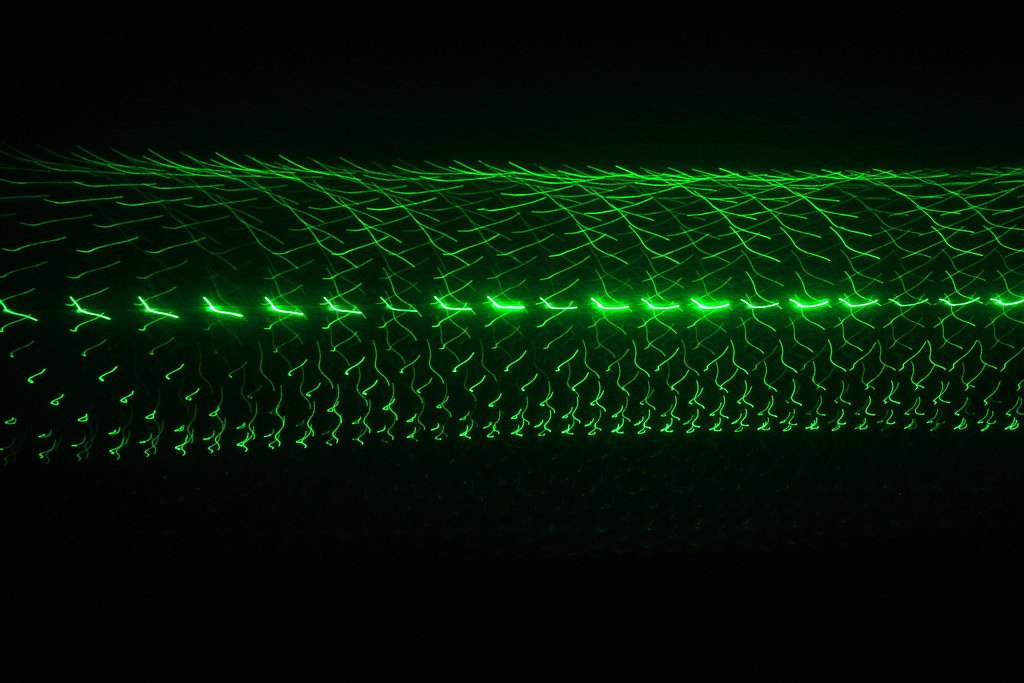
One challenge for the NOM4D project is overcoming the size and weight limits of rocket cargo. To address this, the team is developing laser-forming technology to trace precise patterns on metals to bend them into the right shape. If done correctly, the heat from the lasers would bend the metals without a human needed.
“With this technology, we can build structures in space far more efficiently than launching them fully assembled from Earth,” team member Nathan Fripp, also a third-year Ph.D. student studying materials science and engineering, said. “This opens up a wide range of new possibilities for space exploration, satellite systems and even future habitats.”
Laser bending, according to Miller, is complex, and getting things into the right shape is just one piece of the puzzle.
“The challenge is ensuring that the material properties stay good or improve during the laser-forming process,” she said. “Can we ensure when we bend this sheet metal that bent regions still have really good properties and are strong and tough with the right flexibility?”
Stay tuned to EyeOnLondon for the latest news and expert opinions.
Follow us on:



Subscribe to our YouTube channel for the latest videos and updates!

We value your thoughts! Share your feedback and help us make EyeOnLondon even better!