St Paul’s Gyratory Overhaul to Begin in April with Greyfriars Square Set to Transform City Pedestrian Life

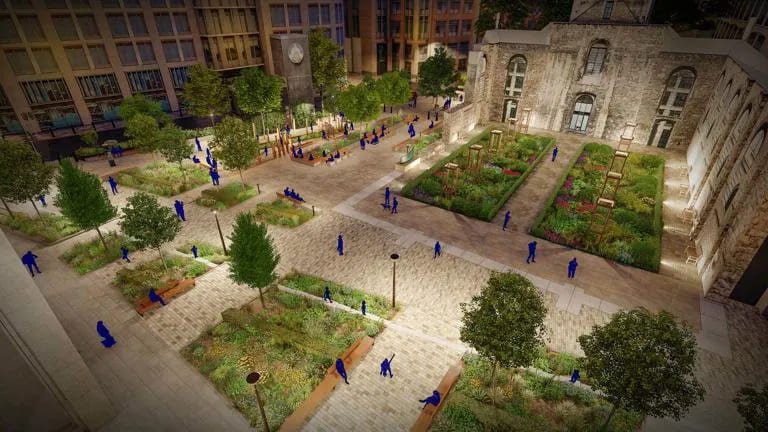
Londoners can expect big changes around one of the capital’s most historic landmarks as work officially begins this April on a major transformation of the St Paul’s gyratory system. Central to the plans is the creation of Greyfriars Square, a new public space that promises to become the largest open space in the City of London once completed. The 3,000 square metre piazza will sit just beside St Paul’s Cathedral, offering a much-needed green and pedestrian-friendly area in a part of London still dominated by its 1970s one-way traffic legacy.
This kind of investment in pedestrian space has been a long time coming, particularly in the City, where tourists and commuters often navigate a web of outdated crossings and cycling pinch points. With almost 1,500 square metres of road set to be replaced with wide pavements, and 800 metres of new cycling lanes running both east-west and north-south, the project aims to re-balance movement in this heavily trafficked part of town.
What’s more, the southern end of King Edward Street will be entirely closed to vehicles, making room for the new square, around the size of 11.5 tennis courts. It’s a bold move that reflects a wider shift across Europe’s major cities toward car-free civic spaces. According to the City of London Corporation, the project is part of its ongoing “Destination City” initiative, which aims to boost the City’s global status as a place to visit, live, and work.
Chairman of the Planning and Transport Committee, Shravan Joshi, said the scheme would “enhance all that the Square Mile offers” and described Greyfriars Square as
“a welcoming walking route that connects the Tate Modern to the future London Museum.” He added: “This is the biggest open space ever to be delivered in the City, with amenities that offer a place to rest, socialise and play.”
It’s also worth noting the timing. Construction starts 28th April, but the first phase alone is expected to take up to two years. Londoners used to squeezing through traffic at Ludgate Hill or dodging buses on King Edward Street will need patience but the longer view is a more accessible, greener City.
The project also fits with wider upgrades planned for the area, including developments linked to the new London Museum, which will move into the General Market buildings at Smithfield in the next few years. As the capital reconfigures post-pandemic, the effort to open up more outdoor public spaces has taken on new importance,especially in parts of the city that have often prioritised vehicles over people.
For those curious about how this ties into broader urban planning trends, the City of London’s walking and cycling strategy gives a clear overview of how they’re reshaping the Square Mile.
More infrastructure updates and information about evolving public spaces in the City of London can be found here at EyeOnLondon City.
[Image Credit: LDA Design for the City of London]
Follow us on:



Subscribe to our YouTube channel for the latest videos and updates!

We value your thoughts! Share your feedback and help us make EyeOnLondon even better!