Chamber Orchestra Of Europe Comes To The Barbican

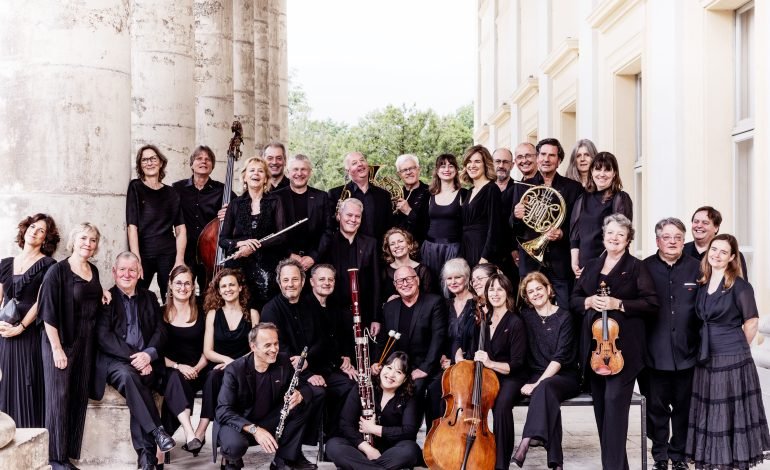
This Saturday (12th April at 7.30) The Chamber Orchestra of Europe performs in the Barbican for the first time since the pandemic. They will be directed from the piano by Sunwook Kim in Beethoven’s Third and Fourth Piano Concertos and Stride by contemporary composer Anne Clyne, a work that is based on fragments of Beethoven’s Pathétique Sonata. The concert is the finale of a tour that, over the last month, has taken Kim and the orchestra from Berlin, Liège, Toulouse and Esterházy Castle in Austria to Daejeon, Daegu and Seoul in his home, South Korea.
Although its headquarters has always been in London, the Chamber Orchestra of Europe (COE) does not play here as often as it used to, mainly thanks to the costs of bringing the whole orchestra. While many of its players have come from the UK over the years, most of them are spread all around Europe, as befits the name and the vision. It was founded in 1981 by musicians coming to the end of their time in the first selection for the European Community Youth Orchestra. They had discovered that playing together took their musicianship to a whole new level, constantly learning from each other’s traditions and techniques.
That has been the ethos ever since. Although they all have other work in the finest orchestras with permanent homes around Europe, they come together for about ten tours a year to renew that sense of adventure and companionship. Some of the original members still remain, and those that have succeeded them have been hand-picked by their colleagues so that the standards and ideals have never been diluted. They have never had a Principal Conductor, though they have enjoyed defining partnerships with Claudio Abbado, Nikolaus Harnoncourt, Bernard Haitink in the past, and nowadays with Yannick Nézet-Séguin, Sir Antonio Pappano, Sir Simon Rattle, Sir András Schiff and Robin Ticciati. They prefer to choose soloists and directors the same way they choose each other – by democratic invitation. The music they play ranges from the 18th and 19th-century classics right through to the most challenging works of our own era.
The relationship with the Barbican goes right back to the beginning. In fact, the COE was the first orchestra to play in the hall, before it opened officially, using an acoustic test to fill it with an audience of potential supporters. Since then, it has had periods when the hall has been its natural home in London, but the closeness has waned over the last couple of decades as circumstances have changed, so it is good that the ties have not been forgotten.
Over the next few months, the players will return to their home orchestras, then reassemble in the US in June for a festival in Vail, Colorado, before spending a week with the conductor of the Philadelphia Orchestra and Metropolitan Opera, Yannick Nézet-Séguin, at the summer festival in Baden-Baden. This has become a regular point in the calendar for them, and since 2014 they have recorded the three great Mozart comedies (The Marriage of Figaro, Così fan tutte and Don Giovanni), along with all the Beethoven, Schumann and Brahms symphonies. This year, the works will include Mozart’s Requiem and Great C Minor Mass. London deserves to hear them too.
For more on the Chamber Orchestra of Europe’s upcoming international appearances, visit their official website.
For more performances, reviews, and interviews from the world of classical music in London and beyond, visit EyeOnLondon. We’d love to hear your reflections in the comments.
Follow us on:



Subscribe to our YouTube channel for the latest videos and updates!

We value your thoughts! Share your feedback and help us make EyeOnLondon even better!