The Great Mughals: Power, Art and the Legacy That Shaped India


The Great Mughals: Art, Architecture and Opulence at the V&A until 5th May is the museum’s return after more than 40 years to the fascinating subject of the courts of India’s Mughal emperors.
“Mogul” is a word that has come down to modern usage to mean, and I quote from the dictionary, “a person who controls, either through personal ownership or a dominant position, any media enterprise”. In current times, it points to the new race of billionaire techno-oligarchs: Bezos, Zuckerberg, Musk.
“Mogul” is a development of “Mughal”, but the Mughals were so much more: they had such fabulous wealth that the concept of spending it was unknown to them—something they have in common with their modern counterparts—but unlike them, their wealth was transformed into art, design, and dazzlingly lavish luxury that is matchless in history.
This time, instead of essaying the whole dynastic spread of nearly 400 years through objects, their exhibition picks out the application and cross-pollination of the arts and crafts patronised by three of the earliest and most fascinating Mughals: Akbar (c.1556-1605), Jahangir (c.1605-1627), and Shah Jahan (c.1628-1658). They were the descendants of the legendary Mongolian tyrant Timur as our history knows him—Tamburlaine, as Shakespeare immortalised him. Mughal is the Persian spelling of Mongol.
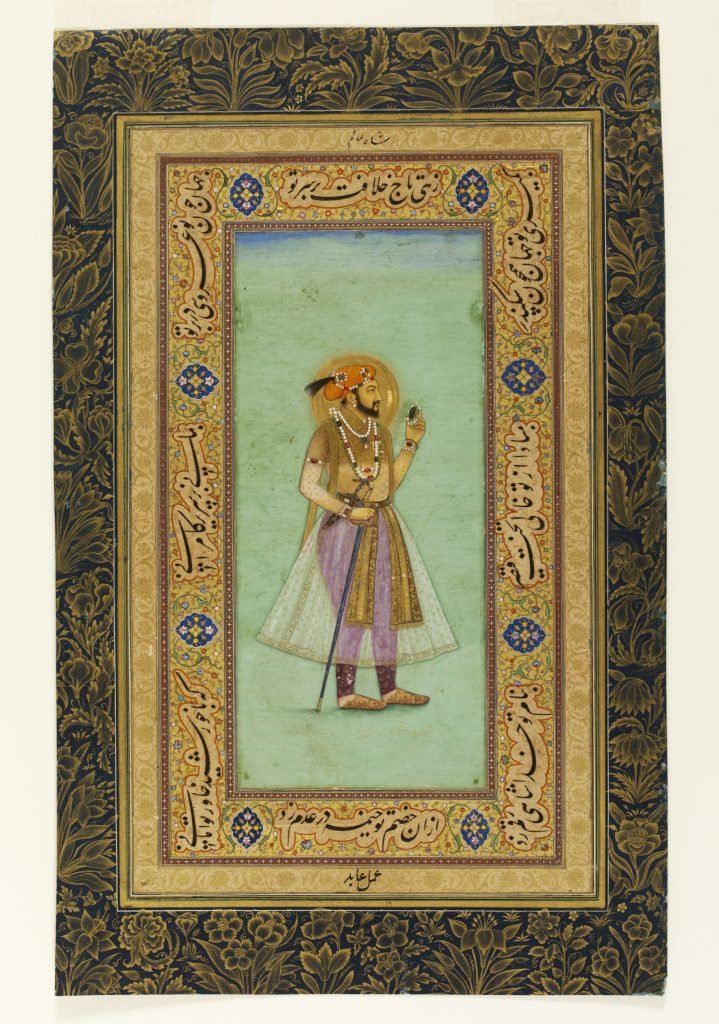
The dynasty dates from when Babur, a Timurid prince, swept down from the north to take Delhi in northern India in 1526, and their conquests across the majority of the subcontinent added more and more to their wealth—from Kabul in the north, Andhra Pradesh in the south, Karachi in the west, and Nagaland in the east.
It was a religiously tolerant court in which Persian was the lingua franca, and artists—including painters, calligraphers, and architects from across the vast area—were recruited to share the imperial workshops in an inexorable forward motion of creativity. “Hindustani artists, Iranian masters and even a few Europeans came together in the imperial workshops to create a new, hybrid art,” said the exhibition’s curator, Susan Stronge. What they created through these three reigns became definable as Mughal art.
So this is the first attempt to map the international nature of the arts and culture of the Mughal courts—a century before Robert Clive’s voracious East India Company appropriated the empire and its wealth.
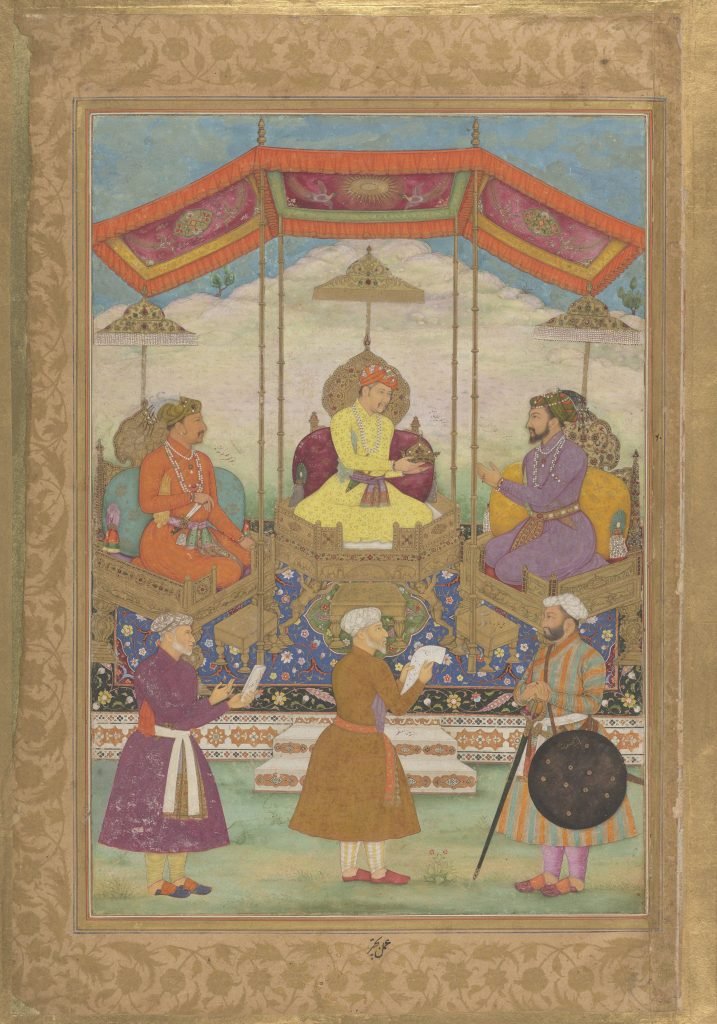
Akbar couldn’t read or write, but he didn’t need to. He had an army of scholars around him whose only job was to read to him, mainly from books of myth and legend—but he had a celebrated memory, so woe betide any reader who tried to skip a bit. In 1589, in the last few years of his reign, he commissioned an illustrated biography, the Akbar-Nama, whose gloriously coloured and animated pictures showed the male and female labourers building his great fort at Agra.
It was Akbar who established the imperial workshops, peopled by the finest craftsmen and artists, to make a huge range of artefacts from textiles and carpets to paintings and gold and silverware. They also created manuscripts for his House of Books, in which Iranian masters supervised at first largely Hindustani artists, often working in different styles. They made the illustrated volumes of Hamza-Nama, epic tales of legendary battles and sorcery. In the book is a description of an attack by firangis, or Franks, the Mughal name for Europeans. There is even a lavishly illustrated book from the 1590s entitled Iskandar-Nama—the Book of Alexander.
In the images, which could have been made yesterday, are frequent glimpses of court life. A manuscript in the Akbar-Nama, an image of the birth of his son Murad, gives a rare and intimate view of the women’s quarters.
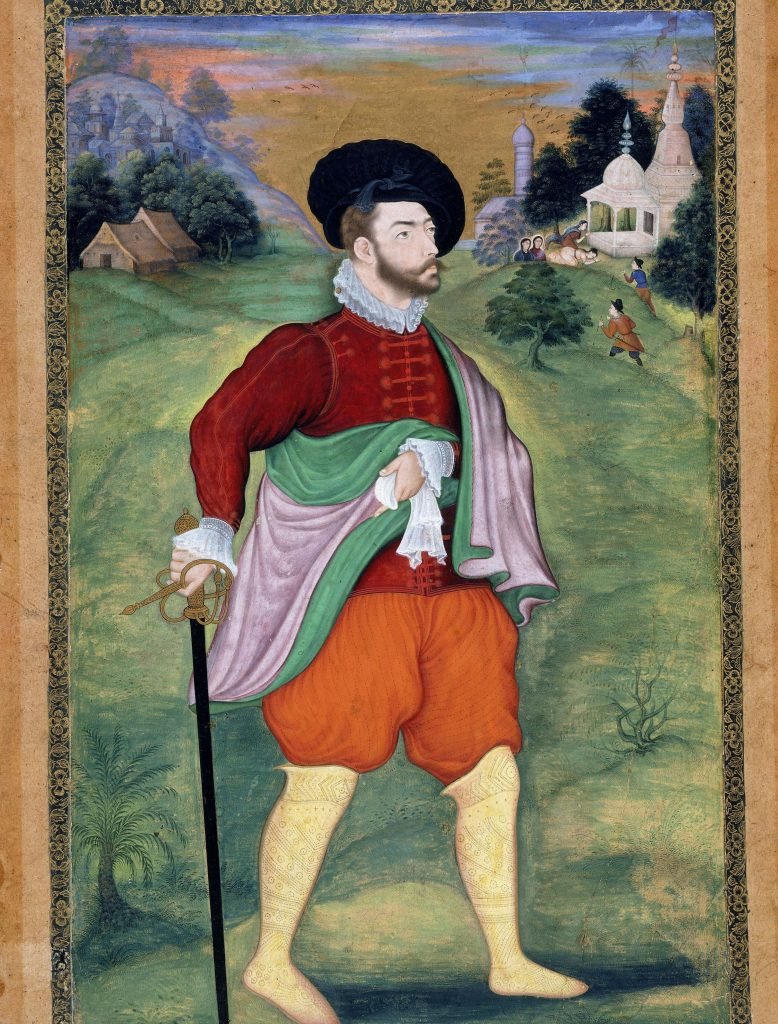
He was succeeded by his first son, Salim, who renamed himself “World Seizer”, or Jahangir. He inherited incalculable wealth and Akbar’s cultured instincts. He brought more artists into his workshops, including some from Europe who brought enamelling to the court, which was to become one of the signature Mughal accomplishments. His artists worked on new materials, such as jade. England’s first ambassador to Jahangir’s court was Sir Thomas Roe, who wrote to the future Charles I that he had witnessed “the treasury of the world”.
Akbar and Jahangir controlled their burgeoning economy by minting coinage—coins that were tiny works of art themselves—and Jahangir’s powerful empress, Nur Jahan, was the only Mughal consort to have coins struck in her name.
The Mughal emperors introduced festivals as a part of court life, and it was Akbar who introduced the custom of addressing his people from an upper-storey balcony—a ritual followed by royalty around the world ever since. It was at these events that the emperor’s craftsmen would put on display their finest creations, demonstrating their inventiveness, ingenuity, and virtuosity. It was Jahangir who, in 1619, commissioned a new throne from Augustin, a French jeweller, who was given the honorary title of Hunamond, The Artist.
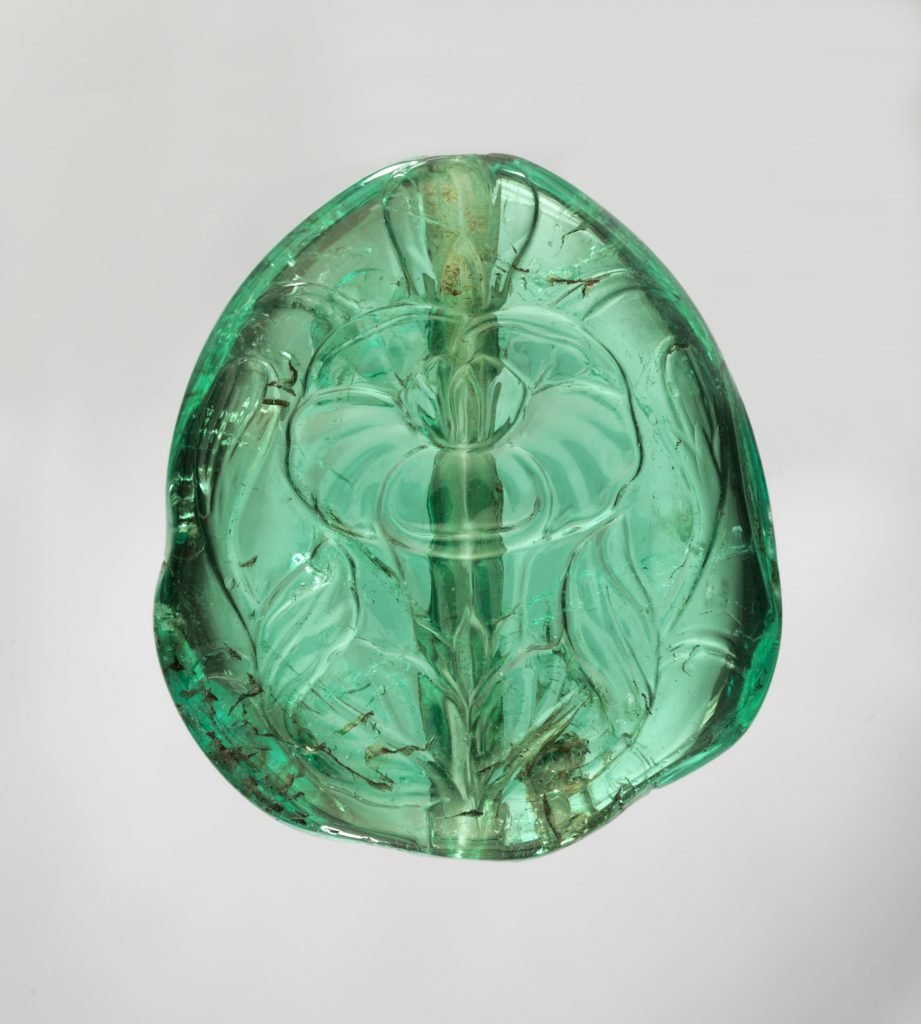
And then, in 1628, came Shah Jahan, Jahangir’s heir, who commissioned possibly the most famous building in the world—the Taj Mahal, commissioned in memory of his beloved wife, Mumtaz Mahal. It was in his reign that a unified creativity developed a harmony in a new style, replacing traditional patterns. Floral motifs dominated, from gold vessels to border decorations on manuscripts, to armour, and even carved into precious stones.
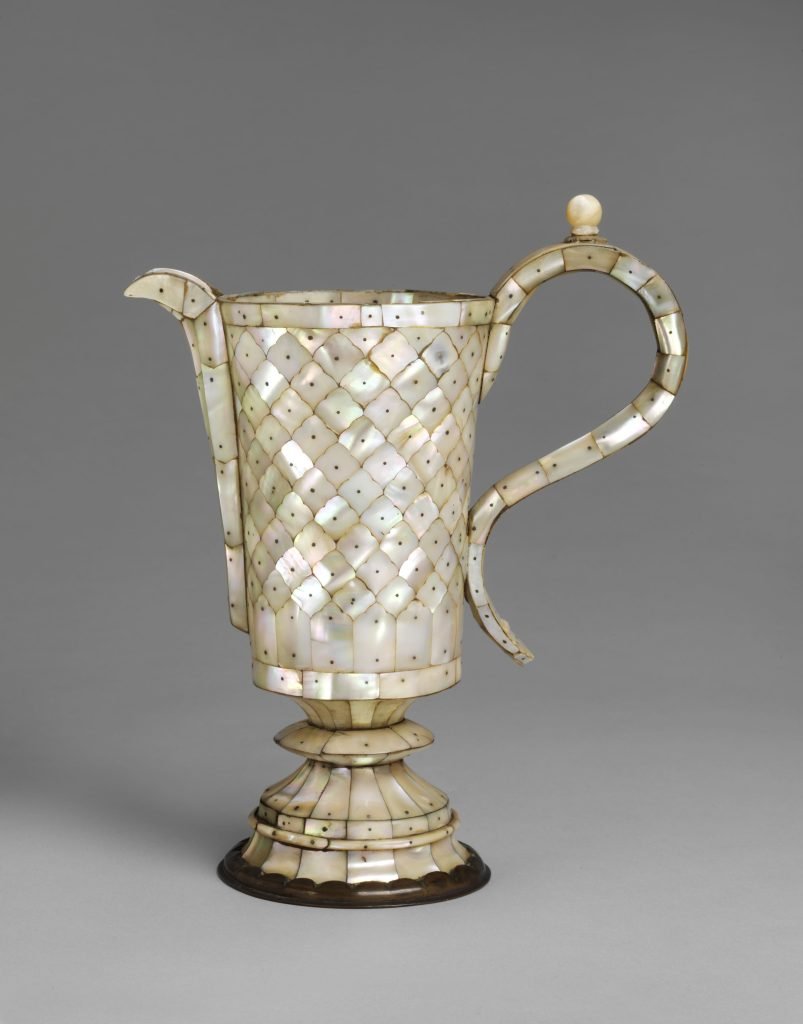
Shah Jahan’s beard is said to have turned white during the mourning period, and it was the Taj Mahal he built in her memory that gave the style to all designs in his era and after, with blossoms evoking an ideal world untouched by disease, decay, or poverty. Perhaps the finest single object in the exhibition is his almost white jade wine cup which, ironically, the emperor probably never drank from, because he foreswore alcohol.
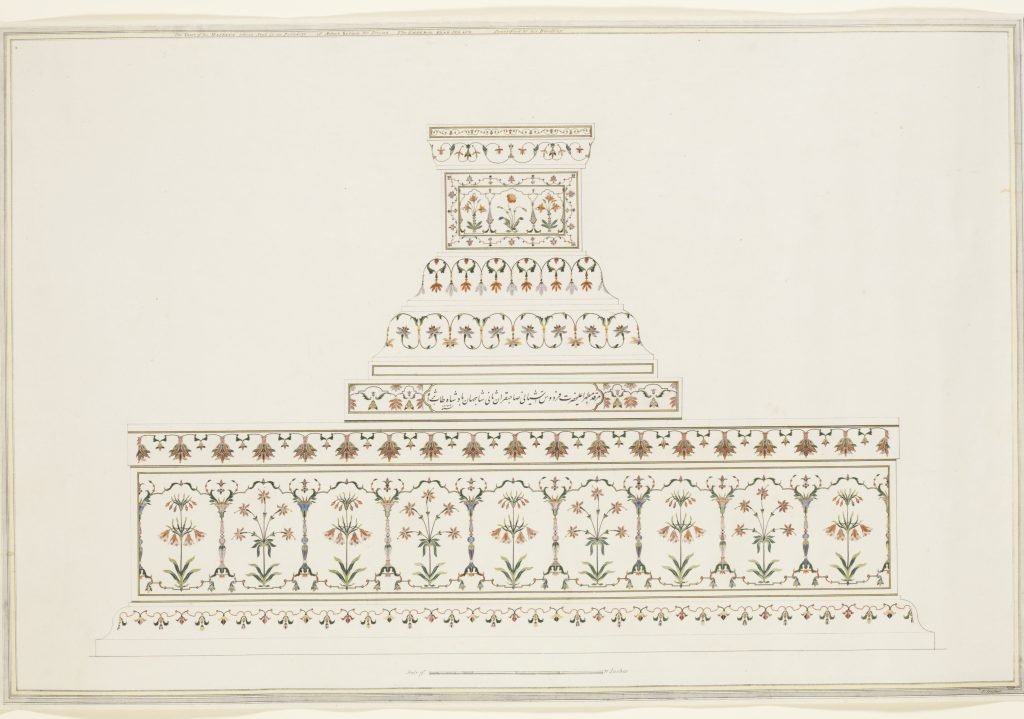
However, under Shah Jahan’s heir, Aurangzeb, the creativity of the empire went into decline. Nevertheless, the imprint of the Taj Mahal style, with its floral marque, was indelible, adopted by subsequent courts across the subcontinent and beyond—Hindu, Sikh, or Muslim.
Exhibition Details
Title: The Great Mughals: Art, Architecture and Opulence
Location: Victoria & Albert Museum, London
Dates: Now until 5 May 2025
Opening Hours: Daily 10:00 AM – 5:45 PM, Friday until 10:00 PM
Ticket Prices: £18 Adults | £12 Concessions | Free for Members
Book NowFor more insights on London’s best exhibitions, visit EyeOnLondon and share your thoughts in the comments!
Follow us on:



Subscribe to our YouTube channel for the latest videos and updates!

We value your thoughts! Share your feedback and help us make EyeOnLondon even better!