Barry Martin (1943–2025): A tribute from EyeOnLondon


It is with great sadness that we share the news of the death of our dear friend and Chess columnist Barry Martin, who died on 12th December 2025.
Barry was part of EyeOnLondon from the very beginning. He believed in what we were trying to build and supported it with generosity, curiosity and good humour. His presence helped shape the intelligence and warmth of the publication, and his absence will be felt deeply.
I first met Barry at the Chelsea Arts Club, where he had once been Vice-Chairman. We had already worked together for many years at KCW Today, where Barry was the Chess columnist, and a close bond grew out of our shared interests. Much of that time was spent talking about art, literature, philosophy and chess, usually over a glass or two of wine at the Club. From the outset, he was someone I trusted. He was thoughtful, kind, quietly principled and very funny, and he carried an extraordinary depth of experience with great modesty.
Barry was born on 20th February 1943 in Amersham, Buckinghamshire. Trained at Goldsmiths and St Martin’s School of Art, the foundations of his artistic thinking were formed early, and over time he developed a very recognisable artistic voice. His work grew out of British kinetic art, shaped by movement and time, and by a belief that sculpture does not settle into a single meaning. As he once put it to me, “It shifts as you stand with it.” He worked with a sculptor’s understanding of materials and with an artist’s sensitivity to rhythm and balance.
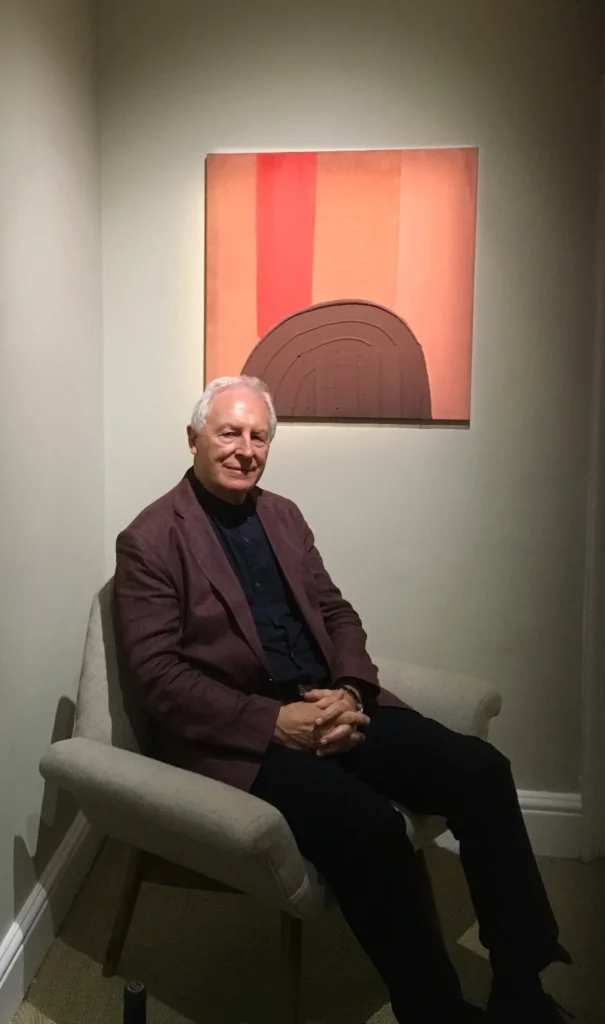
Over many years of making, Barry’s work found its place within post-war British art. It came to be held by institutions including the Tate, the V&A, and even the National Portrait Gallery, details he rarely felt the need to dwell on.
Teaching mattered deeply to him too. He held posts at the Royal College of Art, the Slade School of Fine Art, Goldsmiths and the Royal Academy Schools, and was respected for his seriousness of thought and the care he gave to students. He encouraged independence, close observation and intellectual honesty, shaping generations of artists.
Barry also had a personal connection to the ideas that reshaped modern art at its most radical. He had known Marcel Duchamp’s wife, and Duchamp’s thinking stayed close to him throughout his life. Only recently, Barry wrote for EyeOnLondon about the forthcoming Marcel Duchamp exhibition at MoMA in 2026, reflecting on how Duchamp turned looking into an act of thought. In that piece, Barry wrote that Duchamp’s work proposes
“a way of looking that is also a way of thinking”
a line that could just as easily describe his own approach to art. He spent a lifetime exploring how objects behave in space and time, and how meaning emerges when the viewer brings patience, memory and judgement to what they see.
For Barry, art and chess were inextricably linked. He approached both with care, curiosity and a keen interest in how people behave under pressure. In one of his final essays for EyeOnLondon, Staunton of Arabia: A Chess Legend Reborn, he wrote that writing about chess is centred on the life of a chess player, with all its ups and downs. That understanding shaped his long involvement with the Howard Staunton Society, where he served as Honorary Secretary and later Vice-Chairman.
He wrote about chess with humour, passion and a wonderfully personal sense of perspective. I will miss his fondness for exclamation marks!!! They were always there for a reason. If you ever suggested he might use fewer, the next article would arrive with more. Whether this came from mischief or instinct was never entirely clear. Either way, his personality and passion were embedded in every punctuation mark and editing his work was always good fun.
Last year, Barry had asked me to write the introduction to Chess Through the Looking Glass, a collection of essays he was putting together with his close friend Grandmaster Ray Keene, the Times chess columnist. The book brings together all the articles Barry wrote for EyeOnLondon and Ray’s articles for Daniel Johnson’s, The Article, and it was a pleasure to be a part of it. His intelligence and humour run through every page. He took real pleasure in the praise the book received and spoke excitedly about it when we met. He also genuinely believed in EyeOnLondon. He read every edition from start to finish and, when we met, always made a point of commenting on individual writers and their work, with real attentiveness and care.
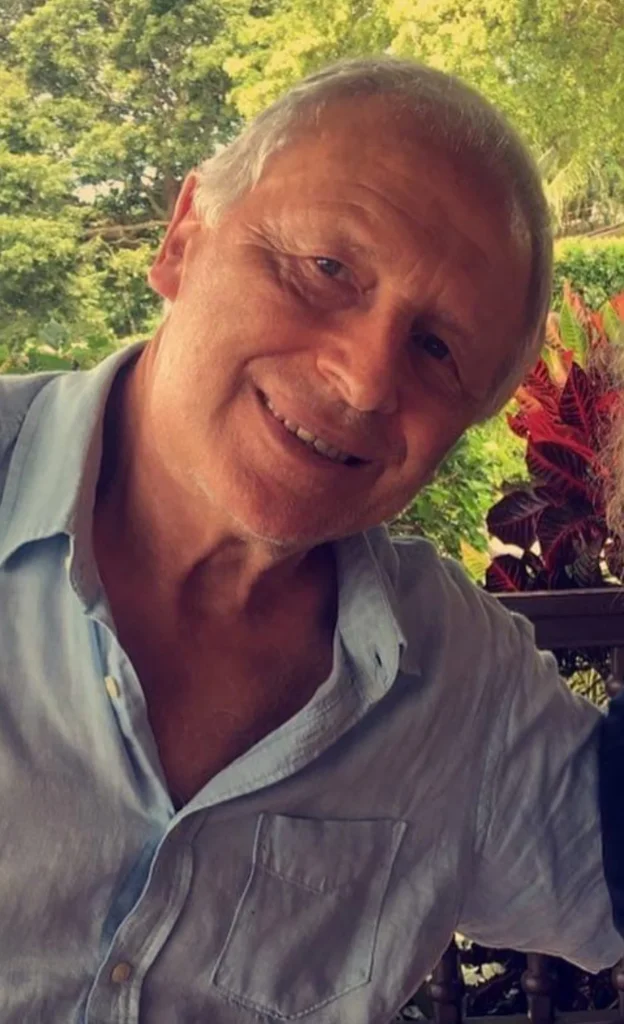
What I will miss most is his sense of humour. Barry saw irony everywhere and took genuine delight in it. He never took himself too seriously and was always on the side of the arts and the underdogs.
I always found that time mattered with Barry. The more you gave him, the more he gave in return. He was insightful, humourous, and had a way of seeing things that stayed with you – always comical yet philosophical at the same time. His work, whether an article, a painting or a sculpture, asks for that same patience. The longer you stay with it, the more it opens up, very much like himself.
Barry Martin is survived by his wife Sarah, his daughter Jessie, and his family, to whom we extend our deepest sympathies.
Rest among kings, queens and rooks, dear Barry. We will miss you greatly!
For more writing that connects art, chess and the people behind them, explore EyeOnLondon and read Barry’s essays alongside the work of our contributors.
[Image Credits | Jessie Martin]
Follow us on:



Subscribe to our YouTube channel for the latest videos and updates!

We value your thoughts! Share your feedback and help us make EyeOnLondon even better!