Winter Evenings: Classical CD Reviews for the Festive Season


In this Winter evenings selection we bring together new and notable recordings that reward close listening. From Handel’s Chandos Anthems, poised between English tradition and operatic ambition, to Shostakovich and Hindemith shaped under political pressure, these discs reflect composers writing with something at stake. There is also Haydn at a turning point in the string quartet, and a remarkable historical release preserving Albert Sammons in his final public concerto performance. As ever, the focus is on musical substance, performance quality, and recordings that stand the test of time.
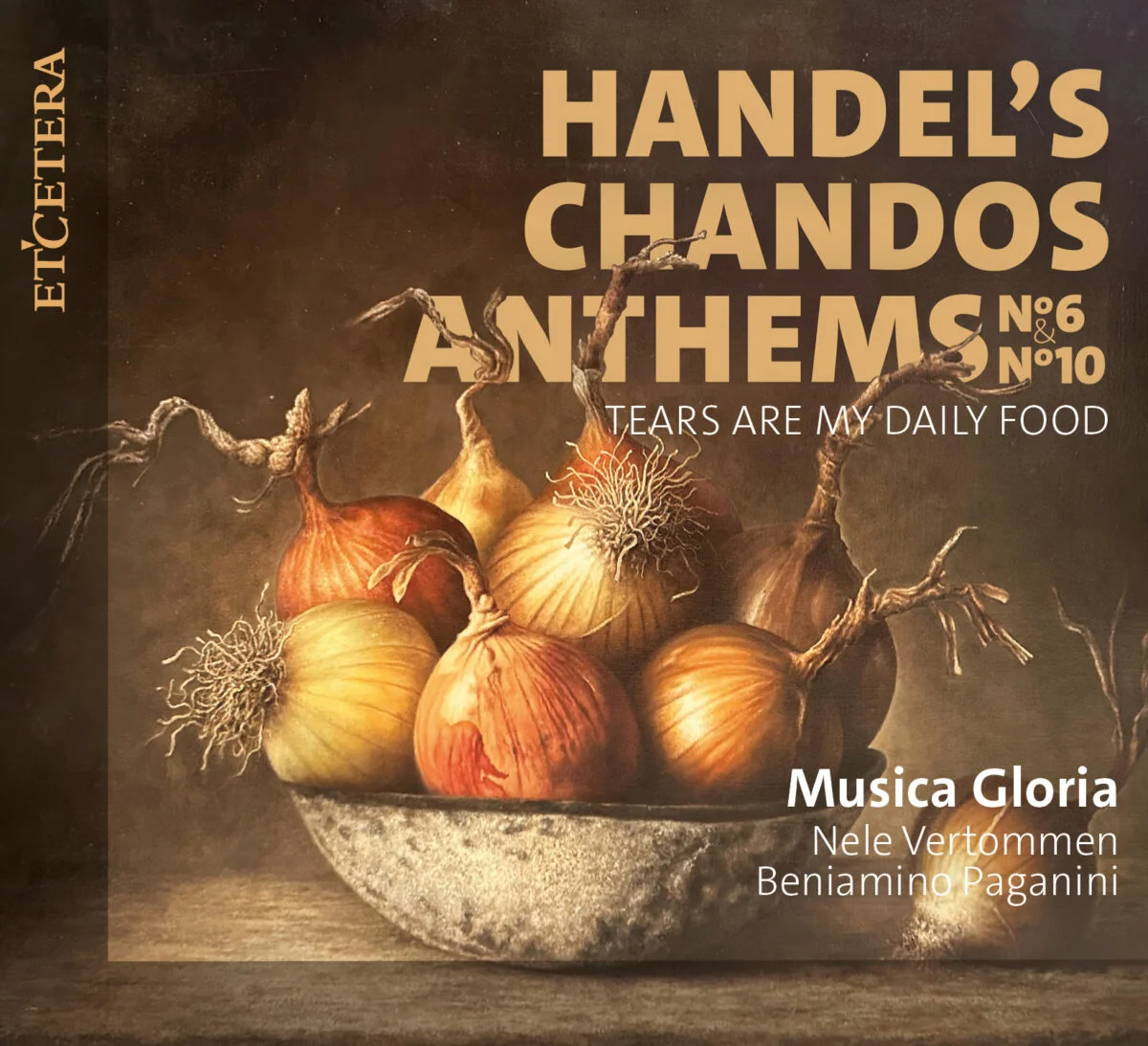
Handel: Chandos Anthems 6 & 10
Musica Gloria – Et’cetera Records KTC 1858
Handel
Chandos Anthems 6 & 10
Concerto for Oboe, Strings and Continuo, HWV 302a
Musica Gloria
Beniamino Paganini Keyboard & Co-Director
Nele Vertommen Oboe & Co-Director
The anthems Handel wrote for Henry Brydges at the church he frequented near Stanmore between 1717 and 1719 are the bridge (forgive the pun) between the anthems of Purcell and Handel’s later oratorios. They are known as the Chandos Anthems because Henry became Duke of Chandos a year later, then a year after that lost all his money in the South Sea Bubble – otherwise Handel would probably have continued to write music for him. This is a meticulous recording from a group based in Flanders, recording in Antwerp. They have gone to the trouble of bringing in the specialist in 16th–18th century English, David Crystel, to advise them on pronunciation of the time, particularly rolling their ‘r’s a little and not swallowing the vowels. I’d like to say this makes a huge difference but as sung it just makes rhymes work better. The vigorous vocal group is exceptionally good, and a shout out to tenor André Perez Muiño and alto Sophia Faltas. The playing of the four-movement concerto is equally finely balanced and delivered with vim. A terrific disc.
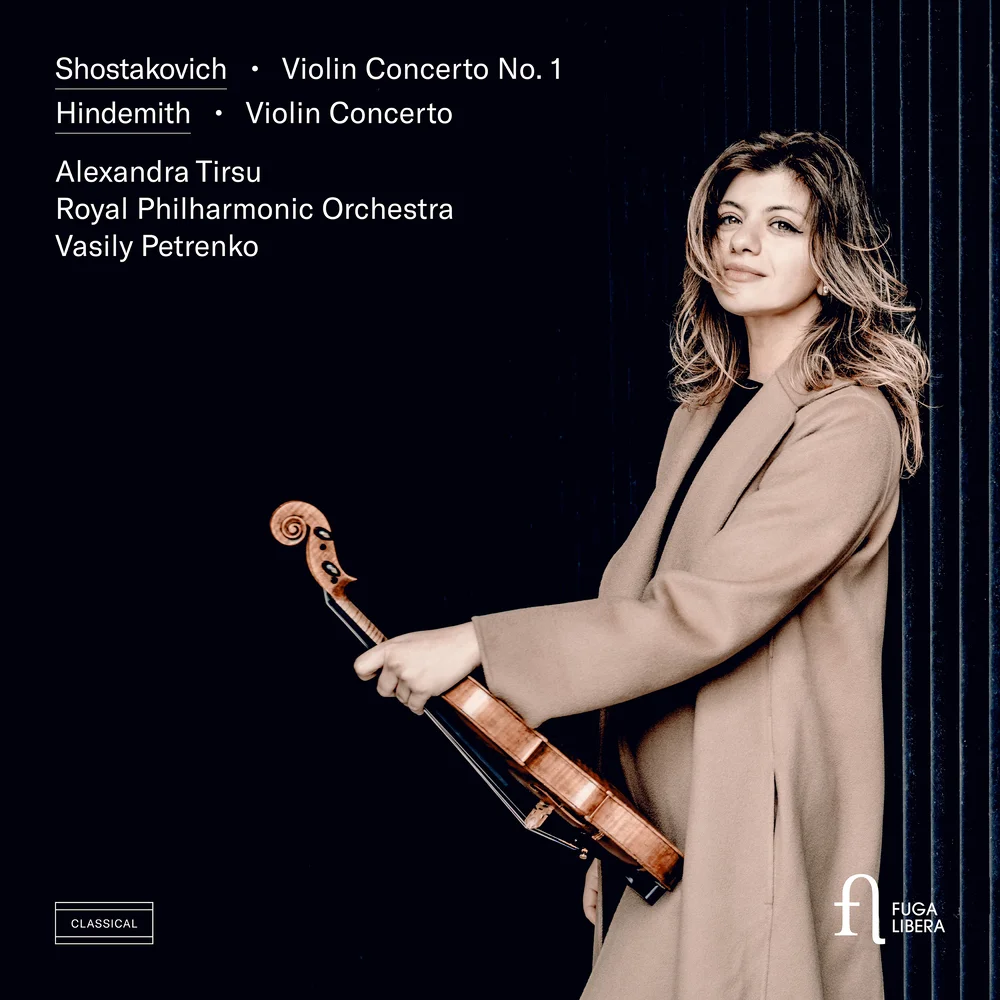
Shostakovich & Hindemith: Violin Concertos
Alexandra Tirsu – Royal Philharmonic Orchestra – Vasily Petrenko – Fuga Libra FUG859
Shostakovich
Violin Concerto No. 1
Hindemith
Violin Concerto
Performers
Alexandra Tirsu Violin
Royal Philharmonic Orchestra
Vasily Petrenko Conductor
I admit a huge conflict of interest in recommending this recording because I wrote the liner note for it but Tirsu’s debut concerto disc is superb. These are two works by composers who were both dealing with actual and potential persecution: Shostakovich because Stalin thought his music critical of him (he was right), Hindemith because of Nazi threats. Tirsu is from Moldova and she and Petrenko understand the fragility of civilised society intuitively. Her searing playing, the sustained tension, in the first and slow movements (especially the extended cadenza) of the Shostakovich is frightening. She also, though, has the technique to deal with the fast movements in both concertos with enormous energy and grit. The Hindemith concerto is less daunting but still a stern test of musicianship. She is a very fine violinist indeed and London audiences can judge for themselves when she makes her live concerto debut here playing Prokofiev’s First Violin Concerto with the RPO in Cadogan Hall on 4 March. As to the RPO on this disc, the wind and brass ensemble playing is of the highest quality.
Classical Music — More from EyeOnLondon
Continue reading with reviews, festival highlights and London music features.
September classical CD reviews
A round-up of recent releases, with clear-eyed judgement and listening notes.
Read the reviewMore Classical Music
Enescu Festival 2025: Bucharest highlights
A focused guide to standout concerts and the scale of this major European festival.
Read the highlightsMore Classical Music
Steinway in London
A London story with craftsmanship at its centre, and the sound-world behind a famous name.
Read the featureMore Classical Music

Haydn: String Quartets Op. 76, 1–6
Quatuor Arod – Erato 5021732875211 (2 CDs)
Haydn
String Quartets Op. 76, 1–6
Quatuor Arod
Erato 5021732875211
2 CDs
Although written in the late 1790s, these quartets are really the first that show how the form was to develop through the 19th century. And while they were heard at the Esterházy court, Haydn was more interested in their reception in London, where he had been the toast of audiences all decade (earning him much more than his salary from his aristocratic employer in Austria-Hungary). By then Haydn had developed the form from an incidental by-product of domestic music-making into a vehicle that could match the symphony and concerto in its expressive depth. This complete recording of the set is not quite ‘period’. The Quatuor Arod use ‘modern’ violins but bows modelled on those from Haydn’s time. The result is a mellow and flexible sound that allows plenty of articulation but avoids the scratchiness modern bows can produce, particularly on the cello. It is a highly successful compromise and I like their approach more than any I have heard for a long time.

E. J. Moeran: Symphony & Violin Concerto
Albert Sammons – BBC Symphony Orchestra – Sir Adrian Boult – SOMM Recordings ARIADNE 5045
E. J. Moeran
Symphony & Violin Concerto
Performers
Albert Sammons Violin
BBC Symphony Orchestra
Sir Adrian Boult Conductor
Label
SOMM Recordings ARIADNE 5045
Moeran occupies a space in British music very similar to Arnold Bax: after Elgar, younger than Vaughan Williams. Indeed Bax and Moeran had a lot in common (though they did not necessarily like each other). Both were captivated by landscape – in Moeran’s case Ireland and Norfolk, in Bax’s, Ireland and Sussex. Both were inhibited by too much alcohol, though Moeran had the excuse that he spent much of his life in pain after being wounded as a motorcycle despatch rider in WWI.
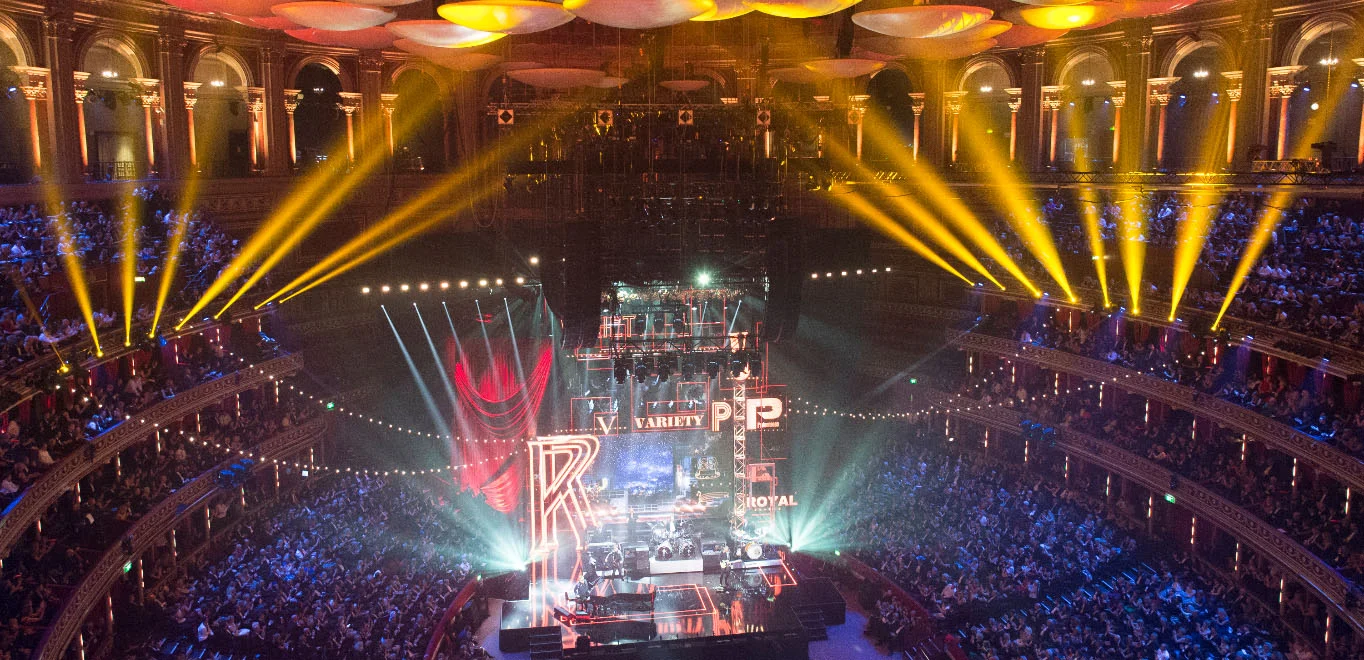
This disc is most important not so much for Moeran’s music (fine though it is) but because it presents the last ever public concerto performance by Albert Sammons, along with May Harrison almost certainly the finest English violinist of the first half of the 20th century. By 1946, when this concert was given in Norwich, Sammons was beginning to suffer from Parkinson’s disease at only 60. Although he was famous for his interpretation of Delius and Elgar, his late performances of Moeran’s concerto were treasured by the composer. As a work it hangs together strongly and is unusual in having the wistful slow movement last. Moeran liked too Boult’s careful preparation of the symphony three years later for this Royal Albert Hall concert. In these recordings, beautifully remastered by Lani Spahr, one can hear why, 80 years on.
Taken together, these recordings are not seasonal curiosities but discs that stand up to repeated listening. They come from composers writing under constraint, and from performers attentive to detail rather than effect. Readers who wish to explore further will find a broad range of comparable recordings through Presto Music, while those interested in Handel’s years at Cannons and the background to the Chandos Anthems may find the material published by the Handel and Henderix in London of interest. For wider critical and performance context, BBC Radio 3 continue to offer a useful point of reference.
Discover more classical music coverage and recordings worth your time at EyeOnLondon.
Follow us on:



Subscribe to our YouTube channel for the latest videos and updates!

We value your thoughts! Share your feedback and help us make EyeOnLondon even better!