Measuring the giants of landscape painting: Turner & Constable

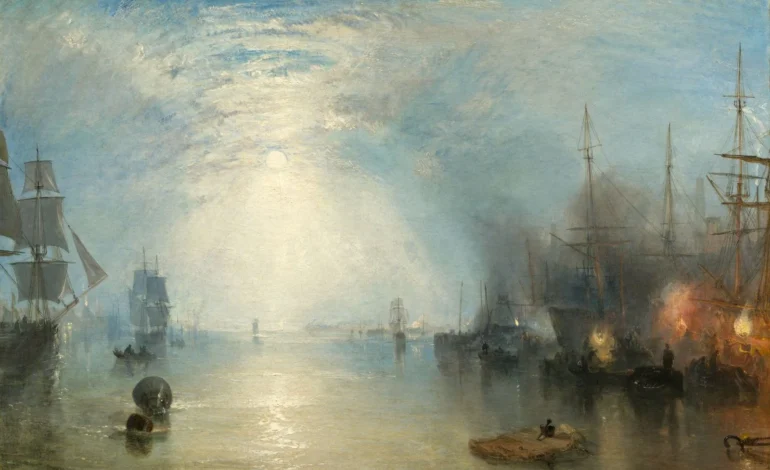
TURNER AND CONSTABLE: rivals and originals | Tate until 12 April, 2026.
We love high-wire rivalries between contemporaries in the art world, but we’re never very good at analysing them: Leonardo v Michelangelo; Dickens v Trollope; Picasso v Matisse. But the one that is closest to home has, unbelievably, never been properly explored at all, until now.
This exhibition sets out to untangle the intertwined careers of J. M. W. Turner and John Constable, whose backgrounds, personalities and approach to their work could hardly have been more different but whose careers glanced and crashed almost throughout their lives.
Arts & Culture — More from EyeOnLondon
Recent writing on art, history, books and the people who shape cultural life.
Barry Martin obituary
A tribute to the writer, critic and broadcaster who shaped arts coverage for decades.
Read the articleMore Arts & Culture
Secret Maps at the British Library
Exploring rare and revealing maps that chart power, secrecy and imagination.
Read the articleMore Arts & Culture
Hogarth at Barts Great Hall
William Hogarth’s paintings and their continuing presence in a historic London space.
Read the articleMore Arts & Culture
They were born within 12 months of each other, Turner in 1775 in London, the son of a Covent Garden barber, and Constable, one of six, in 1776 to a comfortably off Suffolk grain merchant. Constable could barely tear himself away from the scenes around his birthplace at East Bergholt, while Turner couldn’t wait to get abroad and, in fact, was painting Mediterranean scenes from exhibited pictures and others’ sketches before he ever left London.
Turner never married, though he had at least two daughters (who may appear in his 1815 oil painting Crossing the Brook) with Sarah Danby, and a bravado love life. At the age of 40, Constable married the daughter of a wealthy lawyer after a seven-year courtship, and they had seven children before Maria died of consumption after the birth of the last in 1828.
The Royal Academy was set up by Joshua Reynolds in the 1760s to emulate the Académie Française, and its schools, whose students paid no fees and where the teaching was to strict formulae in which the highest echelon was history painting (with drawing the human figure the principal activity), constituted the pre-eminent college of art. It was both a hothouse and a showcase, with its annual summer exhibition the art event of every season. Competition for the best space in the show was feverishly intense, a fever from which neither of our heroes was immune.
Turner began painting as a child and his talent quickly asserted itself. He was using his skill to earn long before he sold a painting, as a copyist in architects’ offices, and he and his chum Thomas Girtin used RA contacts to persuade wealthy collectors to allow them to copy their collections of European art (like Dr Thomas Munro, who would give the boys oysters to sustain them). Having persuaded his reluctant father to support him, Constable lived on a meagre allowance. Turner had a genius for marketing and sold from his teenage years, while Constable seemed reluctant to let his pictures leave the studio.
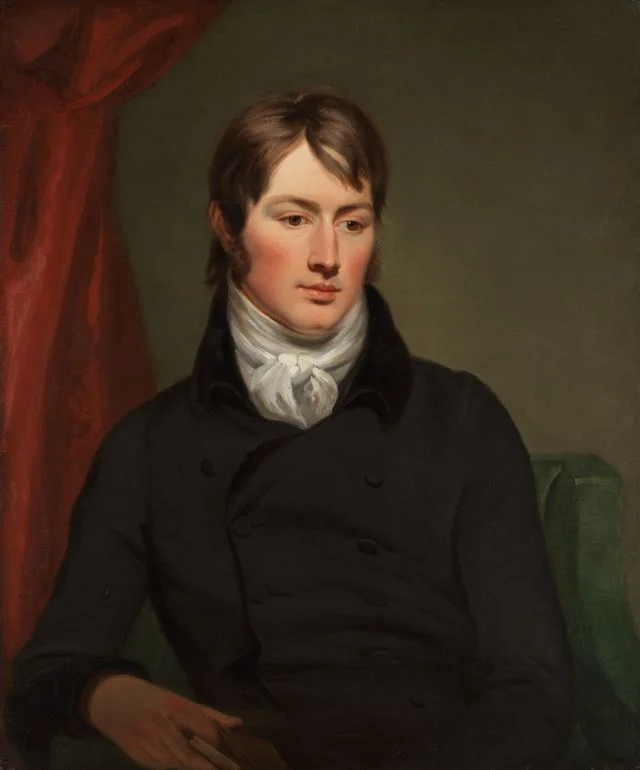
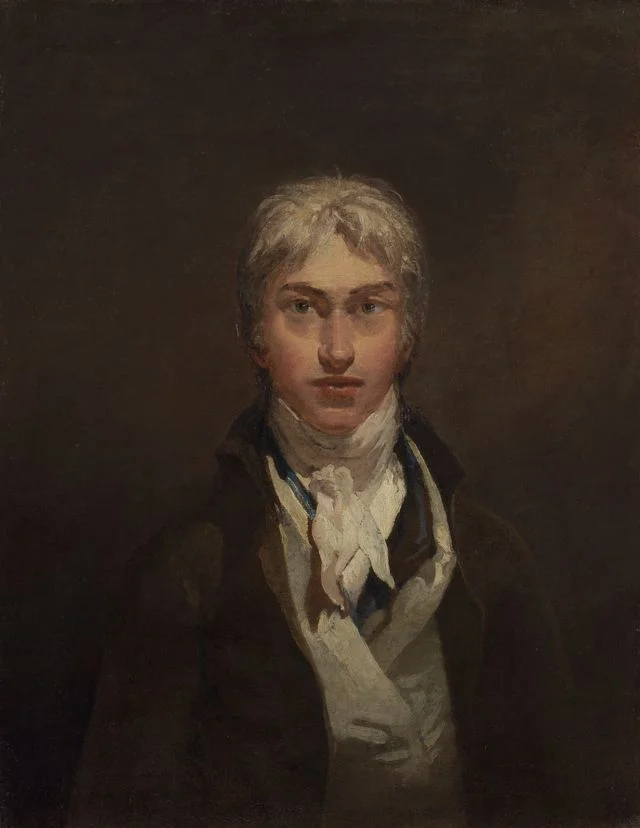
At 14 Turner was accepted at the Royal Academy Schools, Constable when he was 23. Turner was already a rising star, one of the youngest to be elected a Royal Academy Associate in 1799 (meaning he could exhibit in the RA’s exhibitions without fear of rejection by a hanging committee); Constable had to wait until 1819. Turner became a full RA at 27, while his techniques were still largely experimental; Constable at 52, with his style matured. In all, Turner had 256 works exhibited in the summer show, Constable 104. Selling prints was the most lucrative source of income for a popular artist, and Turner had about 900 on the market at different times; Constable 47. Turner died aged 76 in 1851, Constable in 1837 aged 60.
Both were precocious in their own ways, both inspired by past painters such as Rembrandt and Claude Lorrain; both were dedicated to raising the public perception of the importance of landscape painting, and both pursued their own divergent stars. Turner, especially after his first visit to Italy when he was 44 (he’d been to France and Switzerland when he was 27), was in quest of light, even to the extent of experimenting with candlelight behind a canvas. Constable looked to the sky, studying cloud formations and the science behind them, and the effects of cloud on landscape and the people in the landscape. “The sky,” he said, “governs everything.”
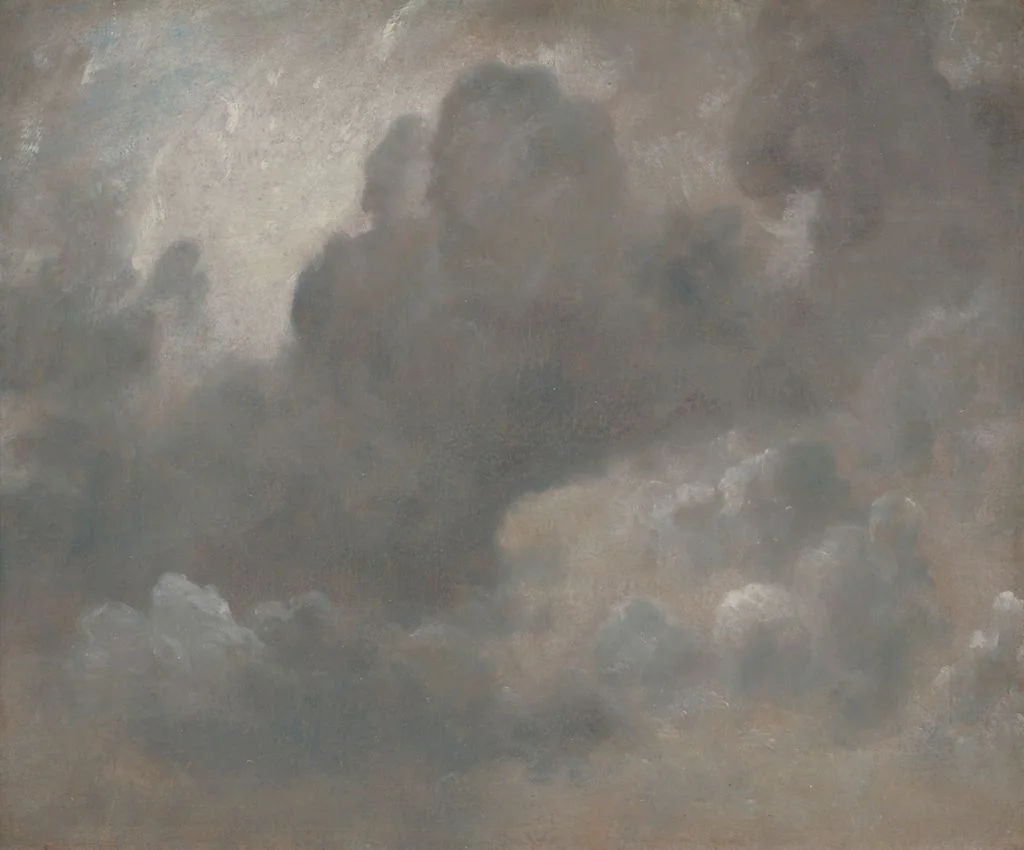
Both began working in watercolour, with oils coming later because oil painting was not taught at the RA schools, and while much is made of the Impressionists’ use of plein air to capture nature authentically, Constable and Turner were doing it a generation before, perfecting strategies of drawing and painting sketches. One of Turner’s Lake District drawings in this show is speckled with raindrops.
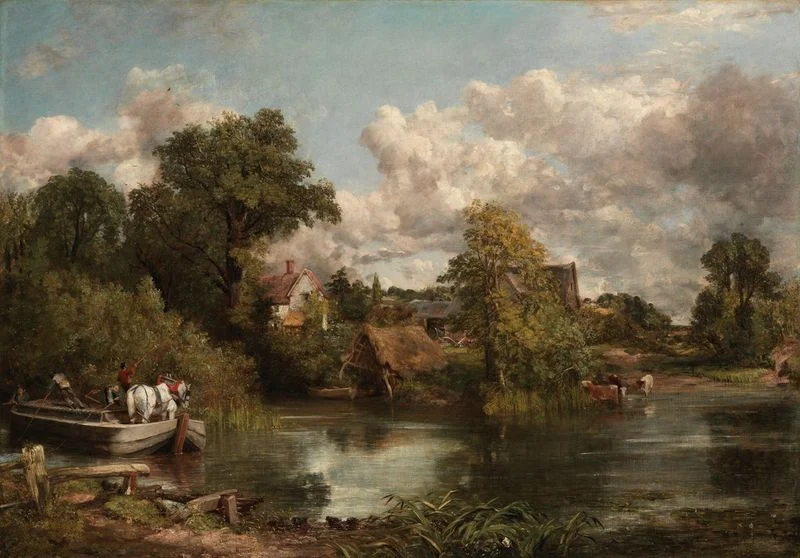
In the 1810s commercial success was eluding Constable, and he decided to risk the reputation he had by making dramatically large paintings, his “six footers”, and the critical acclaim of the first, The White Horse, in 1819 convinced him. But he had to use a studio in the City that was big enough to take the large canvases and was torn between his need to be with his family in Hampstead and to be painting an hour’s journey away in London.
But the rivalry was not so much for each to make better art than the other as to get critical and RA approval, and the summer exhibition was the opportunity for public assessment of these two giants.
“Mr Constable’s works present no stronger contrast… than they do with Mr Turner’s… The first is all truth, the last all poetry: the one is silver, the other gold,” wrote The London Magazine about the 1829 exhibition.
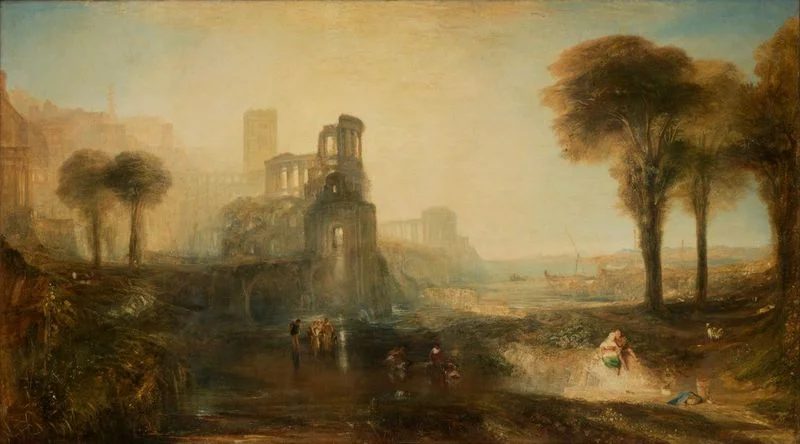
In 1831 Constable was one of the summer show’s hanging committee. Usually Turner was a magnet, with visitors going immediately to his pictures first, but this time Constable hung his own moody and fascinatingly real Salisbury Cathedral from the Meadows next to Turner’s rather prosaic, for him, and imagined Caligula’s Palace and Bridge, completely upstaging him. At a dinner party afterwards Turner “came down on him like a sledgehammer” for his effrontery.
The day before the summer exhibition is called varnishing day, an opportunity for exhibitors to adjust their work before public opinion can be invited. Mike Leigh’s 2014 film Mr Turner shows the incident the next year when Turner was again hung next to Constable and, on varnishing day, added a red buoy at the centre of his harbour scene, stealing the gaze to turn the tables.
What we didn’t need in this exhibition was various personal possessions such as Turner’s fishing rods or Constable’s sketching chair, or the views of successful living painters on the influence of these two on contemporary art. But what we have got is the story of how England’s two finest painters, who happened to be alive and working at the same time, developed and perfected their art in spite of the pressures of a febrile culture.
For more thoughtful writing on art, exhibitions and the stories behind Britain’s cultural life, follow EyeOnLondon and explore our Arts & Culture coverage.
Turner and Constable: Rivals and Originals
Tate Britain, London | 27 November 2025 – 12 April 2026
A landmark exhibition examining the intertwined lives, artistic rivalry and enduring legacies of J. M. W. Turner and John Constable. The show brings together major works by both artists in a first-of-its-kind presentation at Tate Britain.
Tate Britain, Millbank, London SW1P 4RG
Open daily 10.00 – 18.00 (check Tate Britain for current visiting hours)
Book tickets and find full exhibition details
For more on London exhibitions and culture, visit our Arts & Culture section .
Follow us on:



Subscribe to our YouTube channel for the latest videos and updates!

We value your thoughts! Share your feedback and help us make EyeOnLondon even better!