The Point of Pointillism: Seurat and the Sea at the Courtauld

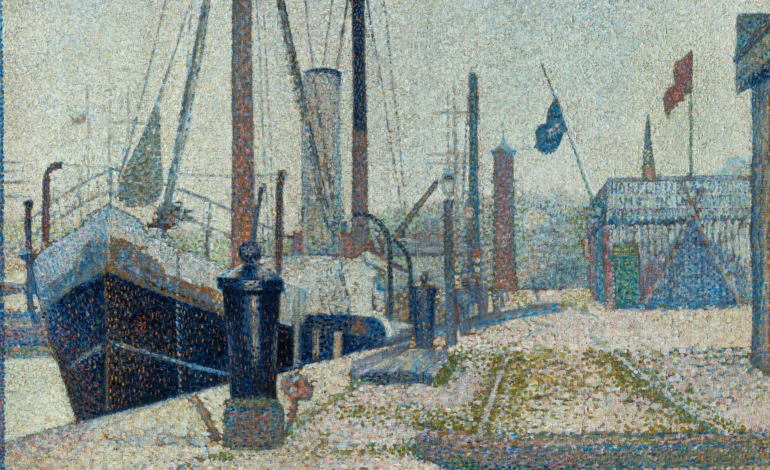
Seurat and the Sea | Courtauld Gallery until 7 May
There’s a faint tremor about the Courtauld Institute these days, like a slight underfoot earth movement before a volcanic eruption, or, more accurately, a chrysalis trembling in the moment before it bursts open to give up a glorious butterfly.
The Institute has just announced an enormous £82m development which will add not only galleries for contemporary art, which the Courtauld has never been able to properly tackle, but will also give students on its new MA curating course scope to make their own exhibitions and allow the Courtauld to pursue new areas of research.
It is easy to reduce Seurat to the painter of dots, the scientific aftershock to Impressionism, the prodigy who died at 31 leaving promise only partially fulfilled. Yet Seurat’s ambition ran deeper. In his pursuit of light, he developed what he termed Neo-Impressionism or Chromoluminarism, what we now call Pointillism, an attempt to render optical truth rather than painterly impression.
More Arts & Culture from EyeOnLondon
Exhibition reviews, art history and cultural insight from across London.
Barry Martin obituary
A tribute to the respected critic and broadcaster whose writing shaped serious arts coverage.
Read the full articleTurner and Constable landscape rivalry
How two painters transformed British landscape art through competition and conviction.
Read the full articleHogarth at Barts Great Hall
Exploring Hogarth’s monumental works and their enduring presence inside St Bartholomew’s Hospital.
Read the full articleTo understand his quest, one must reach back to Isaac Newton and the science of optics. Seurat was fascinated by colour theory: the interaction of primary, secondary and tertiary hues; the balancing of brightness and shadow; the subtle calibration that allows one colour to vibrate against another. The conventional rule, 60 per cent dominant colour, 30 per cent secondary, 10 per cent accent, was not doctrine but structure. Harmony, not chaos, was the aim. What we see, Seurat understood, is not always what has been painted. The eye completes the act.
Born in Paris in 1859 to comfortable circumstances, Seurat studied at the École des Beaux-Arts before completing national service in 1880. He worked initially in monochrome, favouring Conté crayon for its resistance to smudging, and exhibited at the Paris Salon. By 24 he was applying his chromatic theories to painting. His Bathers at Asnières was rejected by the Salon, yet he found allies among independent artists including Paul Signac and Odilon Redon within the Société des Artistes Indépendants.
His monumental A Sunday Afternoon on the Island of La Grande Jatte, later immortalised in Stephen Sondheim’s musical Sunday in the Park with George, established his reputation. Yet neither that nor Bathers appear here. Instead, this exhibition concentrates on the coastal studies made between 1885 and 1890 along France’s northern shore.
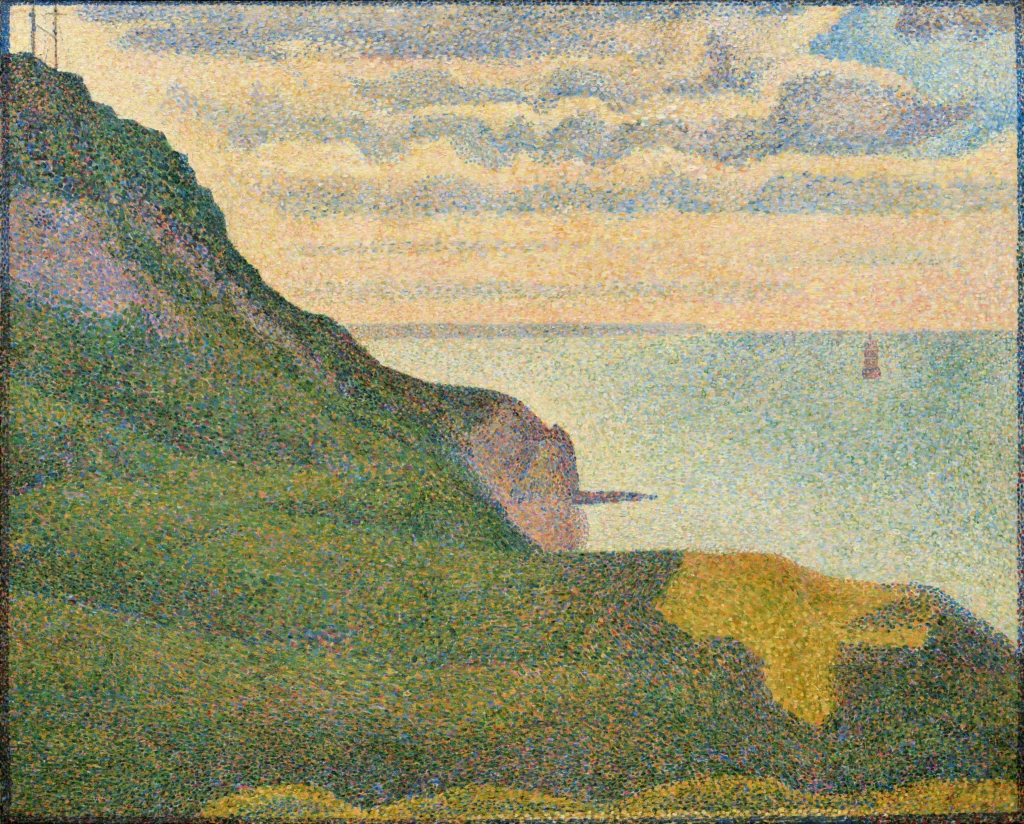
Seeking, as he put it, “to cleanse one’s eyes of the days spent in the studio,” Seurat worked at Grandcamp, Honfleur, Port-en-Bessin, Le Crotoy and Gravelines. These were not leisurely holiday sketches but laboratories of perception. Often working on small wooden panels carried in the lid of his paintbox, he recorded vast skies and tidal horizons, the geometry of harbour walls and the slow curve of beaches. Figures are rare. Human presence, he felt, interrupted the visual narrative of line and light.
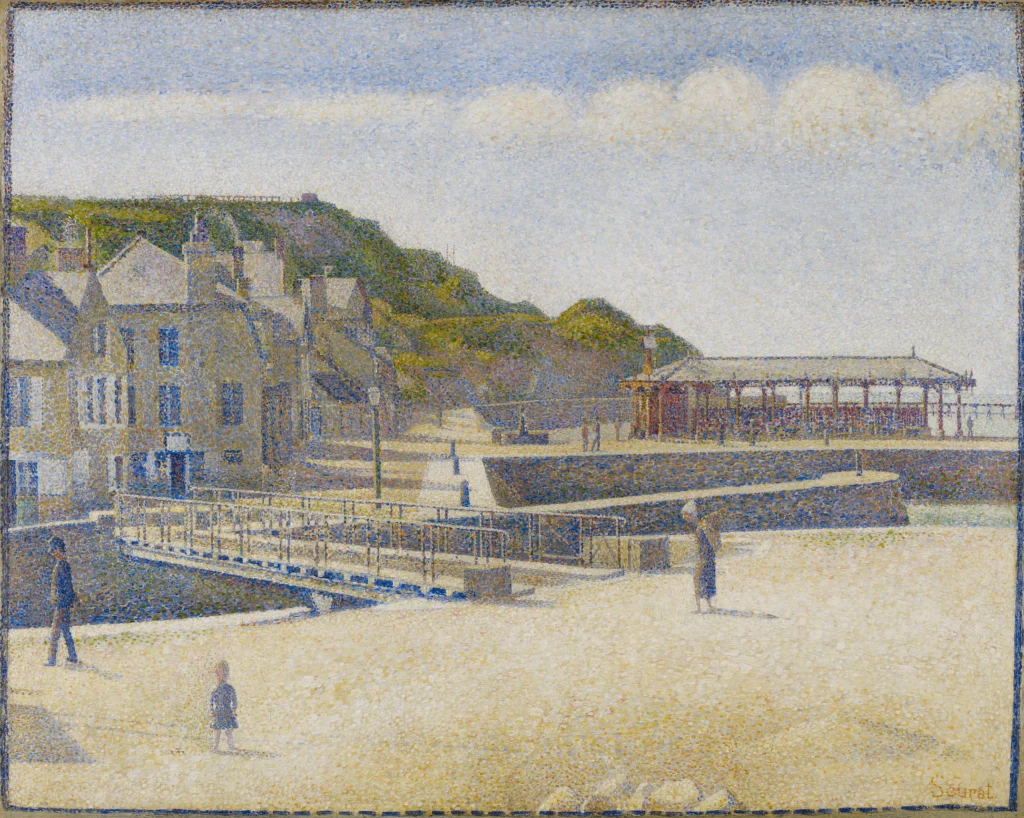
Works such as Marine at Grandcamp (1885) reveal the process. Dabs of pink and deep blue describe rock; brown and pale green articulate the sea’s edge. These marks would later refine into the controlled points that define his mature canvases. In Le Bec du Hoc (Grandcamp) the strokes tighten into tension; in The Shore at Bas-Butin (Honfleur) they soften into ambiguity.
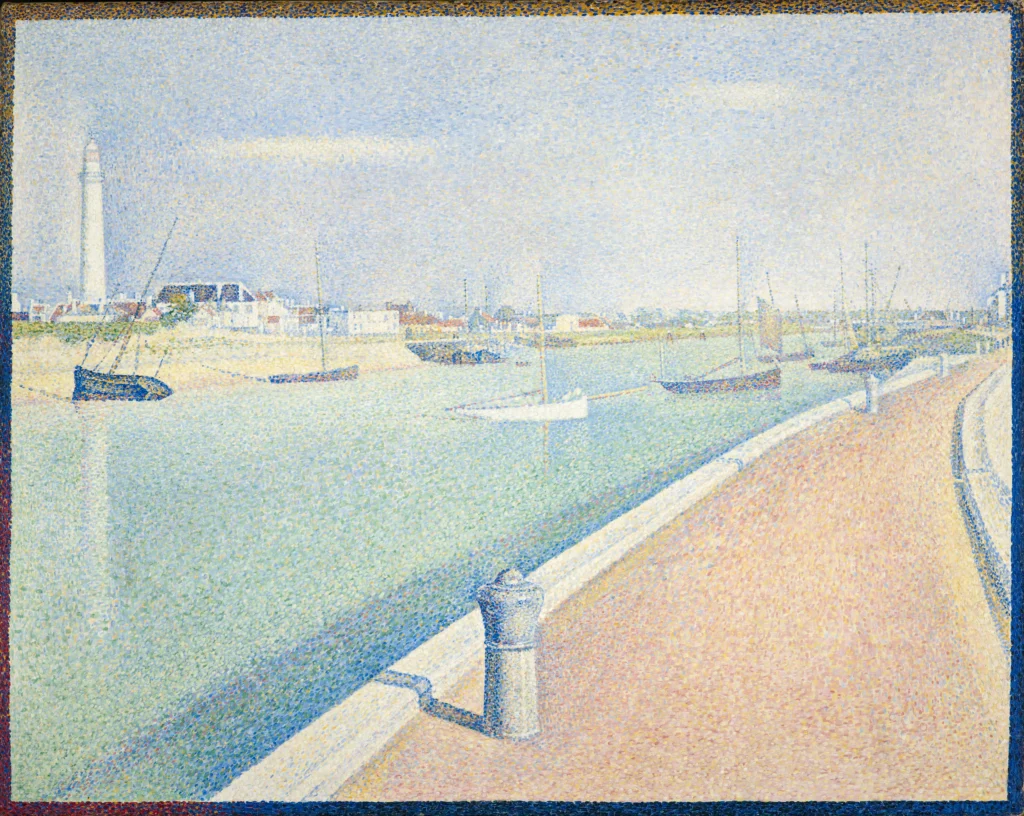
Seurat’s technique blended colour not on the palette but on the retina. Opposing hues placed side by side generated vibration. He trusted the viewer’s eye to resolve the image. His heavily grained Conté drawings, including studies for The Port of Honfleur and The Channel of Gravelines: An Evening, show how tonal scaffolding underpinned chromatic structure.
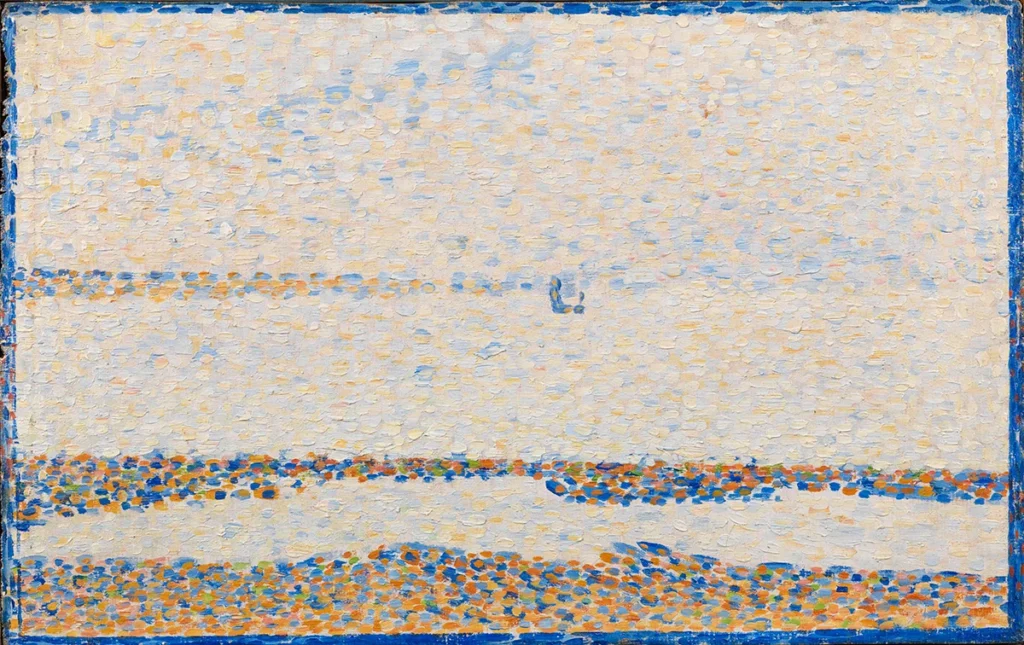
The Gravelines series of 1888–89 marks a confident evolution. New harbour architecture becomes subject rather than intrusion. Even three small figures are permitted into the composition without disturbing its equilibrium. Neo-Impressionism here feels less experiment than declaration, a theory fully tested against sea, sky and stone.
Behind the work lay private drama. Seurat conducted a discreet relationship with his model, Madeleine Knobloch, who bore their son in February 1890. In March 1891 Seurat died, probably of meningitis; his infant son died two weeks later. He left just 45 completed paintings. His final, unfinished canvas was The Circus.
Yet in these coastal studies one senses something complete: a rigorous, almost devotional exploration of how light behaves at the edge of land. The point of Pointillism, ultimately, was not the dot. It was vision.
For more thoughtful coverage of London’s exhibitions and the ideas behind them, follow EyeOnLondon and join the conversation shaping the capital’s cultural life.
Seurat and the Sea
Courtauld Gallery , Somerset House, London
An exhibition examining Georges Seurat’s coastal studies and his disciplined experiments in colour, light and optical perception.
14 February – 7 May 2025
Admission from £14 · Concessions available
Open daily · Advance booking recommended
Follow us on:



Subscribe to our YouTube channel for the latest videos and updates!

We value your thoughts! Share your feedback and help us make EyeOnLondon even better!