Pompey’s Grand Theatre: The Ultimate Power Play of Ancient Rome

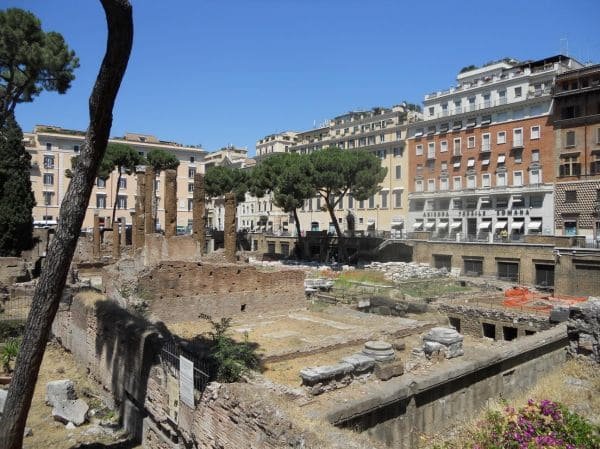
In 55 BC, one of Rome’s most powerful men made history, not on the battlefield, but with bricks and mortar. Pompey the Great, fresh from a string of military victories, decided to leave his mark on the city in a way no one had before. He built Rome’s first permanent theatre, a colossal structure designed not just to entertain but to remind the people exactly who had made it possible. It was an early example of power, politics, and spectacle coming together in one grand show.
Born in 106 BC in Picenum, on Italy’s east coast, Pompey came from wealth and privilege. His father owned vast estates, and Pompey used that fortune to launch himself into public life early. By 24, he had already claimed victories in Sicily and North Africa, building a reputation as one of Rome’s rising stars. However, it was in 62 BC that he secured his biggest win, defeating King Mithridates of Pontus (modern-day Turkey). His return to Rome was met with massive crowds, his war plunder carried through the streets in a display of triumph.
Instead of just basking in his success, Pompey took things further. He poured millions of sestertii into a project unlike anything Rome had seen before, a theatre that would outshine all others in the Mediterranean.
Rome’s First Entertainment Empire
Built behind the Capitoline Hill in the bustling Campus Martius, Pompey’s theatre could seat at least 15,000 spectators, making it three times the size of the largest existing theatre in Italy. Unlike the smaller wooden venues that were erected temporarily for festivals, this was built to last, a permanent stage for Rome’s love of performance, games, and spectacle.
The design was breathtaking. A vast temple to Venus, Pompey’s patron goddess, was placed at the top of the seating area, giving the theatre a divine presence. Around the perimeter, three storeys of red granite columns framed shop-lined streets, while statues of Pompey’s conquered enemies were carefully positioned between them. And just outside the theatre? A huge statue of Pompey himself, ensuring that no one forgot whose generosity had made all this possible.
Behind the theatre lay stunning gardens with shaded walkways, offering a retreat from the city’s chaos. A brand-new Senate House was incorporated into the complex, ensuring that even Rome’s political elite couldn’t escape Pompey’s influence.
A Week of Spectacle and a Political Statement
To mark the theatre’s grand opening, Pompey didn’t hold back. Historian Plutarch records that 500 lions were killed in staged hunts, while the most shocking attraction, a brutal elephant fight, left some Romans disturbed. There were also gymnastic and musical contests, gladiator battles, and of course, theatrical performances.
One of the first plays performed was Clytemnestra, a tragedy about betrayal and murder. However, Pompey had a trick up his sleeve. The entrance of King Agamemnon, the play’s central figure, was accompanied by 600 mules carrying treasure, a dramatic re-enactment of Pompey’s own triumphant return to Rome after his military victories. The crowd was watching a staged version of their own reality, a performance designed to reinforce Pompey’s legacy.
Was It Generosity or Just Good Politics?
Pompey sold the theatre as a gift to the people, a place where all Romans, rich and poor, could enjoy spectacular entertainment. But was it really about them? Or was it about keeping Pompey’s name on everyone’s lips?
The poet Horace, writing decades later, saw through the illusion. He warned of the dangers of “bread and circuses”, the idea that public entertainment was being used to distract Romans from politics. With lavish venues and free shows, how could ordinary people focus on real issues when they were constantly entertained?
Even after Pompey’s death in 48 BC, his theatre remained at the heart of Roman politics. In 44 BC, it became the setting for one of history’s most infamous events, the assassination of Julius Caesar, who was murdered in the theatre’s adjoining Senate House. Pompey’s grand project, built as a monument to his own power, had become a backdrop for the most dramatic moment in Rome’s history.
Pompey may have given Rome its first permanent theatre, but he also proved that entertainment and power go hand in hand, a lesson that still holds true today.
For a more in-depth look at the history of Pompey’s theatre and its political significance, historian Jessica Clarke explores this in detail in History Today. You can read more about her research here.
For more historical insights, visit EyeOnLondon.
Follow us on:



Subscribe to our YouTube channel for the latest videos and updates!

We value your thoughts! Share your feedback and help us make EyeOnLondon even better!