NATO Backs Ukraine’s Right to Strike Inside Russia as UK Pressures Biden on Missile Use

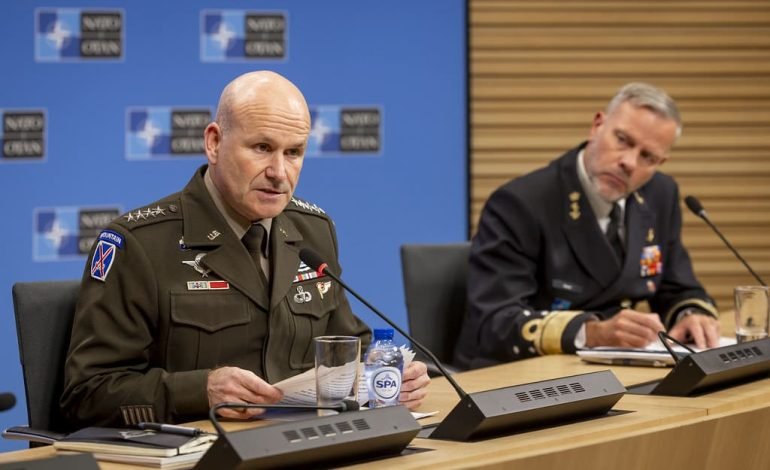
As tensions over Ukraine’s ongoing conflict with Russia continue to rise, NATO supports Ukraine’s legal and military right to strike deep within Russia to gain a combat advantage, according to the head of NATO’s military committee, Adm. Rob Bauer. This viewpoint, shared by many U.S. allies, highlights a divide in opinions between Europe and the United States over the extent of support provided to Kyiv.
Speaking at the close of NATO’s annual military committee meeting, Adm. Bauer emphasised that every nation attacked has the right to defend itself, even beyond its own borders. This sentiment was echoed by Lt. Gen. Karel Řehka, the Czech Republic’s chief of the General Staff, who clarified that his nation imposes no restrictions on the weapons it supplies to Ukraine, allowing Kyiv to decide how to deploy them.
These remarks come amid ongoing deliberations within the Biden administration about allowing Ukraine to use American-made long-range weapons to target Russian territories. U.S. President Joe Biden recently met with British Prime Minister Keir Starmer to discuss the issue, following a visit to Kyiv by their top diplomats. According to sources familiar with the talks, Starmer is seeking Biden’s approval for Ukraine to use British Storm Shadow missiles, whose components are manufactured in the U.S., for expanded strikes against Russia.
While the U.S. has authorised Ukraine to conduct cross-border strikes with American-provided weapons, it has stopped short of allowing Kyiv to use long-range missiles, like the ATACMS, to hit deeper targets within Russia. This cautious approach is driven by concerns over escalating the conflict and the limited number of such missiles available to Ukraine. However, European nations have been more open to empowering Ukraine’s military capabilities, worried that a more emboldened Russia could pose a direct threat to their own security.
At the NATO meeting, Czech President Petr Pavel urged military leaders to be bold and clear in their recommendations, stressing the need to take decisive actions to safeguard European nations. The meeting underscored ongoing support for Ukraine, although it remains uncertain whether discussions addressed the specific U.S. restrictions on long-range weapons.
As winter approaches, Kyiv is intensifying its appeals to Washington to lift these restrictions, fearing that Russian forces could make gains during the colder months. Adm. Bauer argued that allowing Ukraine to target deeper within Russia would strategically weaken the enemy by disrupting logistics and supply lines crucial to Russian operations. U.S. Gen. CQ Brown, however, noted that while the policy on long-range weapons remains unchanged, the U.S. continues to provide Ukraine with various capabilities to help ensure its success.
Despite the limitations on certain weapons, Ukraine has already demonstrated its ability to strike within Russia using drones and other internally developed systems. U.S. officials, including Defense Secretary Lloyd Austin, have reiterated that no single weapon system can guarantee victory, pointing to Ukraine’s effectiveness with the tools it currently possesses.
As Western leaders weigh their options, the debate continues over how best to support Ukraine in its struggle against Russian aggression without escalating the conflict beyond control. For now, the U.S. and its allies remain committed to aiding Ukraine, albeit with differing views on the limits of that support.
For more detailed analysis on NATO’s evolving military strategies and Ukraine’s defence tactics, visit the Royal United Services Institute (RUSI). Visit EyeOnLondon for further updates.
[Image Credit: NATO/IMS]