Why Community Is the Secret to Mental Good Health


It’s Mental Health Awareness Week, 12th–18th May 2025, and this is a great opportunity for us to introduce our new wellbeing and mental good health articles! Jane is a Positive Psychology Practitioner and she will be sharing some of the science behind how to increase our happiness levels, and this is her first article for us.
This year’s theme for Mental Health Awareness Week is ‘community’. We want to use this Mental Health Awareness Week to celebrate the power and importance of community.
Being part of a safe, positive community is vital for our mental health and wellbeing. We thrive when we have strong connections with other people and supportive communities that remind us we are not alone. Communities can provide a sense of belonging, safety, support in hard times, and give us a sense of purpose.
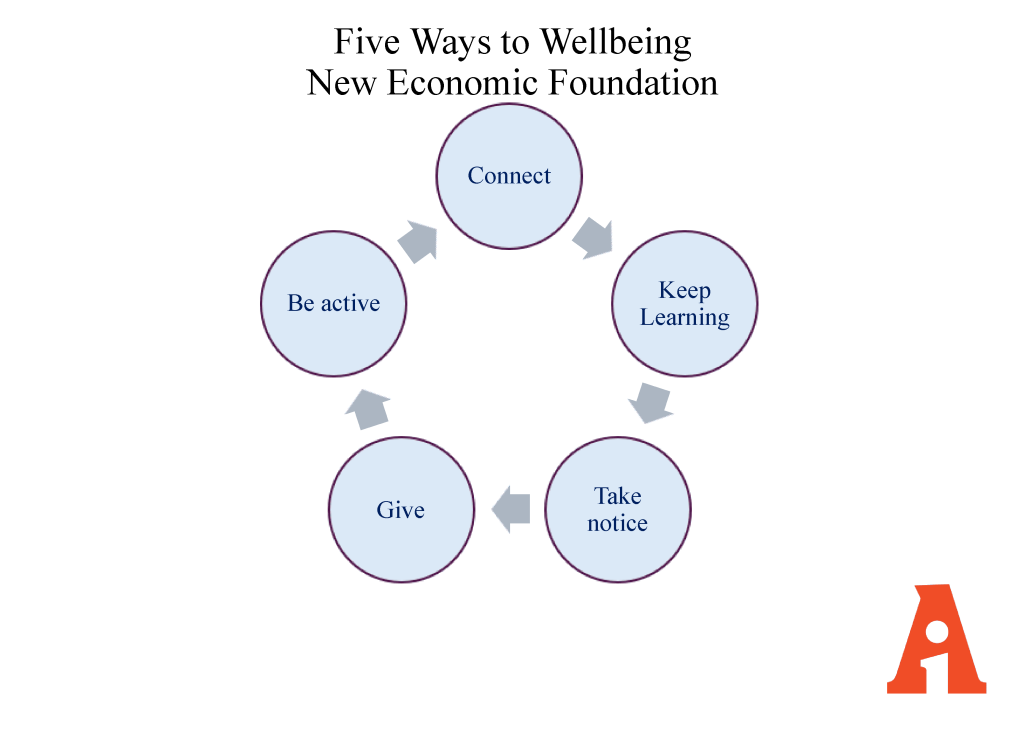
We are social creatures, and being part of a group is one way to boost our wellbeing and increase our mental good health. It’s one of the Five Ways to Wellbeing researched by the New Economics Foundation.
They list:
- Connect with other people
- Be physically active
- Learn new skills
- Give to others
- Pay attention to the present moment (being mindfully present)
We can see how these can all fit into being part of a community, and so boost our wellbeing. Let’s look at each of these in turn.
Connect with other people. It’s not the number of people in our social circle that’s important, it’s the quality of those relationships. Phillipa Perry suggests we need just four close friends, and the wider the demographic – how diverse our friends are across age and cultures – the happier we are. Being part of a community is a great way to develop our friendships and spend positive time together.
Be physically active. This is good for our physical health, and our mental health also benefits. Our bodies release dopamine – known as the ‘happy hormone’ – when we are active. If we can link being active with being part of a group, it also helps boost our community. This could be a local ‘wellbeing walk’, or something more active like volunteering with a group such as the Wildlife Trust. If you can align your interests or passions with the activity, you’ll also find like-minded people!
Learn new skills. This is a great way to boost self-esteem and, if you go to a class or group, it will also help build connections with new people. Gone are the days when we believed ‘you can’t teach an old dog new tricks’! Now, we understand more about how our brains are capable of acquiring new skills throughout our lifetime, and this can also help us ‘un-learn’ things that are no longer helpful to us.
Give to others. Max Lucado says, ‘happiness happens when you give it away’, and this is a lovely way to explain why we feel happier – and for longer – when we do something for another person rather than ourselves. Mirror neurons allow us to feel happier when we volunteer our time and our talents, while also giving us a sense of purpose and achievement. We can volunteer our time, our skills, our attention, and of course we can also donate financially. Find something you are passionate about, or give back to an organisation that supported you when you were going through difficulties, and you will also connect with the community there. Giving can also be a simple ‘thank you’ or affirmation to a colleague or friend.
Pay attention to the present moment (being mindfully present). By focussing on the present and being fully engaged, we prevent our brains from ‘doom scrolling’ over past events, or worrying about the future. If you struggle with this, the 5-4-3-2-1 technique could help:
- 5 things you can see
- 4 things you can hear
- 3 things you can feel
- 2 things you can smell
- 1 thing you can taste
This engages five of our senses and gives us a focus. When thinking about how being mindfully present can help us in community, pay full attention to the tasks you are engaged with. Also, pay full attention to the people around you! When someone is talking, give them your full focus – leave your phone in your pocket! – as this will help you build connection, and they will feel appreciated and valued.
I hope this has been useful and has given you some tools to help build your wellbeing.
Further reading and helpful resources:
- Mental Health Awareness Week – Mental Health Foundation
- How community benefits your mental health
- Five Ways to Wellbeing – New Economics Foundation
- Five Steps to Mental Wellbeing – NHS
Follow us on:



Subscribe to our YouTube channel for the latest videos and updates!

We value your thoughts! Share your feedback and help us make EyeOnLondon even better!