The Name’s Bond, Jack Bond!


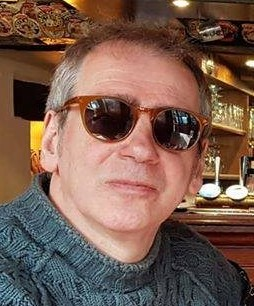
To have the surname Bond back in the 1960’s was the height of ‘cool’. Especially in the wake of Ian Fleming’s James Bond. The name personified the words ‘suave’ and ‘sophisticated’. Jack Bond had these qualities in spades. I first met Jack Bond some 20 years ago when I attended a reception held by the producer Dominic Saville, the son of TV’s ‘Boys From The Blackstuff’ director, the late Philip Saville, who Bond’s former filmmaking partner, the late Jane Arden, had married.
DOCUMENTARIES ON DALI
Jack Bond was already a legend, having made the very first documentary on Salvador Dali. A cinema verité styled monochrome film, ‘Dali In New York’ (1965), made for BBC TV’s Arts series Monitor. Bond and Arden followed Dali around Manhattan, while the great man almost drove the pair mad. The interviewer, the proto-feminist Jane Arden, sharply reciprocated. Thereby providing much insight into Dali and his curious relationship with his ‘muse’, Gala. Arden challenged Dali’s bravado and his continual spirit of self-promotion. Thereafter Bond and Arden had a ‘Ticket To Ride’ into the new era of ‘Underground’ filmmaking. In 1967 this was the path to take. Notably, Bond made his Dali film on the back of a documentary that he’d written and directed about George Orwell in 1965 for the London-only burgeoning BBC 2, which did not go on to a national BBC TV network until 1967.
Explore More Stories on EyeOnLondon
A FILM ON ‘SEPARATION’
‘Dali In New York’ led to a long-standing ‘creative and personal relationship’ between Arden and Bond, which saw Bond’s movie debut ‘Separation’ (1967) provide a narrative about a woman during a marital relationship’s final days. Written by Arden, it was claimed to be based-upon the demise of her own marriage to the late Phillip Saville. Nevertheless, the couple never divorced. The on-screen ‘husband’ in the film was played by actor David De Keyser, who bore a striking resemblance to Arden’s real-life partner, the late Phillip Saville. Saville was then in two extra-curricular relationships: one with the ‘Mod’ era artist, the late Pauline Boty, and also with Avengers TV star the late Diana Rigg.
Touted originally to be a 1960’s ‘caper’ feature, ‘Separation’ was nothing of the sort. It was a cut-up narrative with Bond’s penchant for surreal scenes fused with pure naturalism. The film was timely in 1967, but now remains a time capsule of those heady days. It captured London at the height of ‘The Summer of Love’, featuring nudity amid psychedelic light shows, coupled with the music of Procol Harum as it might have occurred at London’s UFO Club in Tottenham Court Road. All at a time when ‘A Whiter Shade of Pale’ topped the singles charts for a whopping six weeks, while The Beatles ‘Sgt Peppers’ was Number 1 in the LP charts. The opening theme to ‘Separation’ was written by Procol’s Hammond organist Matthew Fisher, with an accompanying orchestral score by the late Stanley Myers. Oddly, the film didn’t feature Procol’s hit. Instead, it debuted a new song called ‘Salad Days’ written by Procol’s Gary Brooker and Keith Reid. Fisher’s theme to ‘Separation’ would later provide a coda to Bond’s 2010 documentary, ‘Discovering Dali: A Tale Of Two Cities’. This is Bond’s masterpiece. Possibly the most intriguing film ever to be made about Salvador Dali.
In 2009, Jack Bond told me of his memories of Procol’s Matthew Fisher, in 1967, when Bond lived in a canalside townhouse in an area known as ‘London’s Little Venice’.
Jack Bond, “Matthew Fisher rang me one day, and said, ‘I’ve got this monster Hammond organ with two Wurlitzer speakers, you know, big tweeters on the top. Do you mind if I store it at your place? Have you got room?’ So it arrived and it was the size of a church organ, this monster. And he set it up, and then he played it. Now this house was built in 1820. It had walls about three feet thick. Nonetheless, the entire thing shook, as did every other house adjoining it. I had people coming round looking up at the windows, wondering if the entire row of houses was going to collapse. Just by the sheer force of its vibrations. It was wonderful to hear it like that. He did quite a lot of composing in that house. I’ll never forget this, ’cause the sun was shining on the canal. The refraction of the ripples hit the ceilings in the house. There Matthew Fisher sat at the organ, making this magnificent racket, and the ceiling above him was awash with ripples, sunlit ripples. Quite extraordinary really. I wish I had taken a photograph of it!”
Restoration of ‘Separation’
‘Separation’ along with all of Jane Arden’s work, was buried in The National Film Archives until 2009 when a BFI Southbank and NFT Retrospective finally paid homage to Bond & Arden. The wife of Procol Harum’s Matthew Fisher takes up the story:
Carol Fisher, “Before I met Jack, I spoke to him on the phone, when he telephoned to invite Maf, me, and ‘Maf’s’ sister, Judith, to the 2009 screening of Separation at London’s BFI. From that brief conversation, I had a picture in my mind’s eye of a larger-than-life character, wearing a long cape and wide-brimmed Fedora. When I met Jack, a week later, there was no Fedora, and no long cape, but a slight, white-haired man in a simple dark suit, who was, nonetheless, a wonderfully charming and witty character, who had so many marvelous stories to tell from his long life as a filmmaker”.
SWINGING SIXTIES LONDON & EXPERIMENTAL SEVENTIES CINEMA
Bond hung-out with the hipsters. For Jane Arden’s 40th he bought her a Penguin-styled cape a la ‘Batman’ from ‘Granny Takes A Trip’ in Chelsea’s Kings Road. This was the retail outlet of the fashion designer John Pearse, the psychedelic poster designer, Nigel Weymouth, and the DJ-Impresario and Sue Records’ Boss, the co-founder of Procol Harum, the late Guy Stevens. Otherwise, all collectively known as ‘Hapshash & The Coloured Coat’. The Godfathers of ‘British Psychedelia’. They reigned supreme in the late 1960’s, and were never equalled. Not even by The Beatles Apple Shop in Baker Street. What a time to be alive. What a time to be creative.
As the 1970’s beckoned, Ted Heath’s failing Tory Government (1970-1974) witnessed long winters in Britain, amid the famous ‘three day week’, during the Coal Miners Strike. Bond continued to make controversial films during this particular time with Jane Arden. ‘The Other Side of the Underneath’ was produced by Bond and directed by Arden. It was based upon Arden’s 1971 play ‘A New Communion for Freaks, Prophets and Witches’ for her own Holocaust Theatre Company. This disturbing Bedlam-like film was influenced by the 1970s ‘anti-psychiatry movement’, with more than a nod to the alternative thinking of the late Psychiatrist R D Laing. The film examined a young woman’s schizophrenia, and involved a lot of drug-taking on set. It was the first British feature film to be solely directed by a woman. Musician and journalist the late George Melly called it “a most illuminating season in Hell”, whereas a BBC Arts Journalist, David Will, called it, “A major breakthrough for British Cinema”.
1979’s ‘Anti-Clock’ co-directed by Arden and Bond was in a similar ‘experimental’ vein. It was their final collaboration.
British film producer Don Boyd,“I loved Jack. I helped to produce ‘Anti-Clock’, an extraordinary avant-garde 1979 movie written with his partner Jane Arden. He was ‘charm personified’ and immensely knowledgeable about the arts in general, and way ahead of his time. He later made some superb films for Melvyn Bragg’s ‘Southbank Show’ for LWT-ITV. RIP dear Jack!”
SOUTHBANK SHOWS FOR TV, THE EIGHTIES & NINETIES
Tragically, in the same year that Bond began making films for The Southbank Show, Jane Arden took her own life at Hindlethwaite Hall, in Coverdale, Yorkshire on the 20th of December 1982. She was just 55 years old. Her death had an immense effect on Bond who withdrew all of the films that he’d made with her for 27 years, storing them all with The National Film Archive until 2009, when The BFI screened them at BFI Southbank. The NFT screenings tied-in with simultaneous 2009 BFI DVD reissue packages.
In-house Archival Producer at London Weekend TV, Phillip Windeatt, recalled Bond with affection, “I worked with Jack on ‘The Southbank Show’. I always enjoyed his company throughout the 1980’s and 1990s”. Head of Production there, filmmaker Alan Benson, described him as, “A man of considerable charm and panache. The king of self-promotion!” During his time at LWT Bond produced and directed 10 one-hour Southbank Shows, including ‘Werner Herzog’ (1982), ‘Patricia Highsmith’ (1982) ‘Roald Dahl’ (1986), ‘Jean Genet’ (1993), and ‘Vanessa Redgrave as Cleopatra’ (1994). When the series moved to Sky Arts he made one more, ‘Albert Camus – Broken Morning’ (2003).
A TOUR DE FORCE WITH THE PET SHOP BOYS
Overlooked since 1988, the filmed ‘Musical’ titled ‘It Couldn’t Happen Here’ starred the British synth-pop duo The Pet Shop Boys. It was based on the music from their first two albums ‘Please’ and ‘Actually’. Originally conceived as an hour-long video based on ‘Actually’, it evolved into a surreal, full-scale feature film, directed by Bond, co-starring Barbara Windsor, Joss Ackland, Neil Dickson, and Gareth Hunt.
CHARLOTTE RAMPLING
In 2009 Bond shot an interview as a walk-around Paris. A portrait of the screen actress Charlotte Rampling, called ‘Waiting For Charlotte’, whom he had known intimately. In one particular scene, where they walk together, she describes him, teasingly, as being like, “A 12 year old, like a Chimpanzee, jumping up and down” when he couldn’t get his own way. To which Bond is seen laughing in an on-camera rebuttal; with, “Well, given the amount of control you seem to exert …” Thereby laying clues to their own personal history of banter and repartee. The film screened on French Cinemoi and Sky on 23rd August, 2009, then disappeared for good.
BOND’S FINEST FILM
A year later Bond went to Sweden to make a semi-autobiographical film called ‘Discovering Dali: A Tale Of Two Cities Dali’. Shot in a snow-covered city for the 2009 Moderna Museet retrospective of Dali’s work. The film was fraught with difficulty, according to Bond, but is, nevertheless, stunningly photographed, utilising scenes from Hitchcock’s ‘Spellbound’, Luis Bunuel’s ‘Un Chien Andalou’, alongside extracts from ‘Dalí in New York’, and Bond‘s own films, which had also been influenced by ‘The Surrealists’. In the final sequence we hear an audio montage of memories, which accompany Bond’s own car journey back through time. This is musically backed by Procol Harum’s organ player, Matthew Fisher, the composer of the 1967 theme to ‘Separation’. All in the closing minutes of this touching and masterful film. This can be seen ‘officially’ via the Production Company’s very own YouTube channel at no cost to the viewer: Watch ‘Discovering Dali’.
ADAM ANT – THE BLUEBLACK HUSSAR
In 2013 came Bond’s penultimate documentary ‘The Blueblack Hussar’ about the return of Adam Ant. Geoffrey MacNab’s Independent Newspaper Review of 12th September 2013 said,
“Bond’s engaging documentary about Adam Ant’s comeback after years of mental health problems is helped immeasurably by its subject’s (on screen) rapport with Bond. The Prince Charming of the 1980s British Punk and New Romantic scene invites Bond into his kitchen, and into the studio. In the film’s most entertaining section, Bond accompanies him to Paris (to meet Charlotte Rampling). Bond doesn’t resort to voice-overs, or tell us too much about Ant’s career. Instead, he opts for an observational approach. Adam Ant makes a fascinating subject”.
BOND’S FINAL FILM
Bond’s final film ‘An Artist’s Eyes’ (2018) was made by Bond at the age of 81. It was described by The Guardian’s Mike McCahill as a “Profile of punkish Essex-based painter Chris Moon, which opens with a coup de cinéma to rank alongside anything in those defining art movies ‘La Belle Noiseuse’ by Jacques Rivette, and Victor Erice’s ‘The Quince Tree Sun’: 10 minutes in sees Moon, fag in mouth, daubing a jet-black canvas with coloured streaks”. Shot in the Andalusian sunshine, contrasting starkly with the suburban backyard streets around Moon’s own studio in rural Essex. The sumptuous cinematography was shot by Bond’s partner since 1999, Mary-Rose Storey, who also shot ‘The Blueblack Hussar’.
REMEMBERING JACK BOND
Jack Bond passed-on on 21st December 2024, in a care home in Twickenham aged 87. He is survived by his wife Moira, whom he married in 1984, and from whom he was separated, plus their three children, namely, Tom, Caite, and Oliver Bond. A fourth child, Rebecca, died in 2018. Our thoughts also go out to his partner since 1999, the Cinematographer Mary-Rose Storey, who survives him, along with her daughter, Jack’s step-daughter, the singer-songwriter musician, Lily Marlene Von Kalbach.
Discover the stories shaping London’s culture, theatre, and entertainment. Follow EyeOnLondon for unique insights, updates, and reviews that bring the city to life. Stay informed, stay inspired, and be part of the conversation.
[Image Credit: Jack Bond Estate]
Follow us on:



Subscribe to our YouTube channel for the latest videos and updates!

We value your thoughts! Share your feedback and help us make EyeOnLondon even better!