Extraterrestrial Life in History: British Perspectives on Life Beyond Earth

For millennia, people believed that humanity held a unique position at the centre of the universe. However, this notion began to unravel when Nicolaus Copernicus suggested that the Earth orbits the Sun. This revelation sparked a thrilling and unsettling question: could life exist on other planets? Historian Patricia Fara, writing for History Today, contemplates into this historical fascination, writing how scientific, religious, and philosophical beliefs shaped discussions on extraterrestrial life from the 17th to the 18th centuries.
French astronomer Jérôme Lalande argued by analogy, stating that since the planets resemble Earth, they must also be inhabited—much like assuming all sheep have entrails rather than stones. As telescopes became more advanced, revealing a seemingly endless number of stars, the question intensified: might other planetary systems exist, and could they also support life?
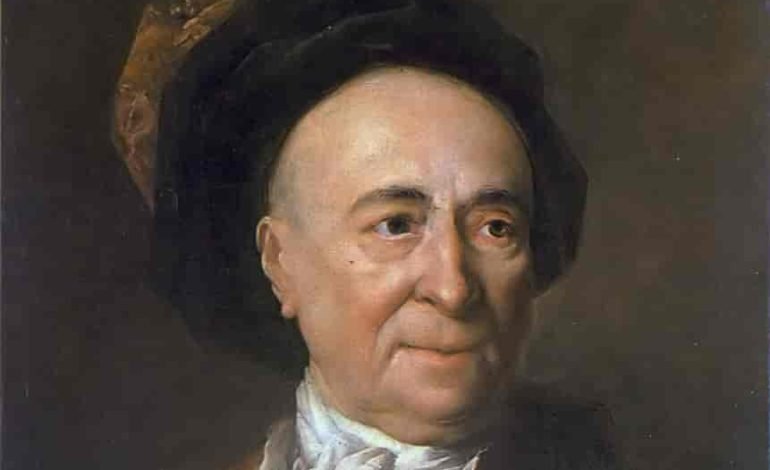
The debate went viral in 1686 when French poet Bernard Le Bovier de Fontenelle published Entretiens sur la pluralité des mondes, a series of dialogues between a philosopher and a marquise strolling beneath the stars. Despite Copernicus having redefined the cosmos nearly 150 years earlier, Fontenelle still felt compelled to advocate for a sun-centred universe. Before Isaac Newton’s concept of gravity, Fontenelle celebrated René Descartes’ vision of a clockwork universe filled with swirling vortices of matter, suggesting that invisible planets circling distant suns must also be inhabited.
This idea of inhabited worlds found fertile ground in Britain, where Newtonian followers like Scottish mathematician John Keill embraced the concept, depicting the universe as a grand palace designed for God’s glory. Unlike their French counterparts, British thinkers often wove theological elements into their cosmic views, citing biblical texts like “In my Father’s House are many Mansions” to argue that other worlds could be inhabited by beings far superior to humans.
The existence of extraterrestrial life transitioned from a speculative hypothesis to a widely accepted aspect of Enlightenment thought. Poetry played a significant role in popularising these ideas. A popular phrase often quoted by astronomers was “An undevout astronomer is mad,” originally from Edward Young’s Night Thoughts (1742-45). In this lengthy poem, Young portrayed a universe filled with worlds inhabited by beings who worshipped God, using vivid imagery to inspire readers to marvel at the divine order of the cosmos. The poem sought to convert sceptics by taking them on an imaginative tour of the heavens, highlighting the majesty and perceived interconnectedness of all creation.
Similarly, Alexander Pope’s Essay on Man (1733-34) reinforced the belief that God had created a universe teeming with life. Pope wrote about the vastness of the cosmos, describing it as a complex system of worlds within worlds, each potentially inhabited:
“He, who thro’ vast immensity can pierce,
See worlds on worlds compose one universe,
Observe how system into system runs,
What other planets circle other suns,
What vary’d being peoples ev’ry star,
May tell why Heav’n has made us as we are.”
These poetic expressions helped shape public and scientific discourse, promoting the idea that extraterrestrial life was not only possible but an essential component of the grand design of the universe
Tautological arguments were common during this period. John Adams, who would later become the President of the United States, posited that the specific velocities of the planets were set by a benevolent intelligence to prevent catastrophic extremes of temperature. Likewise, Robert Chambers’ Cyclopaedia argued, somewhat circularly, that the Moon, being similar to Earth, must have rivers solely for the support of life, illustrating how analogical reasoning was often stretched to affirm beliefs about life beyond Earth.
The notion of extraterrestrial life became so entrenched that it shaped cultural and theological debates throughout the Enlightenment. Thomas Paine, an outspoken critic of organised religion, questioned why Christ would “quit the care of all the rest and come to die in our world.” This dilemma led to a complex intersection of science and faith, as thinkers like Friedrich Klopstock imagined Christ’s sacrifice as unique to Earth, while other worlds remained innocent.
Patricia Fara captures this evolving landscape of thought in her insightful article for History Today, showing how discussions about life beyond Earth allowed people to speculate freely, often making grand pronouncements without solid evidence. As she notes, “the plurality of worlds debates provided wonderful opportunities to make definitive pronouncements without the inconvenience of providing solid evidence: after all, it was impossible to be proved wrong.”
For a more academic and peer-reviewed perspective on the historical debates surrounding extraterrestrial life, you can explore articles available through Cambridge University Press, which hosts numerous scholarly publications on the history of astronomy and related scientific discussions. A good starting point is their Cambridge Core platform, accessible here, where you can find a wide range of academic articles on this subject.
Explore further into the legacy of thinkers like Fontenelle and their influence on the evolution of intellectual thought, history, and our understanding of humanity at EyeOnLondon, where past insights continue to shape our world view.