The death of Six Cinemas in London 2024–2026

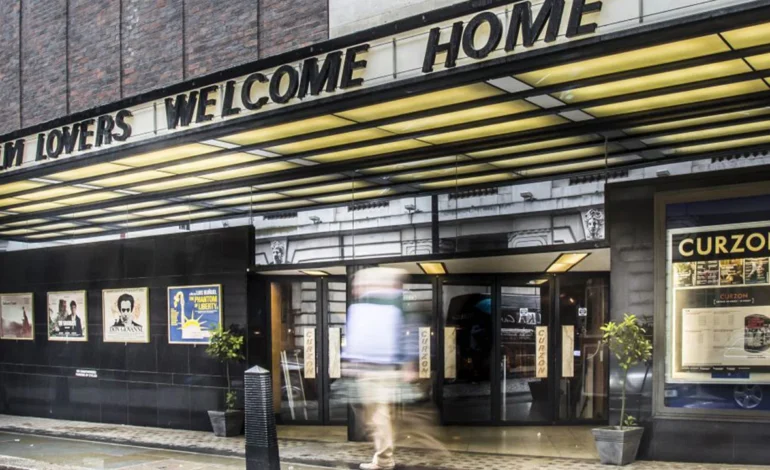
These sad blows to London’s historic cinema scene follow on from the closures of three Odeon Cinemas and three Picturehouse Cinemas in London. That’s the death of six cinemas in London in two years.
Odeon Covent Garden, situated within the former ‘Art Deco’ Saville Theatre, built in 1931, was home to NEMS (Beatles) Apple Live Events from 1966–1971, when they hosted The Who, The Jimi Hendrix Experience, Procol Harum and The Rolling Stones, among many other ‘on stage’ luminaries of the time. The Saville Theatre was converted into an EMI-owned cinema named The ABC Shaftesbury Avenue in 1971, as a two-screen conversion. It was later acquired by Cannon Cinemas, who sold it in the mid-1980s when it was expanded yet again. The cinema complex became known as Odeon Covent Garden in 2001, until its demise on 11th August 2024. It is currently awaiting demolition. The frieze at the front will be the only item to be saved under a preservation order. This cinema has been given a temporary three-month licence from December 2025 until February 2026 to function as The Lost Cinema, with two screens showing evening-only films. Nightclub mayhem will occur afterwards in the other former screens, with live acts and cabaret from midnight until dawn.
Arts & Culture — More from EyeOnLondon
Keep reading for film reviews, cinema stories, and what’s changing across London’s cultural life.
Wicked: For Good film review
Our take on the latest big-screen release and what works, what doesn’t, and why it matters.
Read the reviewMore Arts & Culture
Curzon Mayfair cinema closure
A London cinema story with heritage, audiences, and the difficult economics behind keeping doors open.
Read the storyMore Arts & Culture
Film studios could be coming to Camden
A look at what’s being proposed, why Camden is in the frame, and what it could mean locally.
Read the storyMore Arts & Culture
Odeon Surrey Quays called time on 18th August 2024. In a statement, Odeon said: “The decision was due to redevelopment plans taking place in Covent Garden and at Surrey Quays”.
Odeon Camden Town, situated in Parkway, was originally opened as The Gaumont Palace in 1937. It later became The Odeon in 1964, with Top Rank Bingo operating in the stalls. The Odeon closed in 1979. Cinegate opened a couple of screens, renamed as The Gate Camden, from 1980 until 1982. By 1997, Odeon converted the building into a five-screen multiplex. The current venue is set to close in January 2026, when it will be converted into student accommodation. It is still currently open as a cinema at the time of writing this piece (16th December).
Picturehouse Fulham, a 1930s Art Deco multi-screen conversion, closed on 11th July 2024. The building is currently up for sale.
Picturehouse Stratford East, built for the 2012 London Olympic Games, closed on 28th July 2024. Rumours abound that The Prince Charles Cinema in Soho may acquire the Stratford East building as a secondary venue.
Picturehouse Bromley closed on 1st August 2024. Picturehouse Bromley was a particularly sad loss. Designed by George Coles (1884–1963), Bromley’s original ‘Oscar Deutsch Odeon Theatre’ – as it was originally known – opened in 1936 and is one of several of George Coles’ architectural gems emanating from London’s Art Deco cinema palace era, including The Troxy in Stepney (1933), The Gaumont State, Kilburn (1937) and The Odeon Muswell Hill (1936), all of which are still Grade II* listed through Historic England. It was formerly run by Empire Cinemas, then Cineworld, and, since 2019, by Picturehouse. The building had been operating exclusively as a cinema for almost 90 years. The Save Bromley Picturehouse Campaign petition received almost 8,000 signatures. A listed building, it currently remains empty.
Have you attended any of these cinemas, or do you have memories of films seen there?
Share your thoughts with us, and follow EyeOnLondon for more stories exploring the city’s changing cultural landscape.
[Image Credit | BFI]
Follow us on:



Subscribe to our YouTube channel for the latest videos and updates!

We value your thoughts! Share your feedback and help us make EyeOnLondon even better!