Dead Man’s Wire: Gus Van Sant Strikes a 1970s Nerve

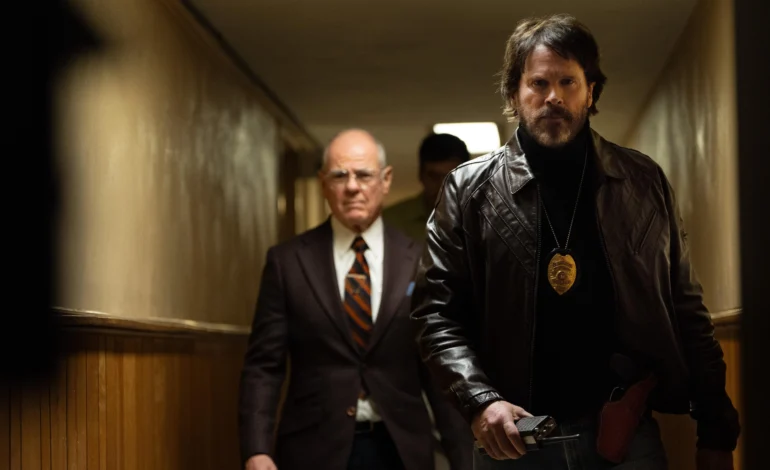
Dead Man’s Wire review: Gus Van Sant is a director of many means. Whether it be his Oscar-winning turn for Good Will Hunting, his more experimental features such as Elephant or even his notorious remake of Psycho, Van Sant has shown time and time again that he can approach a project in a number of ways. Dead Man’s Wire sees Van Sant’s take on a film that could have been ripped right out of the 1970s.
Dead Man’s Wire tells the true-life story of Tony Kiritsis and the measures that he took when his American dream was ripped away from him. Right from the outset, there are obvious parallels to Sidney Lumet’s Dog Day Afternoon, and while both explore the fragilities of man and the lengths some people will go to for money, they almost act as companion features as they depict a portrait of the archetypal ‘1970s American loner’.
Arts & Culture — More from EyeOnLondon
Three recent reviews and features to keep you reading beyond the headline.
Cinderella at Richmond Theatre pantomime review
A festive panto night out in a beautiful theatre, with strong performances and plenty to keep all ages engaged.
Read the reviewMore Arts & Culture
The Importance of Stephen Fry: an OTT Earnest with a surprise Lady Bracknell
A new take on Wilde that does not always land the finesse, but earns its laughs with a standout central turn.
Read the reviewMore Arts & Culture
Pillion film review
A closely observed film with a strong sense of mood, built around character tension rather than obvious spectacle.
Read the reviewMore Arts & Culture
The two performances at the centre of this film sit at different ends of a spectrum but are used expertly to create a fine balance and generate conflict. Firstly, we have the leading star of the film, Bill Skarsgård, who portrays Tony with a raw kineticism, a man who struggles to keep his emotions internal in a do-or-die situation. A character like this is a puzzle from the very beginning. How do you make a hostage taker likeable? Well, Skarsgård and Van Sant have orchestrated a concoction that relies on the sheer charisma and the wickedly dark humour of our lead. Yes, Dead Man’s Wire may deal with a true-life shocking situation, but it is not without its humour. Instead, it makes this component an integral part of humanising the man at the centre of the story and also calls out the sheer wild mundanity of what is going on.
On the other end of the performance spectrum is Dacre Montgomery’s Richard Hall, who balances out the wildcard that is Skarsgård’s Tony with a more stable, nuanced performance. Due to the events of the film, Montgomery is, for the most part, seated, leaning slightly forward, and has the constant distraction of a shotgun aimed at his head. This too is a very human performance, one that does not rely on humour or wit, but one that relies on an initial sliminess that soon turns to a rational hopelessness.
Also in the film is an ensemble cast that includes the likes of Colman Domingo, Myha’la, Cary Elwes and even Al Pacino, the latter in particular lending more weight to the aforementioned comparisons to the cinema of Sidney Lumet. What this cast of supporting characters is able to do is further the 1970s setting. Each character has their own particular spin on Tony’s actions that sometimes influence the narrative and sometimes influence our own interpretation of whether this is rightful justice or a crazed overreaction.
The ensemble is also a clever way for the film to develop this 1970s aesthetic, as it showcases archetypes that have since become synonymous with the era, such as the smooth-talking radio DJ, the gruff detective and the greedy, emotionless businessman.
Dead Man’s Wire looks into some hard-hitting issues that were rife at the time the film is set, such as corporate greed, poverty and justice, issues that hit just as hard now and issues that Van Sant never gets too carried away with. The ideas and themes that are tackled within Dead Man’s Wire are baked into the action. We, as an audience, are not whacked over the head over and over again, but instead left to ponder and analyse our own views on the actions that Tony takes.
Overall, Gus Van Sant’s Dead Man’s Wire is a sharply written bolt of energy that includes a collection of eccentric and immensely watchable performances, shaping a film that feels as though it could have been released fifty years ago. I highly recommend watching Dead Man’s Wire when it is released next year.
Dead Man’s Wire
Feature film | Directed by Gus Van Sant | Based on a true story
A tense true-crime drama inspired by the 1977 hostage standoff involving Tony Kiritsis, told with the restrained intensity and moral ambiguity associated with 1970s American cinema.
Starring Bill Skarsgård as Tony Kiritsis, alongside Dacre Montgomery, Colman Domingo, Myha’la, Cary Elwes and Al Pacino.
★ ★ ★ ★ ☆
View full cast and production details on IMDb
For more film reviews and cultural criticism, visit our Arts & Culture section .
Follow us on:



Subscribe to our YouTube channel for the latest videos and updates!

We value your thoughts! Share your feedback and help us make EyeOnLondon even better!