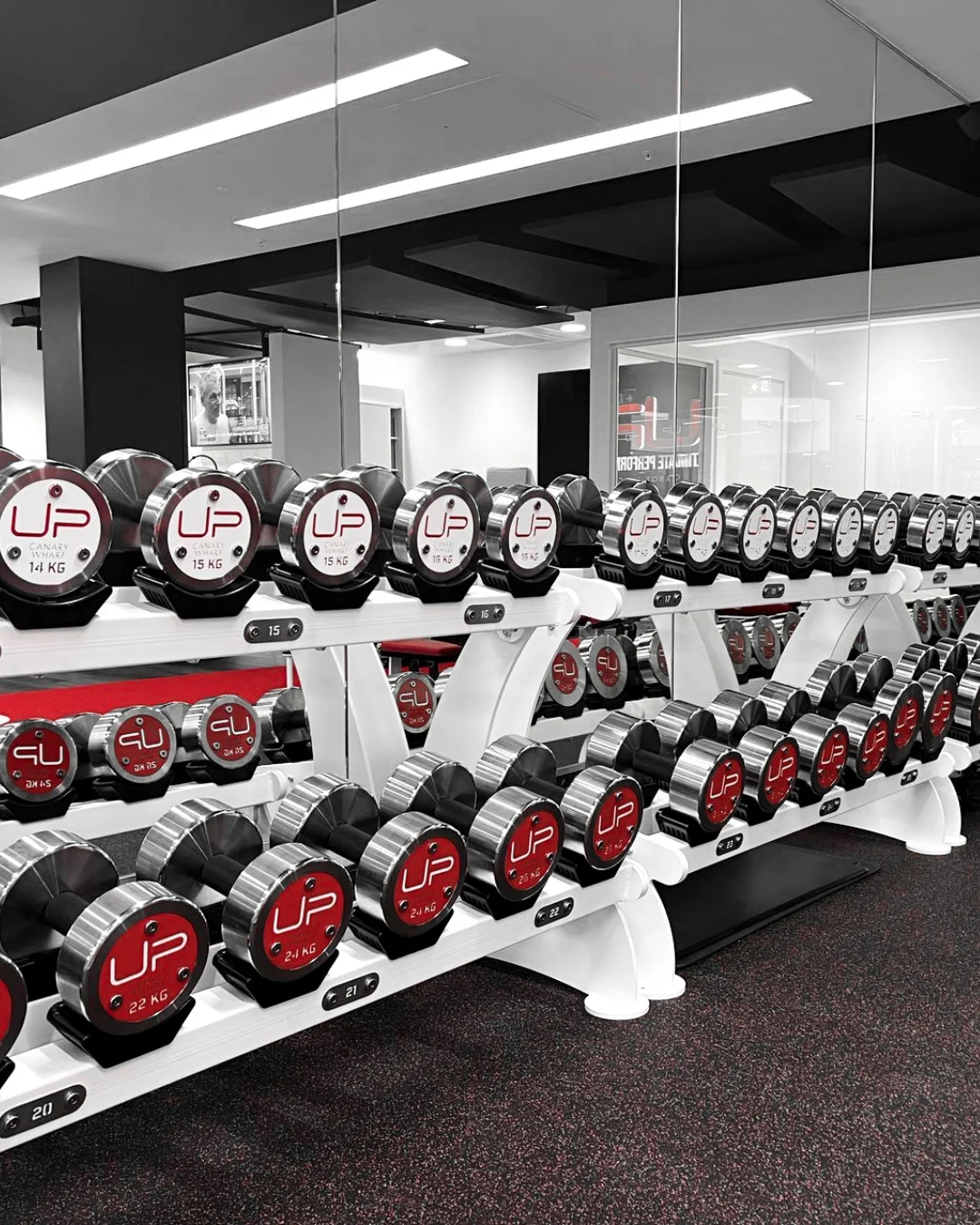
2025 has been a year of contradiction for health and fitness, with the top fitness trends pulling the industry in two directions at once. While cutting-edge technology has introduced next-generation wearables and AI-driven coaching apps, many gyms are returning to their roots, placing renewed emphasis on community to improve member retention and sustain revenue.
Pilates has surged in popularity throughout 2024 and shows no signs of slowing down. Old school step aerobics has been hinting at a comeback, appearing in both budget gyms and boutique studios. As the Boomer generation grows older, there has been an increase in longevity-based programming, combining strength with mobility and balance work.
Health & Wellbeing — More from EyeOnLondon
Training, mindset and everyday habits — three reads to keep you informed.
What is HYROX?
A straightforward guide to the race format, the training style, and why it has taken off.
Read the storyMore Health & Wellbeing
The science behind the mind muscle connection
What research suggests about focus, form and muscle activation in the gym.
Read the storyMore Health & Wellbeing
How gratitude supports health and happiness
A look at why small daily habits can matter for mood, resilience and wellbeing.
Read the storyMore Health & Wellbeing
Hybrid training competitions are also gaining significant traction, with December’s London HYROX event attracting around 40,000 athletes. The future of fitness appears to lie in the tension between rapid technological innovation and the enduring pull of community.
1. Technology-driven personalisation
Wearable tech, health tracking and training apps, AI coaching.

Modern wearables have moved far beyond basic step counting to become comprehensive health monitoring systems. Devices now track heart rate, sleep quality, blood pressure, cholesterol, oxygen levels, calorie burn and a growing range of daily health markers.
Smartwatches, smart rings, AR glasses, electronic textiles and flexible sensors are reshaping the market. These devices offer levels of insight that would once have been confined to clinical settings, blurring the line between technology and lifestyle.
Artificial intelligence has transformed these tools from passive data collectors into adaptive systems that learn from user behaviour, predict patterns and flag potential health concerns before they escalate. This shift opens the door to preventative rather than reactive approaches to health.
Recent advances in sensor technology have enabled continuous monitoring capabilities that were previously unavailable outside medical environments. Non-invasive blood pressure tracking now allows users to receive real-time alerts about potentially dangerous conditions. Some smart rings can even monitor blood oxygen levels.
Developments in flexible and stretchable electronics, advanced materials such as graphene and MXenes, energy-harvesting solutions and new manufacturing techniques including 3D printing and roll-to-roll processing are expected to accelerate in 2026. This should make wearables more accurate, more discreet, more comfortable and, in time, more affordable.
The most exciting of these developments, in my view, is augmented reality glasses. Until recently, they felt like clumsy approximations of the sleek designs imagined in science fiction. Major technology companies are now investing heavily in making AR glasses practical and wearable.
Meta’s collaboration with Ray-Ban has produced smart glasses that combine fashion with functionality. These devices go beyond entertainment and sun protection, offering immersive meetings, multi-screen computing and real-time task management. Some models include a neural band, worn like a screenless smartwatch, which can detect pinches, swipes, taps, rotations and other familiar gestures, including the use of a virtual d-pad with the thumb. Later this year, handwriting using a finger is expected to be introduced.
Meta has also partnered with Oakley and Garmin to link the glasses with Garmin watches and bike computers. Users can request real-time data such as speed, pace, heart rate or distance during runs and rides, with an LED inside the glasses flashing when a target metric is reached.
Software has evolved alongside the hardware. Advanced AI-driven apps can now link to this growing pool of health data, predict race finish times, create progressive personalised training schedules and adapt day by day to the user.
2. Hybrid training and competitions
Fitness enthusiasts have long combined traditional strength training, high-intensity interval training and endurance work within single sessions. In recent years, these hybrid workouts have surged in popularity.

This shift has carried through to competitive events, with formats such as HYROX, ATHX and DECA expanding rapidly. Part of the appeal lies in the option to compete in pairs, sharing the physical load while enhancing the social aspect.
An increasing number of gyms and studios have affiliated themselves with these brands, offering targeted classes, structured training programmes and early access to ticket sales. This model looks set to dominate in 2026 as existing competitions grow and new ones emerge.
In October, HYROX is even launching a four-day Mediterranean cruise. The event will bring together around 2,300 athletes and 15 elite HYROX professionals, combining training, competition and community aboard a luxury cruise ship.
3. Reformer Pilates and strength training
Reformer Pilates has surged in popularity, driven by its emphasis on alignment, core strength and flexibility. Across London, reformer studios have multiplied in recent years, with hundreds more expected to open in 2026.

These classes are no longer attracting only women seeking aesthetic goals or rehabilitation. Clientele now range from new mothers to professional footballers. Even serious bodybuilders are incorporating reformer work into their routines.
The reformer bed, originally developed by Joseph Pilates, is increasingly being used for more demanding strength-based training. Some studios now incorporate heavy dumbbell exercises into sessions. These classes, often referred to as Strength Reformer, do not strictly follow Joseph Pilates’ original movements.
Instead, they combine traditional strength exercises with the balance, control and stretch required to work on the reformer. Imagine straddling the reformer, trying to prevent your legs from sliding apart, while performing a single-arm snatch with a 20kg dumbbell.
4. Zone 2 training
Zone 2 training involves maintaining a steady heart rate at roughly 60 to 70 per cent of maximum. At this intensity, conversation remains possible, breathing is controlled and the effort can be sustained for long periods. It typically feels like a three or four out of ten.

Zone boundaries vary by individual. What feels easy for an elite athlete may be challenging for a beginner. Experienced runners may reach Zone 2 during an easy jog, while others may do so during a brisk walk.
During 2025, Zone 2 training gained widespread attention, often promoted as optimal for mitochondrial health, fat oxidation and longevity. However, when training volumes are matched, higher intensity work generally produces greater mitochondrial adaptations than Zone 2 alone.
Zone 2 can improve fat oxidation in beginners, but long-term progress usually requires more varied intensities. For cardiorespiratory fitness, intensity remains one of the most time-efficient drivers. If training time is limited, higher intensity sessions tend to outperform Zone 2 in both performance and health outcomes.
That said, Zone 2 has an important role. It helps build an aerobic base, supports recovery and allows for additional low-stress training volume. Its accessibility and comfort mean it is likely to continue growing in popularity, particularly if it encourages previously inactive people to move more regularly.
5. Longevity-focused training
Earlier this year, a meme circulated on social media stating: “I’m not training for my beach body, I’m training for my old lady body.” Despite the humour, the message resonated widely.

As people live longer but not necessarily healthier lives, the importance of preparing for later years has become clearer. Gyms and personal trainers have noticed a shift, particularly among Baby Boomers and Generation X, towards programmes designed to build bone density, increase lean muscle mass and reduce the risk of dementia and metabolic syndrome.
Strength, mobility and balance-focused training has grown in popularity, with many studios now offering small group personal training. This format provides personalised coaching, improved technique and a sense of community at a lower cost than one-to-one sessions.
By 2043, almost 4.5 million people aged 65 and over are expected to live alone. A simple fall can result in serious injury, particularly if help is not immediately available. Even with assistance, injuries such as broken hips can lead to prolonged immobility, muscle loss and lasting reductions in independence.
These realities underline the importance of preparing the body earlier in life. Longevity-focused training is less about fear and more about preserving independence, resilience and quality of life for as long as possible.
For more stories exploring London life, health and wellbeing, follow EyeOnLondon for original features and everyday insights across the capital.
Follow us on:



Subscribe to our YouTube channel for the latest videos and updates!

We value your thoughts! Share your feedback and help us make EyeOnLondon even better!