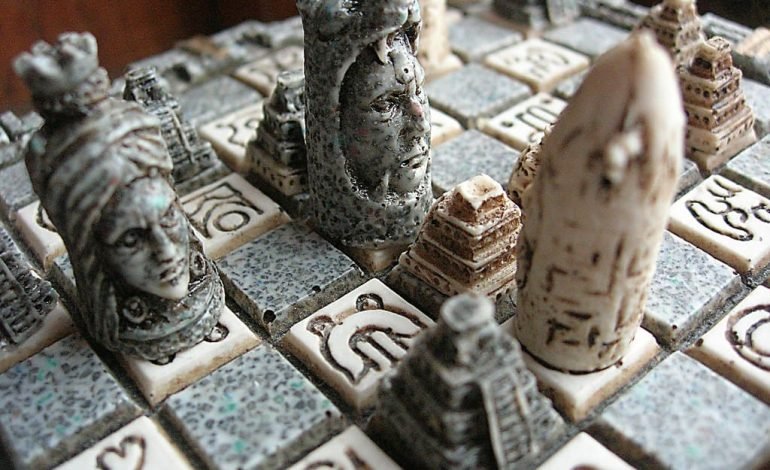
As spring returns the bright colours of nature to us and, ‘April is the cruellest month, breeding lilacs out of the dead land,’ we rejoice and console in equal measure. Just as the seasons shift, the chess world also reflects on the past, remembering one of the most defining moments in chess history, an encounter that shaped the game forever: Spassky vs Fischer.
New enterprises in chess, such as the BBC’s Chess Masters: The End Game, where 12 skilled and passionate amateur players compete against each other to see who will be top of the board, is a welcome venture in expanding the chess profile. The programme’s introductory literature states, “… it is the first time chess has been broadcast on mainstream television in the UK for 30 years!” Certainly, in Europe and other continents, chess has been part of mainstream television broadcasts, although the internet and chess platforms have now taken up much of that live coverage, expanding the game’s reach significantly.
BBC Two’s introduction, of course, refers to Channel 4’s live coverage of the World Chess Championship held at the Savoy Theatre, London, in 1993 between our challenger to the world title and crown, Nigel Short, and the world champion, Garry Kasparov. Channel 4 covered the event and broadcast live each day’s game from early afternoon until late evening over the entirety of the championship. Carol Vorderman made her debut as the programme’s presenter, and grandmasters at Simpson’s-in-the-Strand analysed the games for viewers. I was the official artist for the event, and a large drawing I made of the two contestants in panoramic view on stage at the Savoy, including Princess Diana, who attended the championship on multiple days, watching from the Royal Box, was used as the final TV image of each day’s play.
The current BBC programme, which began on Monday, 10th March at 8pm, features 12 players from all backgrounds battling it out across a series of rapid chess games before one is crowned and given the title of Chess Master. It is hosted by Sue Perkins, with GM David Howell providing insight into the strategies (or lack thereof) and playing skills of the contestants. “It’s all about psychology, strategy, smart thinking, and nerves of steel!” The show is also available on iPlayer. It runs over eight episodes, featuring the 12 contestants, Howell, and former Traitors contestant Anthony Mathurin. Contestants’ profiles and an interview with Sue Perkins discussing the series can be found at www.bbc.co.uk.
In the column marked for consolation, on 27th February, Boris Vasilievich Spassky, born 30th January 1937, passed away. His death has rightly engendered a crescendo of articles, comments, and obituaries, with former world champions such as Garry Kasparov praising him as the chess grandmaster “who played the game of the century!”
Spassky, the 10th world champion, was 88 years old at the time of his passing and was considered one of the sport’s first mainstream stars. He was “an independent spirit and true chess artist”, a genius excelling in complex and dynamic middlegame positions, states FIDE. As the 10th world champion, he began his serious chess career when he became a grandmaster at the age of 18, memorably making a global impact by qualifying for the Candidates Tournament in Amsterdam in 1956 at just 19. Over the years, his triumphs included victories over Keres, Geller, and Tal in 1965, earning him the right to challenge Tigran Petrosian. However, he lost their title match in Moscow in 1966. The following year, he won the Candidates Tournament again, qualifying for a second world championship challenge, and this time, he defeated the 9th world champion, Petrosian.
Petrosian, born in 1929 and passing in 1984, was “one of the greatest defensive players in history”. He was born in Tbilisi, Georgia, to Armenian parents.
Spassky’s worldwide reputation in chess became firmly established when he played the World Chess Championship match against the American Bobby Fischer in Reykjavik in 1972, billed as a Cold War Showdown. It was “one of the most iconic matches in chess history” and a symbol of the geopolitical rivalry between the USA and the Soviet Union. Fischer’s victory “propelled chess into the mass media spotlight”. Spassky, however, gained global admiration for his dignity and sportsmanlike demeanour in defeat, conceding his crown and title to his Western adversary.
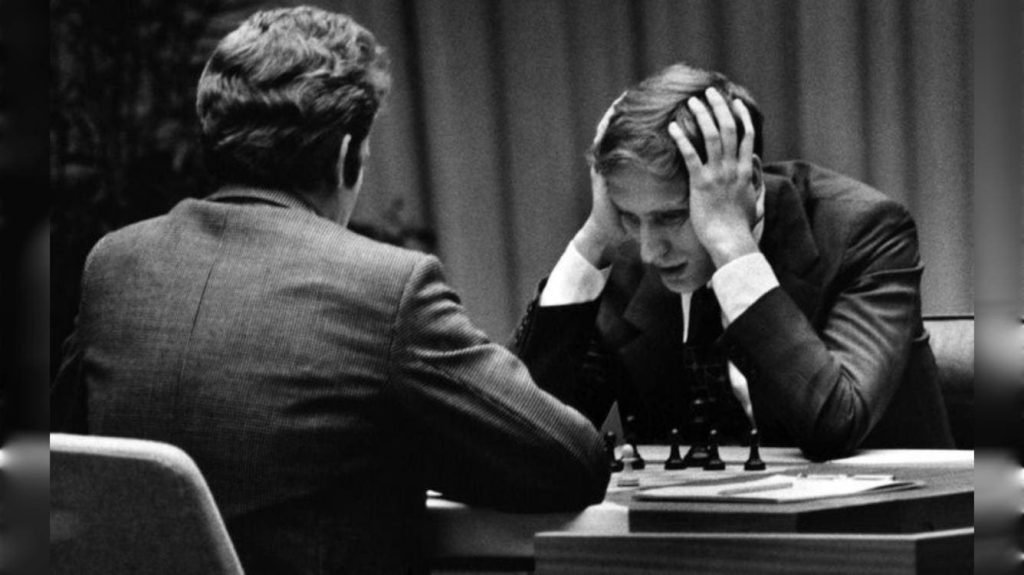
The unusual beginnings of the tournament further enhanced Spassky’s global reputation as a self-determined player. When Fischer failed to attend the opening ceremony, Spassky agreed to postpone the first round of the tournament. Moscow insisted he must claim victory by default and return home, but the friendship between the two players had strengthened over time, and Spassky overruled Moscow’s firm directives. Jim Slater, the London backer of the event, recognised its global significance, as it was front-page news worldwide, and decided to double the prize fund, “an action that even had hardened Muscovites, who sided with Spassky, jumping out of their seats in adulation!”
As history has shown, Spassky lost the championship match. However, when Fischer ultimately won, Spassky stood up and applauded him in admiration. He later said,
“As a chess king, I have always tried to fortify and unite the multinational kingdom of chess, not to cause division within it. I will remain faithful to that principle in my old age.”
Garry Kasparov said of Spassky, “Boris was never above befriending and mentoring the next generation, especially those of us who, like him, didn’t fit comfortably into the Soviet machine.” Kasparov continued, “His rise as a prodigy, conquest of the crown against the invincible Petrosian on the second attempt, and decades of elite play are too often lost in the shadow of his dramatic title loss to Bobby Fischer in 1972 and the circus Fischer turned it into.”
“But Spassky always wanted to play, and he handled the situation, as above, with impressive dignity. While his chess justified the ‘universal’ label that frequently follows his name, his aggressive, gambiteering style produced countless masterpieces.”
Spassky played seven times for the Soviet Olympiad team (1962–1978). In 1976, he emigrated to France and competed under the French flag in three more Olympiads (1984–1988).
The Challenge
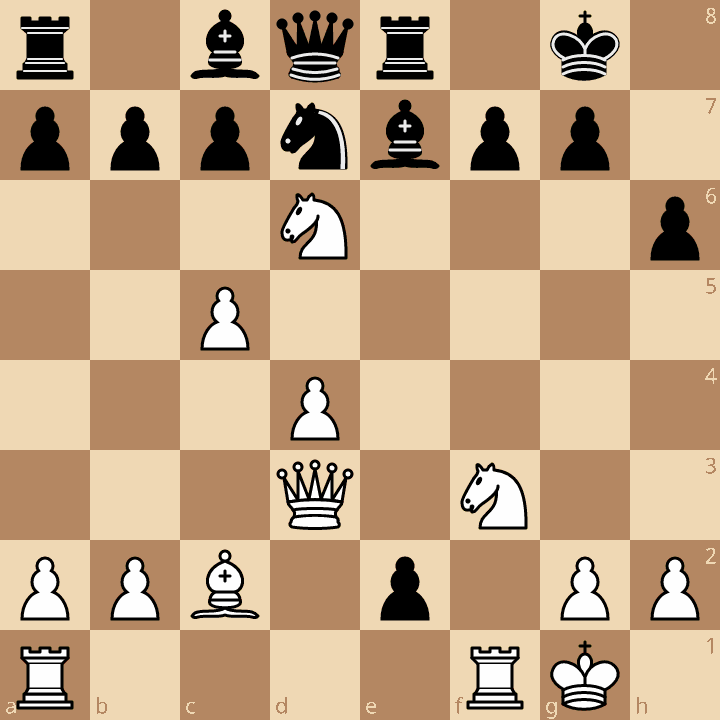
In honour of the recent passing of a great player, it is fitting that we give them their dues and dedicate one of their great games to them! The game in question is probably one of Spassky’s most well-known, given that it was used in the opening sequence of the James Bond film From Russia with Love, the Smersh Gambit! It was originally played in the USSR Championship in 1960 in Leningrad, Round 16, on 20th February. King’s Gambit Accepted, Modern Defence C36. Boris Spassky (White) v David Bronstein (Black). Bronstein, playing Black, had played 14… e2, and Spassky, as White, replied with 15. Nd6—see diagram. White ignored Black’s pawn attacking their rook on f1 by moving his knight from e4 to d6. Can you see why White ignored the threat and seemingly sacrificed his knight?
See the answer down below.
The Solution
15… Nf8, forced, as White’s next move, 16. Qh7, would be checkmate! The game continued…16. Nxf7, exf1=Q+. 17. Rxf1, Bf5. 18. Qxf5, Qd7. 19. Qf4, Bf6. 20. N3e5, Qe7. 21. Bb3, Bxe5. 22. Nxe5+, Kh7. 23. Qe4+… 1-0. A great game with sensational attacks and short-term defensive attempts by Bronstein. I had Bronstein seated behind me watching my simul game when I played against GM David Norwood at The Chelsea Arts Club many moons ago, and upon going into an endgame with equal numbers of pawns and kings, there was no way for either of us to break through the pawn blockades. David Norwood offered me a draw, which I accepted, and David Bronstein jumped up, shook my hand, and said, “Well played, Barry!” He was a lovely man, very courteous and kind. I also thought—that’s the hand that had shaken Spassky’s hand in their Leningrad encounter in 1960, a rare treat for me!
For more from the world of Chess stay tuned to EyeOnLondon.
Follow us on:



Subscribe to our YouTube channel for the latest videos and updates!

We value your thoughts! Share your feedback and help us make EyeOnLondon even better!