Macao: where old Europe meets new China

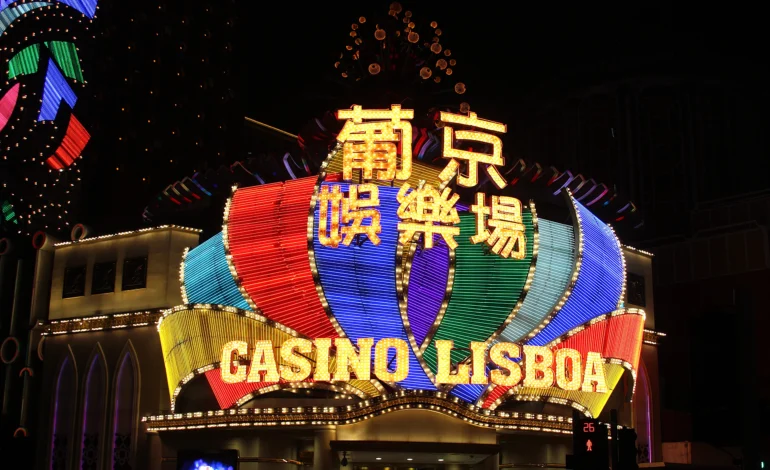
Portuguese for four hundred years, the autonomous Chinese region of Macao is a heady mixture of old Europe and new China.
The world’s longest sea bridge links Hong Kong to Macao. However, the six-lane, 36-mile highway, which spans the Pearl River delta, can be used by just a few permitted vehicles and is almost devoid of traffic. Like most people, I took the fast ferry. The connection is airside so my luggage was collected for me and loaded onto the ferry and we were reunited at Macao’s outer harbour after the long journey from London.
Travel – Latest from EyeOnLondon
Explore new ideas for getaways, from skill-building trips to quirky stays and global travel news.
Learn a new skill on holiday
From cookery to crafts and surf schools, these trips offer more than a tan and leave you with something lasting.
Read the featureMore Travel
Quirky UK stays
Unusual places to stay closer to home, from lighthouses and cabins to converted buses and boats.
Read the ideasMore Travel
US national parks fees to be tripled for foreigners
What the proposed fee rises could mean for UK visitors planning bucket-list trips to America’s great parks.
Read the analysisMore Travel
I was ready for bed, but my host, Jenny, had other ideas and whisked me to the top of the Macao Tower. One thousand feet high, it is amongst the tallest in Asia. Used by courageous bungee jumpers to raise money for charity, it is also home to a revolving buffet restaurant showcasing food from around the world. The diverse nature of Macao’s cuisine has resulted in the country receiving UNESCO recognition for its creative gastronomy. It is also home to numerous Michelin-star restaurants, true foodie heaven.
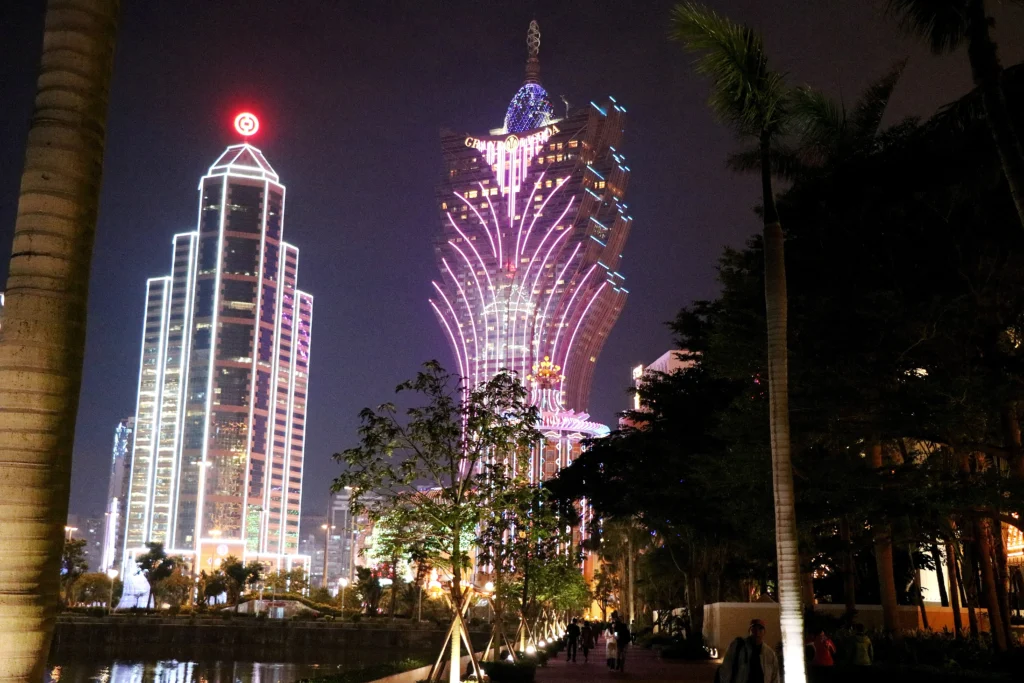
Originally leased by Portugal from China in 1557, Macao was handed back in 1999. The major industries are gambling and tourism. Its gambling revenues are typically seven times higher than Las Vegas, largely because it is the only place in China where gambling is legal, thanks to its Portuguese past.
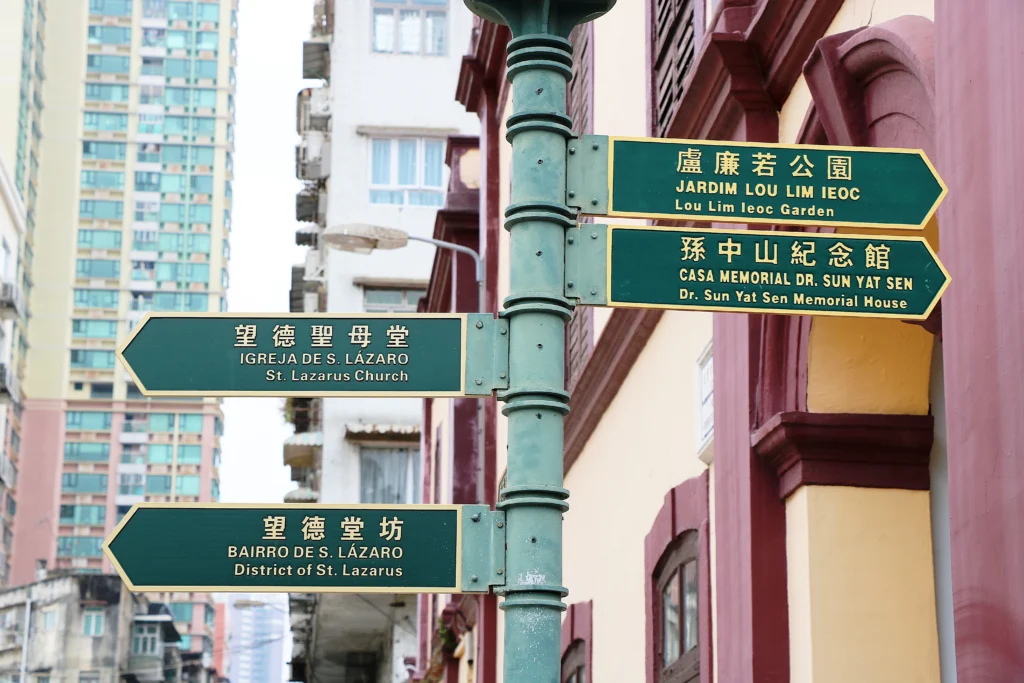
Although covering just twelve square miles, Macao is divided into three distinct regions, the busy and crowded old town with its Portuguese heritage, Cotai, full of modern casinos and resort hotels, and Coloane, a peaceful, relaxing, almost rural environment. After a good night’s sleep I headed out to explore the old town. Street stalls, shops and markets compete for space in the crowded centre, with apartment blocks towering above. Most have balconies, but they are fenced in. Jenny tells me that this is to prevent laundry that has been hung out to dry from falling onto pedestrians below. The street signs are in Mandarin, Portuguese and English, reflecting Macao’s cosmopolitan past.
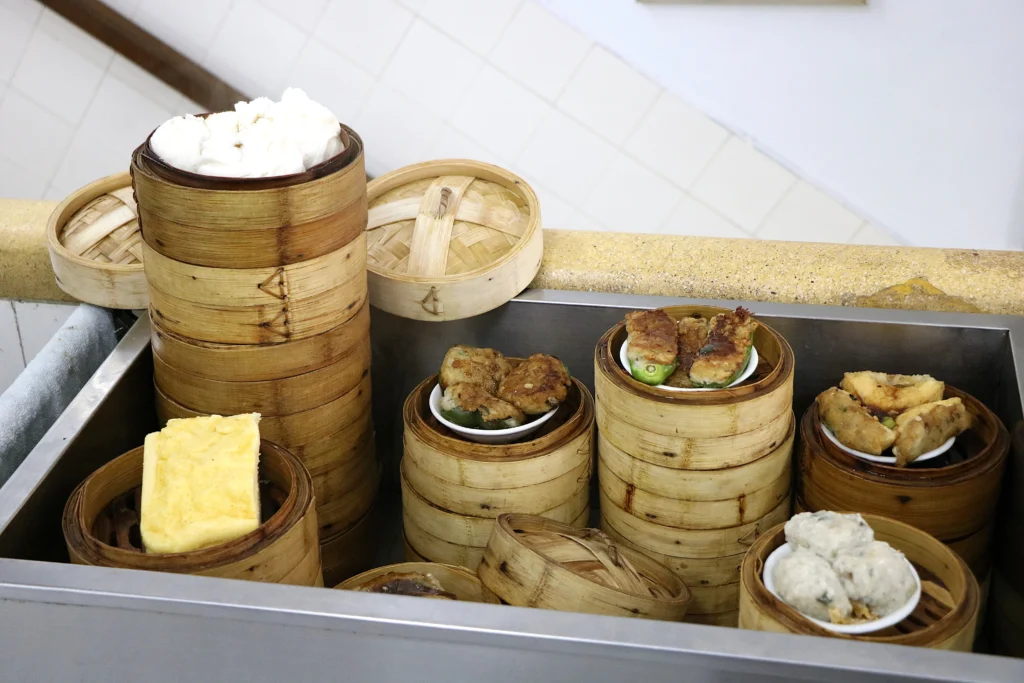
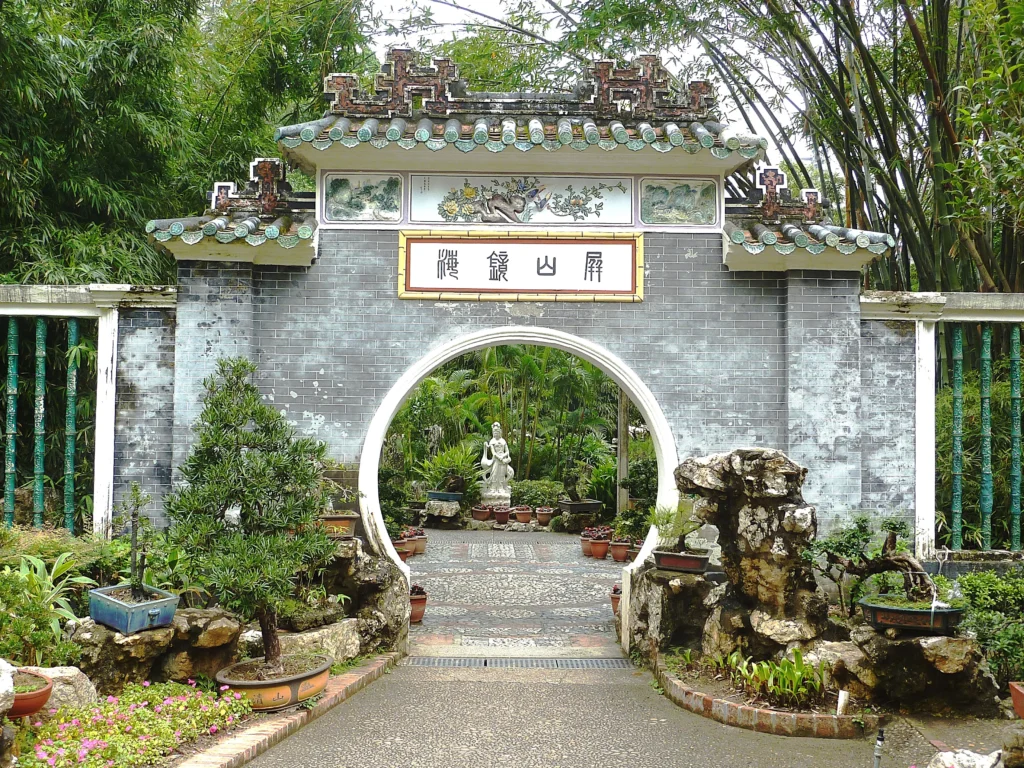
I visited the famous Long Wa Tea House, serving traditional Dim Sum, noodles and other local dishes together with a choice of teas. Rooted firmly in the 1960s, there is no cash register; your bill will be calculated on an abacus. Later that morning I relaxed in the Lou Lim Ieoc Garden, a haven of peace and tranquillity in the hectic old town. It was created by a local merchant, Lou Kau, as part of his private residence, but is now open to the public. There is a large pond in the garden which is crossed by a wiggly bridge. According to legend, evil spirits can travel only in straight lines, so cannot follow you over the bridge. That is a relief.
Close by, but far removed from the hustle and bustle, is the St Lazarus district. Centred on St Lazarus Church, it is Macao’s creative centre. The cobbled streets, colonial houses and tranquillity are ideal for the artists, designers and others who live and work there. The nearby ruins of St Paul’s Church are, oddly, one of historic Macao’s biggest attractions, although having been burned down three times, all that remains is the façade.
That evening I visited Taipa Village, linked to downtown Macao by three bridges. Originally home to fishermen, its narrow, busy streets provide visitors with a taste of Macao’s past and an opportunity to savour its diverse cuisine. I had dinner at Antonio’s, a cosy Portuguese restaurant serving authentic food and offering guests a traditional glass of Port wine at the end of their meal. I wonder what the Chinese make of that.
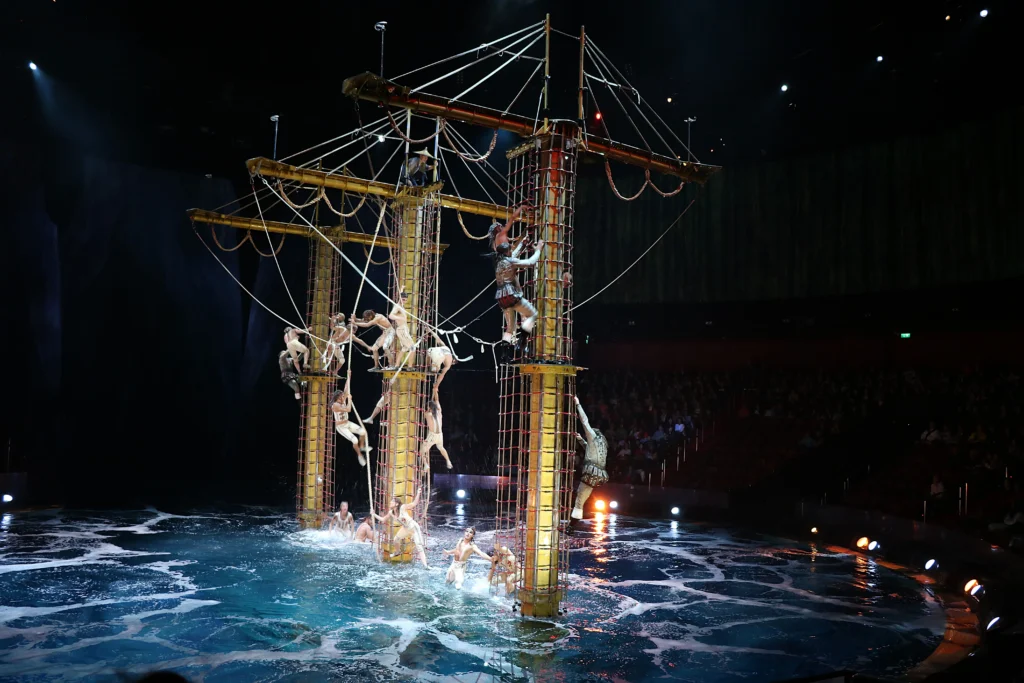
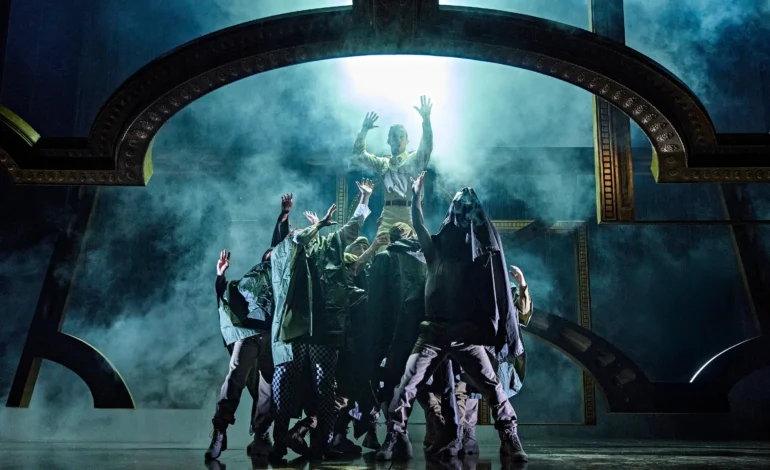
Next day it was off to Cotai. Often referred to as the Las Vegas of the East, it is where visitors can find huge resort hotels, casinos and lavish entertainment. I visited the City of Dreams and saw their famous show ‘House of Dancing Water’. It is an incredible production mixing elements of Cirque du Soleil with water. The main part of the stage consists of a pool holding nearly four million gallons. The amazing stage is divided into eleven parts that fit together but each one can be raised one metre above the surface and dropped to seven metres below during the performance. It was a spectacular and unique experience. If you could only visit one show in your life, this would have to be the one.
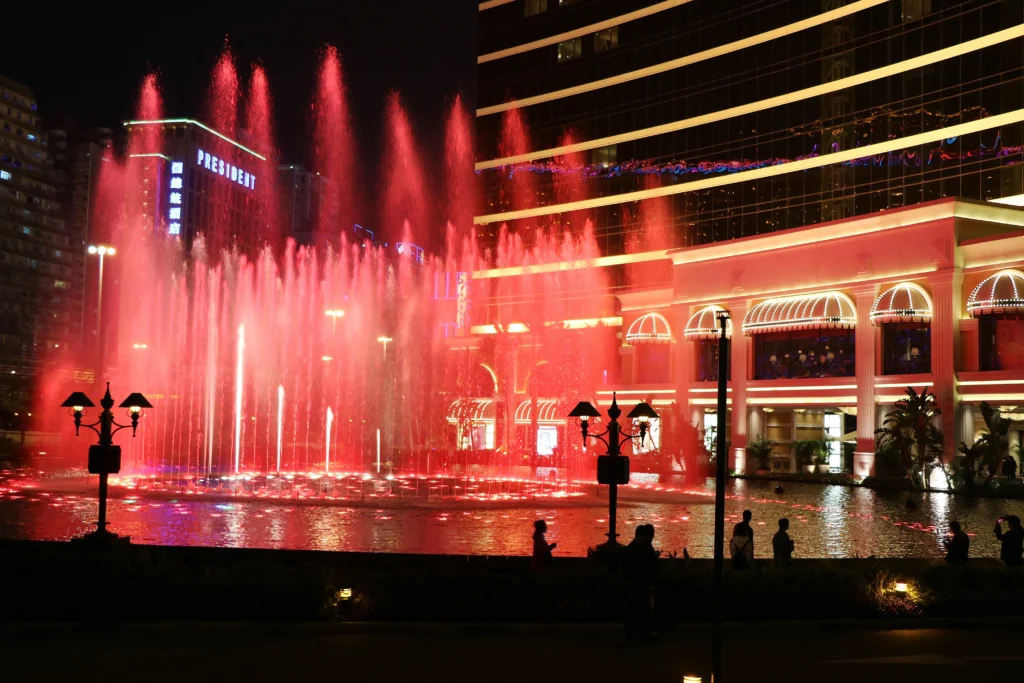
I also took a gondola ride to the Wynn Palace Hotel and then watched the musical fountain display before heading off for a drive around the area. Like other hotels on the Cotai Strip, the Venetian is modelled on its Las Vegas counterpart. Its 39-storey structure contains three thousand suites and the world’s largest casino, with eight hundred gambling tables.
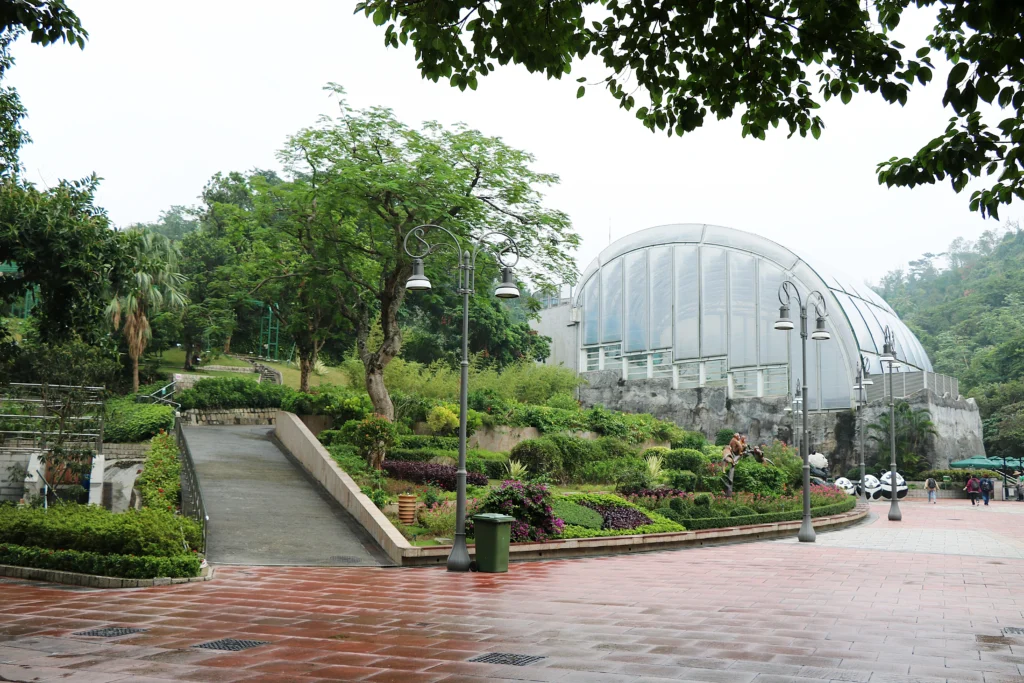
In total contrast, Coloane is as close as Macao gets to sleepy countryside. Seac Pai Van Park is an open area, popular with locals looking to get away from busy city life. The park is home to the Giant Panda Pavilion where its famous inhabitants, including twins Jian Jian and Kang Kang, are kept in air-conditioned comfort for most of the year. Nearby is another famous Macao landmark, Lord Stow’s Bakery. Those familiar with Portuguese cuisine will know that its custard tart, pastel de nata, is a national dish, but it is claimed that the best ones come from the bakery in Coloane, set up by an English chemist. Having tasted them, I would not dispute that.
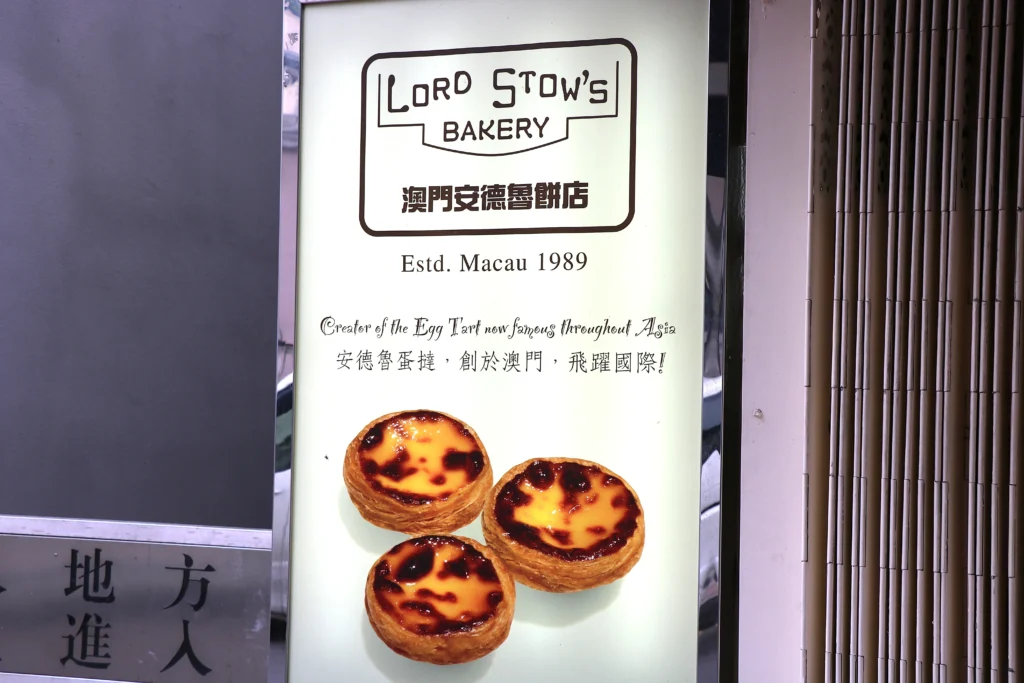
It is just another example of how Macao blends its heritage. Portuguese, Chinese and Macanese food, a fusion of flavours brought about by Macao’s Portuguese maritime past, are available everywhere, from street vendors to over twenty Michelin-star restaurants that call Macao home. There is simply nowhere like it.
Travel Essentials
Wendy Wu Tours offers a 6-day short break to Macao including flights, transfers, four nights at the 5* Parisian with breakfast and a full day tour with lunch. Prices from £2,599pp.
For more information call 0808 239 0632 or visit wendywutours.co.uk
For more travel features and global destination stories, follow EyeOnLondon and explore our latest guides, insights and cultural discoveries.
[Image Credits | Mike Pickup]
Follow us on:



Subscribe to our YouTube channel for the latest videos and updates!

We value your thoughts! Share your feedback and help us make EyeOnLondon even better!