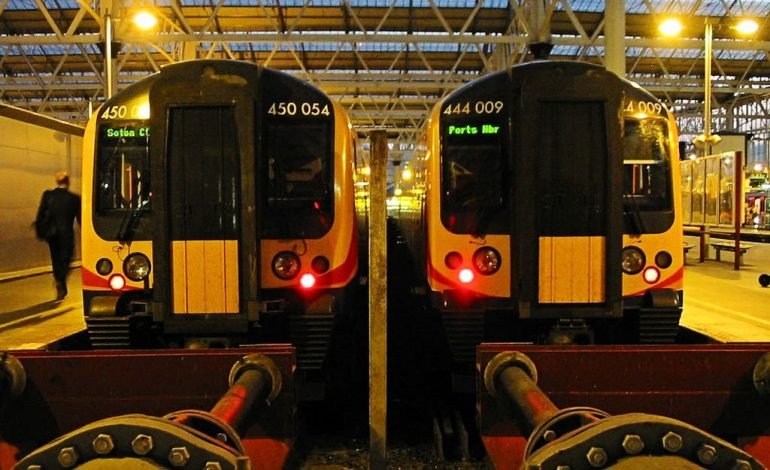
Labour renationalises three key rail operators—South Western Railways, C2C, and Greater Anglia—starting next year as part of its ambitious plans to improve the UK’s rail system. This move aims to tackle long-standing issues of delays, cancellations, and inefficiencies while bringing the railway network under public ownership.
Transport Secretary Heidi Alexander explained that the renationalisation aims to tackle decades of inefficiency, delays, and cancellations caused by the privatised rail system. Speaking to BBC Breakfast, she said, “We need to turn the page on 30 years of failure and bring these train companies into public ownership.” Labour estimates that the plan could save taxpayers £150 million annually while improving reliability and boosting economic growth.
Read More EyeOnLondon UK News and Reviews
How Will Renationalisation Work?
The government plans to establish Great British Railways (GBR), a new arms-length body that will oversee service contracts and eventually take over infrastructure responsibilities from Network Rail. GBR is expected to streamline operations and eliminate the inefficiencies of the fragmented franchise system. This approach follows examples such as LNER, which saw a significant reduction in cancellations after coming under public control.
However, critics argue that public ownership alone may not be enough to address the system’s deeper challenges. Andy Bagnall, chief executive of Rail Partners, warned, “Simply changing who runs the trains won’t deliver more reliable and affordable services for passengers, reduce subsidy for taxpayers, or grow rail freight.” He added that Labour has avoided making “big decisions” about long-term rail infrastructure investments.
Challenges and Criticism
When Labour’s renationalises the railways it aims to improve service reliability, there are no guarantees that rail fares will decrease. Alexander admitted that the focus is on reducing cancellations and improving service punctuality rather than cutting ticket prices. Some have criticised this limited scope, suggesting that additional investment in infrastructure and modernisation is needed to make a real impact.
Privatisation in the 1990s led to a boom in rail usage, but it also fragmented the system, leading to inefficiencies and rising fares. The coronavirus pandemic further strained the network, with the government stepping in to take control of several struggling operators. The Labour government’s plan to renationalise rail services marks a significant shift in the UK’s approach to managing its railways, contrasting with the history of rail privatisation in Britain that began in the 1990s. Currently, four major operators—East Coast Mainline, TransPennine, Northern, and South Eastern—are already under public control, with similar moves in Wales and Scotland in recent years.
Regional Impact
The renationalisation will directly affect key commuter routes into London and across southern England. South Western Railways, operating over 1,500 daily services, is critical for commuters in southwest London and southern England. Meanwhile, C2C connects east London and south Essex, and Greater Anglia serves major regions including Norfolk, Suffolk, and Cambridgeshire.
Commuters have mixed feelings about the changes. While some welcome the promise of improved reliability, others remain sceptical about the lack of concrete plans for fare reductions or infrastructure upgrades.
Labour’s Vision for the Future
Labour’s plan to renationalise railways is a bold step aimed at addressing long-standing frustrations with the UK’s rail system. However, the success of this initiative will depend on effective execution, adequate investment, and a willingness to engage with industry stakeholders and unions. As Alexander noted, resetting relationships with trade unions is “absolutely imperative” for breaking deadlocks and fostering cooperation.
For now, the when Labour renationalises South Western Railways, C2C, and Greater Anglia it will mark the beginning of a significant shift in how Britain’s railways are managed, with hopes of a more reliable and efficient system in the years to come.
Discover more insightful stories and updates on EyeOnLondon – your trusted source for UK news, features, and reviews. Stay informed, stay inspired, and explore a different perspective every time. Follow us today and leave you comments!
Follow us on:



Subscribe to our YouTube channel for the latest videos and updates!

We value your thoughts! Share your feedback and help us make EyeOnLondon even better!