Iran Protests Spread as Economic Pressure Tightens on Tehran

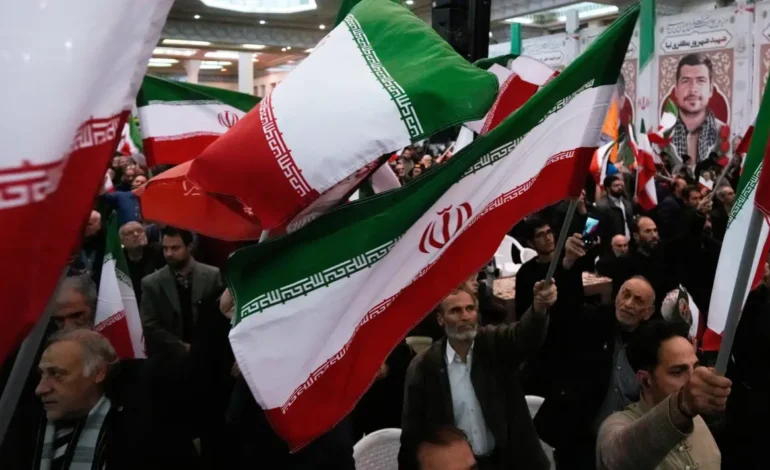
The latest Iran protests have widened steadily across the country, driven less by ideology than by the daily strain of an economy many Iranians say is no longer bearable. Demonstrations that began with traders and workers have now reached cities and towns far from Tehran, placing renewed pressure on the Islamic Republic at a moment of acute regional and international stress.
The unrest follows months of worsening economic conditions. The rial has fallen to historic lows, trading at roughly 1.4 million to the dollar, while prices for staple foods including rice and meat have continued to rise. Official inflation remains close to 40 per cent, eroding wages and savings alike.
International — More from EyeOnLondon
Three recent stories, selected to keep you reading beyond the headline.
US strikes on Venezuela
What happened in Caracas, why an emergency was declared, and what it could mean next.
Read the storyMore International
Crans-Montana bar fire
A fast-moving incident in the Swiss resort and the response as details emerged.
Read the storyMore International
Drug-resistant Candida auris spreads
A growing health concern as hospitals track a hard-to-treat fungus and its risks.
Read the storyMore International
Protests have been reported in more than half of Iran’s provinces, with crowds gathering in marketplaces, along major roads and outside government offices. While state media has offered little coverage, videos circulating online show chants directed not only at economic mismanagement but also at the political leadership itself.
Supreme Leader Ayatollah Ali Khamenei sought to draw a line under the unrest at the weekend, warning that “rioters must be put in their place”. The statement appeared to harden positions on both sides, with demonstrations continuing despite the threat of arrests and force.
Economic anger has been intensified by recent changes to fuel pricing. Iran introduced a higher tier for subsidised petrol late last year, pushing up costs in a country where cheap fuel has long acted as a social safety valve. Officials have signalled that prices will now be reviewed quarterly, raising fears of further increases.
The current Iran protests also carry the memory of earlier unrest. Anger has simmered since the death of Mahsa Amini in police custody in 2022, which triggered nationwide demonstrations and a violent crackdown. Many of the same grievances are resurfacing, now sharpened by economic decline.
Externally, Tehran’s position has weakened. Its network of allies and proxies across the Middle East has been severely damaged since the outbreak of the Israel-Hamas war in 2023. Hamas has been battered in Gaza, Hezbollah’s leadership in Lebanon has suffered heavy losses, and the collapse of Bashar Assad’s government in Syria has removed a crucial regional partner.
Iran is also still absorbing the impact of a brief but consequential conflict earlier this year, when Israeli strikes and subsequent US bombing targeted nuclear facilities inside the country. In September, the return of United Nations sanctions further tightened economic pressure.
The nuclear issue remains a source of deep concern in Western capitals. Iran insists its programme is peaceful, yet has enriched uranium to levels close to weapons-grade and reduced cooperation with international inspectors. The head of the UN’s nuclear watchdog has warned that Tehran could assemble multiple nuclear weapons if it chose to do so, a claim Iran disputes.
A detailed overview of how international monitoring works can be found through the International Atomic Energy Agency, whose inspection regime remains central to efforts to prevent nuclear escalation (IAEA safeguards and monitoring).
Relations with Washington remain fraught. President Donald Trump has issued unusually stark warnings, saying the United States would respond if peaceful protesters were violently suppressed. The comments have taken on added weight following recent US action against leaders aligned with Tehran.
For now, Iran’s leadership faces a familiar but increasingly volatile challenge. The Iran protests show no sign of fading, and while the government retains formidable security tools, the underlying economic pressures remain unresolved. What happens next may depend less on slogans in the streets than on whether ordinary Iranians see any path back to stability.
For more independent coverage of global politics and its impact on everyday life, follow EyeOnLondon. We’d love to hear your views in the comments.
[Image Credit | Global News]
Follow us on:



Subscribe to our YouTube channel for the latest videos and updates!

We value your thoughts! Share your feedback and help us make EyeOnLondon even better!