3I/ATLAS and the uncomfortable lesson of interstellar visitors

The arrival of the interstellar comet 3I/ATLAS has drawn attention not only because of its origin beyond our solar system, but because it highlights a practical challenge about preparedness, coordination, and how unfamiliar phenomena are handled.
3I/ATLAS, an object believed to have originated beyond our solar system, has already come and gone. It passed through on a brief visit, close enough to focus minds, and is now receding, unlikely to return for an unimaginably long time. The point is not to dramatise the object, but to take seriously what it represents: a one-off opportunity to learn from something that did not form here.
Science & Environment — More from EyeOnLondon
Three recent stories, selected to keep you reading beyond the headline.
Triple radio AGN spotted
A striking deep-space discovery and what it suggests about how galaxies behave.
Read the storyMore Science & Environment
Subaru telescope finds giant planet and dwarf star
New observations sharpen the picture of how planets form and where they might be found.
Read the storyMore Science & Environment
Dinosaur licence plates approved in North Carolina
A lighter science story with a serious undertone about museums, funding, and public interest.
Read the storyMore Science & Environment
What makes this visitor different
Interstellar objects are, by definition, outsiders. They carry the history of other star systems and other eras. Even within the cautious language of science, that matters.
Over the past decade, researchers have identified three interstellar visitors passing through our solar system: ʻOumuamua (2017), Borisov (2019), and now interstellar comet 3I/ATLAS. If detection improves, these encounters may become less rare in practice, even if each individual object remains precious.
The “anomalies” point, and what it does and does not mean
Your central argument is worth keeping, but it benefits from firmer framing.
- Anomalies are not proof of anything extraordinary.
- They are a sign that existing models may not fully explain what we are seeing.
- That matters even more for bodies that may be far older than our solar system.
You note that around fifteen anomalies have been discussed in relation to 3I/ATLAS. The careful way to hold that idea is this: if the behaviour does not fit neatly within familiar comet models, the correct response is not speculation, but better observation, better modelling and more patience.
Why “natural or technological” is not a vote, but an investigation
It is tempting, online especially, to turn this into a binary. The more serious approach is cumulative.
Think of it as evidence added to scales over time:
- Start with the simplest explanation that fits the data.
- Test it against observations from different instruments and teams.
- Revise when the data refuse to cooperate.
- Conclude slowly, if at all, and only when the weight of evidence is robust.
Even a very low probability of something unusual can justify preparation because the scientific and cultural consequences would be large. That is not alarmism, it is basic risk management.
The real gap is strategic, not astronomical
Your sharpest point is that the weakness is institutional.
At present, there is no widely recognised global framework specifically designed for interstellar objects. We have systems for planetary defence, asteroid monitoring and space situational awareness, but interstellar bodies sit awkwardly between disciplines and jurisdictions.
A plausible home for coordination already exists: the UN has long hosted international discussion on space governance and near-Earth risks. A strategy for interstellar objects could sit alongside that work, with agreed methods for data sharing, observation priorities and public communication. The goal is not to “declare” anything about an object, but to ensure the world has a calm, shared process when the next visitor arrives.
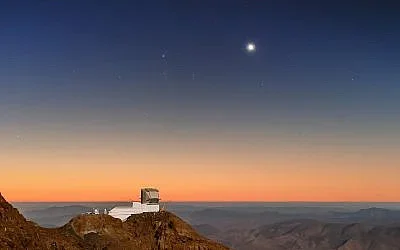
For readers who want a credible sense of why detection rates may soon change, the commissioning of the new wide-field sky survey at the Vera C Rubin Observatory is one of the key reasons astronomers expect many more transient discoveries.
Why each encounter is a one-time chance
Interstellar objects do not linger. That fleetingness is the heart of the matter.
Your list of opportunities can be made clearer for a general audience:
- Data collection on an ancient body that formed far from our Sun.
- Material dispersal as dust and gas are released during passage through the solar system.
- New approaches to long-range observation and tracking, including better prediction tools.
- A public education opportunity, handled responsibly, to explain how science evaluates uncertainty.
This is also why a good institutional response matters. You do not get a second run at the same object.
Not answers, but a better way of thinking
The challenge posed by interstellar comet 3I/ATLAS is not whether it is “alien”. It is whether we can build a mature way of responding to the unfamiliar, one that is scientifically serious, publicly understandable and internationally coordinated.
That is slow work. It requires astronomers and engineers, but also policymakers, educators and communicators. The object has moved on. The question, unhelpfully, remains with us.
For more features exploring the big ideas behind science, history, and cultural change, follow EyeOnLondon for insightful storytelling you can trust.
[Image Credit | Vera C. Rubin Observatory / NSF–DOE]
Follow us on:



Subscribe to our YouTube channel for the latest videos and updates!

We value your thoughts! Share your feedback and help us make EyeOnLondon even better!