Impact crater, world’s oldest, found

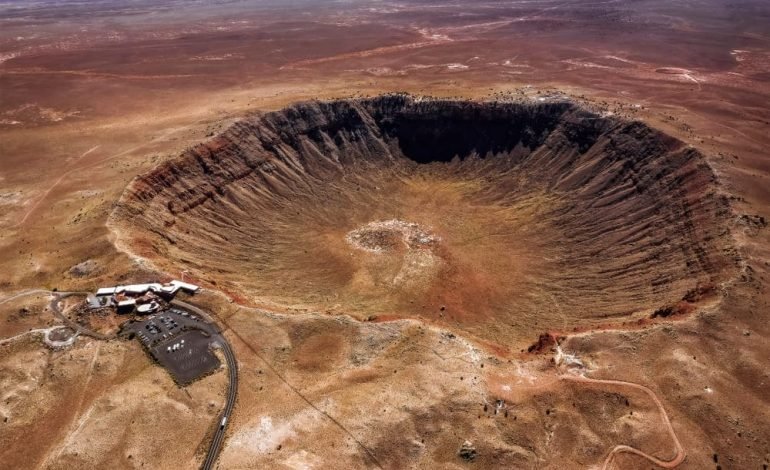
Researchers from Curtin University have discovered the planet’s oldest known meteorite impact crater. This, they say, could redefine our understanding on the origins of life and how the planet has been shaped. The study was titled A Paleoarchaean impact crater in the Pilbara Craton, Western Australia and published in the journal Nature Communications.
The team from Curtin’s School of Earth and Planetary Sciences and the Geological Survey of Western Australia (GSWA) investigated rock layers in the North Pole Dome, an area of the Pilbara region in Western Australia. They found evidence of a major meteorite impact dating back to 3.5 billion years ago.
Study co-lead Professor Tim Johnson, from Curtin University, said that this find will significantly challenge previous assumptions on the planet’s ancient history. “Before our discovery, the oldest impact crater was 2.2 billion years old, so this is by far the oldest known crater ever found on Earth,” Professor Johnson said.
The researchers discovered the meteorite impact crater thanks to “shatter cones,” distinctive rock formations that only form under intense pressure from a meteorite strike. The shatter cones at the site were formed when a meteorite struck the area at over 36,000km/h.
This would make it the first major planetary event, creating an impact crater over 100km wide and sending debris all around the globe.
“We know large impacts were common in the early solar system from looking at the Moon,” Professor Johnson said. “Until now, the absence of any truly ancient craters means they are largely ignored by geologists. “This study provides a crucial piece of the puzzle of Earth’s impact history and suggests there may be many other ancient craters that could be discovered over time.”
Professor Chris Kirkland, also from Curtin’s School of Earth and Planetary Sciences, and co-author of the study, said that it sheds new light on how meteorites shaped the planet’s early environment.
“Uncovering this impact and finding more from the same time period could explain a lot about how life may have got started, as impact craters created environments friendly to microbial life such as hot water pools,”
Professor Kirkland said. “It also radically refines our understanding of crust formation: the tremendous amount of energy from this impact could have played a role in shaping early Earth’s crust by pushing one part of the Earth’s crust under another, or by forcing magma to rise from deep within the Earth’s mantle toward the surface. It may have even contributed to the formation of cratons, which are large, stable landmasses that became the foundation of continents.”
Stay tuned to EyeOnLondon for the latest news and expert opinions.
[Image Credit: Copyright (c) 2019 Dominic Jeanmaire/Shutterstock.]
Follow us on:



Subscribe to our YouTube channel for the latest videos and updates!

We value your thoughts! Share your feedback and help us make EyeOnLondon even better!