Dodo misconceptions corrected by researchers

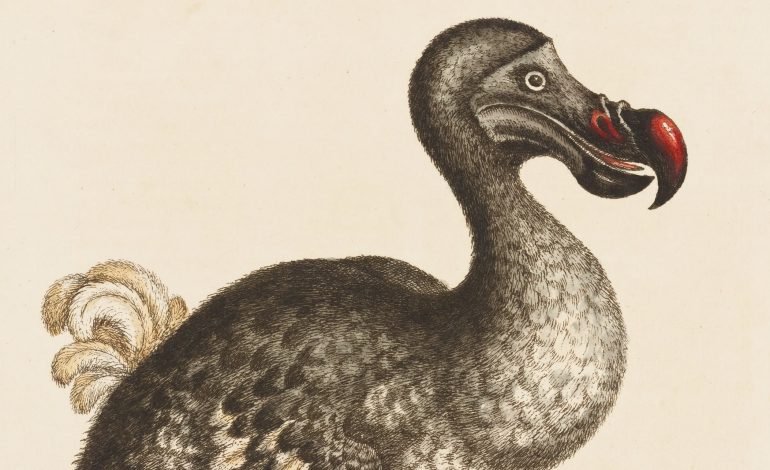
Researchers are hoping out to challenge some of our misconceptions about the Dodo, one of the most well-known but poorly understood species of bird which was wiped out centuries ago. In a paper published in the Zoological Journal of the Linnean Society researchers from the University of Southampton, Natural History Museum (NHM) and Oxford University Museum of Natural History have created a comprehensive review of the Dodo and its closest relative, the Rodriguez Island Solitaire.
They have examined 400 years of scientific literature and visited collections all over the UK in the hopes of making sure that the flightless bird is correctly classified.
“The Dodo was the first living thing that was recorded as being present and then disappeared,” says Dr Neil Gostling from the University of Southampton, supervising author of the paper. “Before this, it hadn’t been thought possible for human beings to influence God’s creation in such a way. This was a time before the scientific principles and systems we rely on to label and classify a species were in place. Both the Dodo and the Solitaire were gone before we had a chance to understand what we were looking at.”
Much of what is known about both the Dodo and Solitaire was based on accounts by Dutch sailors as well as from artists, and incomplete remains of the animal. The researchers believe that the idea that it was a fat, slow animal that was predestined for extinction is flawed.
“Even four centuries later, we have so much to learn about these remarkable birds,” says Dr Mar Young, lead author of the paper from the University of Southampton. “Was the Dodo really the dumb, slow animal we’ve been brought up to believe it was? The few written accounts of live Dodos say it was a fast-moving animal that loved the forest.”
Dr Neil Gostling from the University of Southampton, supervising author of the paper says: “Evidence from bone specimens suggests that the Dodo’s tendon which closed its toes was exceptionally powerful, analogous to climbing and running birds alive today. The dodo was almost certainly a very active, very fast animal.
“These creatures were perfectly adapted to their environment, but the islands they lived on lacked mammalian predators. So, when humans arrived, bringing rats, cats, and pigs, the Dodo and the Solitaire never stood a chance.
“Dodos held an integral place in their ecosystems. If we understand them, we might be able to support ecosystem recovery in Mauritius, perhaps starting to undo the damage that began with the arrival of humans nearly half a millennium ago.”