Where Dickens Still Teaches Us How to Do Christmas

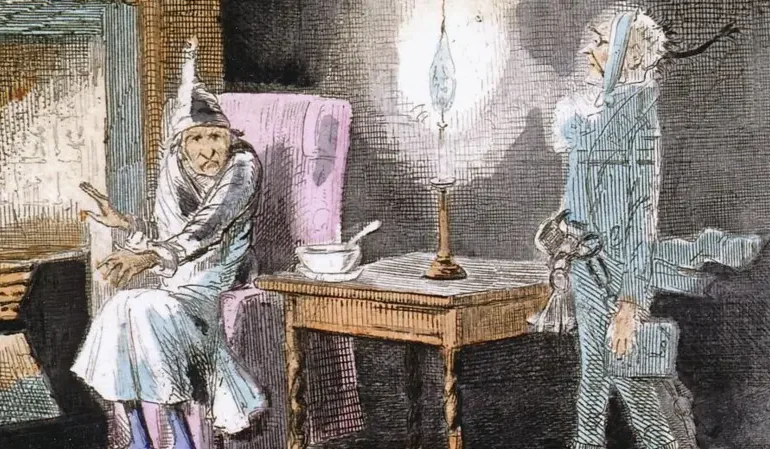
Think of Christmas, and it is difficult not to think of Charles Dickens. More than any other writer, he helped shape what we now recognise as a modern Christmas. The idea of Dickens and Christmas is so closely entwined that it can feel timeless, yet it was forged at a moment when the festive season itself was in danger of fading from British life.
Published in 1843, A Christmas Carol did more than tell the story of Ebenezer Scrooge’s moral reckoning. It helped revive Christmas as a season of family, generosity and shared responsibility at a time when industrial Britain was pulling communities apart. The book struck such a chord that it transformed how Victorians celebrated the holiday and, in many ways, how we still do today.
London News — More from EyeOnLondon
Keep reading for context, local impact, and the stories behind the headlines.
Demand for office space in the City of London
A surge in planning activity points to rising demand for premium workspace in the Square Mile.
Read the storyMore London News
Four-day weeks warned against by Local Government Secretary
Ministers push back on shorter working weeks, raising questions for councils and public services.
Read the storyMore London News
The death of six cinemas in London, 2024–2026
A look at what London is losing as cinema closures reshape high streets and local culture.
Read the storyMore London News
Even before writing A Christmas Carol, Dickens was devoted to Christmas. He loved company, conversation and the rituals that gathered people together. That spirit can still be felt at his former London home, where visitors are invited to experience a version of Christmas as it would have appeared in the Victorian era.
Although Dickens did not write A Christmas Carol at 48 Doughty Street, near King’s Cross, the house holds a special place in his life and work. It was here that he completed The Pickwick Papers and wrote Nicholas Nickleby and Oliver Twist. Dickens lived at the address with his family between 1837 and 1839, and the building is now home to the Dickens Museum, which is celebrating its centenary year.
Emma Harper, deputy director of the museum, says Dickens’s enthusiasm for Christmas went well beyond sentiment. “Dickens loved Christmas. He loved a party,” she said. “He liked the feasting and the playing of games with his friends and family. But he was also really concerned about what he considered the root of Christmas, which is charity. That was central to his writing of A Christmas Carol.”
That concern was shaped by the social realities Dickens witnessed around him. Much of his writing responded directly to the harsh inequalities of Victorian society, particularly the impact of the Poor Laws introduced by the government. Dickens feared that these reforms would worsen the lives of those already struggling, and A Christmas Carol became his way of confronting that injustice.
“He was trying to make people realise that it was everyone’s responsibility to look after each other,” Harper explained. Scrooge’s transformation, she said, was about recognising that responsibility, especially at Christmas, when generosity ought to come most naturally.
The book’s influence was swift and enduring. Family gatherings, festive food and drink, games, dancing and a renewed emphasis on giving became embedded in Christmas celebrations, turning private goodwill into a shared cultural tradition.
Dickens’s own understanding of the season may be best captured in his words, written more than 180 years ago, yet still quoted each December: “A good time: a kind, forgiving, charitable, pleasant time: the only time I know of in the long calendar of the year, when men and women seem by one consent to open their shut-up hearts freely.”
For those curious to step inside Dickens’s world, the Charles Dickens Museum remains open throughout the festive period, closing only on Christmas Day, Boxing Day and New Year’s Day. In a city that moves quickly, it offers a rare pause to reflect on why Christmas still matters.
Follow us on:



Subscribe to our YouTube channel for the latest videos and updates!

We value your thoughts! Share your feedback and help us make EyeOnLondon even better!