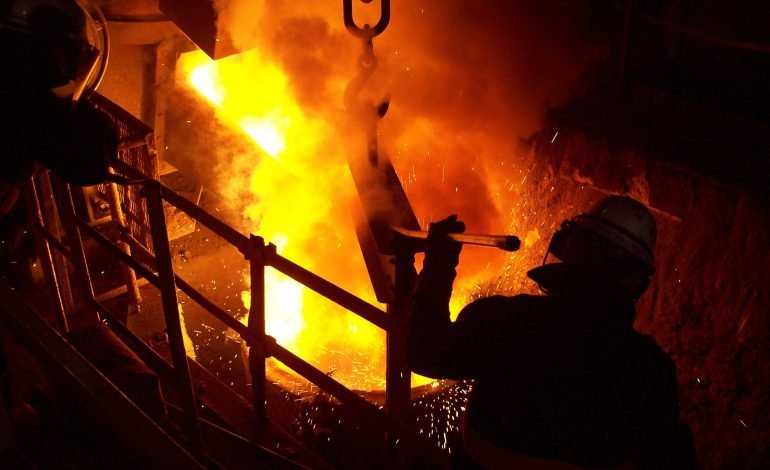
The UK government has taken emergency control of British Steel’s Scunthorpe plant in a last-ditch effort to keep the country’s blast furnace capacity alive, securing vital raw materials to stop production from halting altogether. At the heart of the move is a scramble to obtain coking coal and iron ore – the essential ingredients for making virgin steel – after concerns that Chinese-owned firm Jingye was winding the operation down.
The intervention comes at a critical moment. If temperatures inside a blast furnace drop too low, the internal structure can suffer permanent damage, rendering the entire unit unusable. Restarting such furnaces is not only time-consuming but hugely expensive – a risk the UK appears no longer willing to take. The Scunthorpe site is the last of its kind in Britain producing virgin steel, a material essential for infrastructure like rail tracks and nuclear power plants.
Government sources have indicated that material currently stored at Immingham Docks, 30 miles from the plant, is being targeted for urgent delivery to keep the fires burning. Treasury Minister James Murray said officials were “doing everything possible” to secure supply, although he declined to elaborate on the timeline due to commercial sensitivities.
In an unusual move, Parliament pushed through emergency legislation over the weekend giving ministers authority to take control of the site. It followed the apparent collapse of talks with Jingye, which said in March that it was losing £700,000 per day and deemed the plant no longer viable. The government had reportedly offered a £500 million support package – rejected in favour of a demand for double that amount, without firm assurances of continued operations.
The future of the UK’s ability to produce high-grade steel, which is vital for national projects like Hinkley Point C, now rests on this state-led intervention. If the furnaces at Scunthorpe were to shut permanently, the UK would become the only G7 nation without capacity to make its own virgin steel.
Network Rail has confirmed it holds a steel stockpile and doesn’t anticipate immediate disruption. However, the long-term concern is strategic: without domestic steel production, reliance on overseas supply chains deepens. Speaking to EyeOnLondon, Philip James Lynch, LDR Reporter, noted: “This is a story of national resilience and whether we’ve allowed too much critical infrastructure to slip from our grasp.”
Union leaders have cautiously welcomed the move. Roy Rickhuss of the Community Union said the government’s action has put the furnaces in a “far better position than they were days ago”, while the GMB Union expressed confidence that the required materials could be sourced in time. While unions remain focused on the job security of Scunthorpe’s 2,700 workers, business leaders are also watching closely.
The response from Beijing has been predictably sharp. A spokesperson for China’s foreign ministry called the intervention “politicisation of trade cooperation” and warned it could dampen enthusiasm for Chinese investment in Britain. Jingye itself has not commented beyond reaffirming its view that the site was no longer financially sustainable.
While political debate continues, steel professionals and logistics experts are already on the ground trying to manage delivery and storage. A potential win for ministers would be if UK suppliers, including companies like Rainham Steel and Tata, could fill the gap and deliver domestic resilience.
If you’re interested in how raw materials like coking coal and iron ore shape our national infrastructure, you can find a more technical breakdown through this steel production overview, which helps explain why blast furnaces matter.
For more updates on UK industry, infrastructure and national resilience, visit EyeOnLondon. We’d love to hear your views in the comments.
Follow us on:



Subscribe to our YouTube channel for the latest videos and updates!

We value your thoughts! Share your feedback and help us make EyeOnLondon even better!