Empty homes strategy urged as London housing waits grow

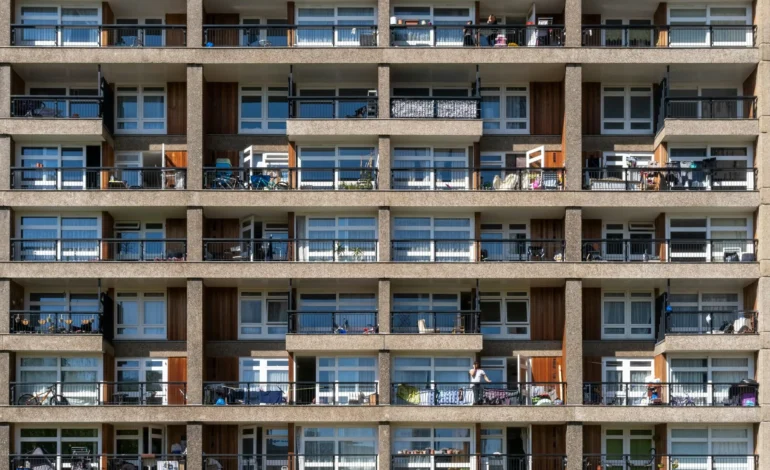
This week a coalition of housing charities and sector leaders called on ministers to introduce a national strategy to bring empty homes back into use, as more than 300,000 households in London remain on waiting lists for social housing. The appeal comes amid record levels of temporary accommodation and mounting pressure on borough budgets.
Estimates suggest more than one million homes across England are unoccupied, including over 309,000 classed as long-term empty, according to data published by the Ministry of Housing, Communities and Local Government. Campaigners argue that returning even a proportion of those properties to use would ease acute shortages in cities where demand is highest.
More London news from EyeOnLondon
Breaking news, City policy and transport reporting across London and beyond.
Clean City Awards 2026 announced
Businesses across the capital recognised for environmental standards and urban cleanliness initiatives.
Read the full reportMobile phone theft crackdown announced by Mayor
New measures aim to tackle rising street thefts, with enforcement and policing resources set to increase.
Read the full reportHackney fox rescue draws local attention
Residents and wildlife volunteers responded after a fox became trapped in a residential area.
Read the full reportOrganisations including the Big Issue, Women’s Aid, Shelter and the social impact property fund manager Resonance have written to housing minister Matthew Pennycook MP urging coordinated national action. Lord John Bird, founder of the Big Issue, said every unused property signalled a failure to address what he described as a housing emergency.
“I feel bad that there are parts of London where people can’t live and yet round the corner there is a void property,” he said. He argued that empty homes should be treated as a limited resource within a broader housing “toolbox”.
More than 1.3 million households in England are currently on waiting lists for a social home, a rise of 10 per cent in two years. In London alone, over 300,000 households are registered. At the same time, more than 132,000 families nationally are living in temporary accommodation, at a reported annual cost of £2.2 billion.
In Hackney, residents of the De Beauvoir Estate have described boarded-up flats standing empty for at least two years in buildings affected by drainage problems and structural decline. Before being secured last year, some units were occupied by squatters. Residents reported antisocial behaviour and said they felt unsafe living alongside vacant blocks.
Sherri, who lives in a neighbouring block, said vulnerable residents including elderly people and children were left feeling exposed. “This is supposed to be your sanctuary,” she said, describing repeated attempts to obtain clear answers from the council.
Hackney Council said finance had been secured to convert the vacant units into 70 modern temporary homes. Guy Nicholson, deputy mayor and cabinet member for housing management and regeneration, said the borough faced the same supply constraints as much of London but was delivering nearly 1,000 new council homes for social rent while bringing its own empty properties back into use.
Zoe Garbett, chair of the London Assembly housing committee, said similar patterns were emerging across the capital. She said boroughs required additional government funding and stronger coordination to ensure repairs were carried out and unused stock reoccupied.
The coalition’s letter proposes a fully funded duty on local authorities to investigate long-term empty homes, a national loan and acquisition fund, ringfencing of Council Tax premium revenue for housing initiatives, and targeted stamp duty reductions where properties are brought into social use.
However, some housing economists question the scale of impact. Analysis by the Centre for Cities suggests that while tackling long-term vacancies is worthwhile, the number of properties involved remains small relative to overall housing need. Maurice Lange of the think tank said planning reform and sustained funding for affordable housing would have a more significant effect.
A spokesperson for the Ministry of Housing, Communities and Local Government said empty homes were damaging to communities and confirmed plans to make it easier for councils to bring them back into use, alongside a £39 billion investment programme for social and affordable housing.
EyeOnLondon continues to track housing reform, borough decision-making and the pressures shaping London’s property landscape.
[Image Credit | © LSE]
Follow us on:



Subscribe to our YouTube channel for the latest videos and updates!

We value your thoughts! Share your feedback and help us make EyeOnLondon even better!