Lava tunnels could help future missions to Mars & Moon

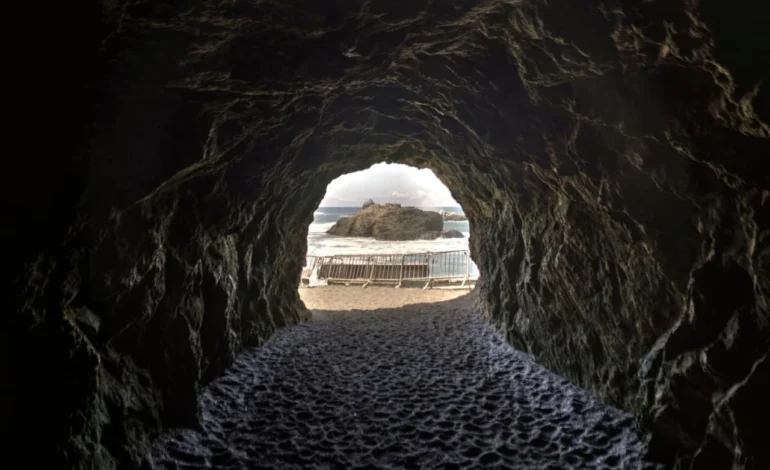
Lava tunnels on other planetary bodies are being considered as candidates for future base camps for human settlements. The underground structures can shield astronauts from radiation and meteorite impacts, making them a promising prospect for future space exploration.
Researching and studying lava tunnels however is challenging thanks to a combination of a rough terrain, limited entry points, and harsh conditions. To tackle this, a European research consortium, including the Space Robotics Laboratory at the University of Malaga, has developed a new mission concept focusing on exploring them. Their work being published in the journal Science Robotics should give you a clue about their idea.
The concept involves three different types of robots that can collaborate together to autonomously explore and map out lava tunnels. The system is being tested in volcanic caves in Lanzarote in Spain and future missions are planned for the Moon.
The robots begin by mapping out the area around a tunnel’s entrance, before a sensorised payload cube is dropped to gather the first measurements. Next, a scout rover rappels down though the entrance to the interior, followed by the robotic team exploring the tunnel in depth and creating detailed 3D interior maps.
A field test on Lanzarote in February 2023 showed promising results, with the approach working as intended. The trial showcased the technical capabilities of the group, led by the German Research Center for Artificial Intelligence (DFKI), with contributions from the University of Malaga and the Spanish company GMV.
Stay tuned to EyeOnLondon for the latest news and expert opinions.
Follow us on:



Subscribe to our YouTube channel for the latest videos and updates!

We value your thoughts! Share your feedback and help us make EyeOnLondon even better!