Europe’s new border system faces calls for pause as summer queues loom

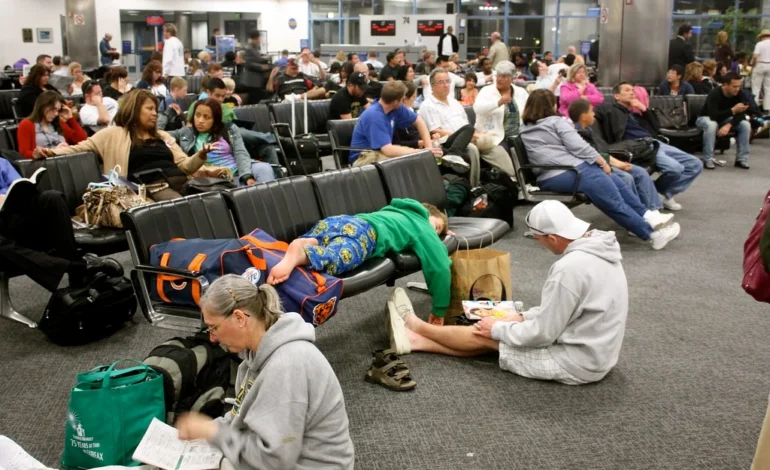
Concerns over Europe entry exit system delays intensified this week after airlines and travel bodies warned that the rollout of the EU’s new biometric border controls could lead to severe congestion at airports during the summer holiday period.
Industry leaders have urged the European Commission to ensure border authorities are prepared to suspend or scale back the system if queues begin to spiral, amid evidence that early implementation has already caused significant disruption.
Travel — More from EyeOnLondon
Recent travel stories shaping how people move, holiday, and explore.
Liverpool Street station plans
What the proposed changes could mean for commuters, capacity, and future travel through the City.
Read the storyMore Travel
Los Charcones wave tragedy
A fatal incident raises questions about coastal safety, warning systems, and tourist awareness.
Read the storyMore Travel
Foreign visitors to the US fell in 2025
Why overseas travel to the United States has dipped, and what it signals for global tourism.
Read the storyMore Travel
Under the new Entry Exit System, most British travellers entering the Schengen zone will be required to register fingerprints, facial images, and personal details at border control. Although the scheme formally launched in October, it has been introduced gradually, with member states currently required to register only a proportion of arrivals.
Airports across southern Europe have reported long delays even under this limited application. The trade body representing Europe’s airports said some passengers had faced waits of up to three hours, despite fewer than half of travellers being processed under the new system.
Olivier Jankovec, director general of ACI Europe, said the situation was already close to breaking point.
“We are seeing queues of up to two hours with only a fraction of passengers being registered,” he said. “That is not sustainable. When traffic doubles in July and August, the consequences could be far more serious.”
The concern is that from April, border authorities are due to begin registering all eligible travellers, a move that could sharply increase processing times unless contingency measures are widely applied.
Officials do have the power to reduce checks or temporarily stand down the system to prevent dangerous overcrowding, but industry groups say these safeguards are not being used consistently.
The UK travel association ABTA has written to the EU’s migration commissioner calling for clearer guidance to border staff and additional personnel at peak times. Its chief executive, Mark Tanzer, said the problem was not the ambition of the project but the uneven way it was being enforced.
“What is frustrating is that border authorities already have the tools to ease queues,” he said. “In too many cases, they are not being used.”
The new controls apply across 29 European countries, including major holiday destinations such as Spain, France, Italy, and Portugal. Lisbon airport was forced to suspend the system late last year after queues reportedly stretched to seven hours.
Much of the infrastructure is already in place in the UK. Registration points have been installed at Eurotunnel in Folkestone and at London St Pancras, though most travellers are still expected to complete biometric checks on arrival at European airports.
Eurotunnel said it had begun phased testing for commercial traffic and was prepared to expand the system once instructed by French authorities. Eurostar, which has installed new kiosks at St Pancras, said it would move to automated processing once final approval and software updates were confirmed.
While EU officials have indicated that contingency arrangements could remain available through the summer, airport operators say they have yet to receive formal confirmation of how and when those measures will apply.
The Entry Exit System is intended to modernise border controls and strengthen security, but aviation groups warn that unless its rollout is handled with greater flexibility, the immediate impact may be felt most sharply by ordinary travellers.
The system sits within the EU’s wider border management framework overseen by its migration and home affairs directorate, which sets common rules for external border controls across the Schengen area. Further detail on its operation is set out in official guidance published by the European Commission’s migration and home affairs department.
For more reporting on how policy changes affect everyday travel from London, follow EyeOnLondon. We welcome readers’ experiences and views in the comments.
Follow us on:



Subscribe to our YouTube channel for the latest videos and updates!

We value your thoughts! Share your feedback and help us make EyeOnLondon even better!