Why London is falling behind on breast screening

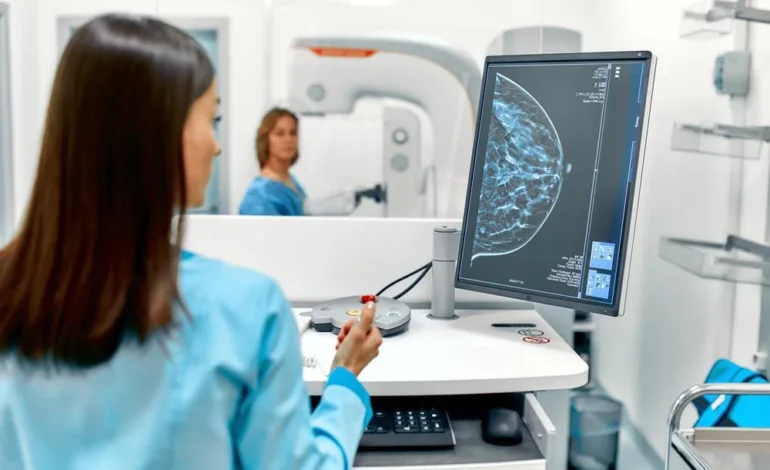
Breast screening in London has fallen well below national expectations, health leaders told City Hall this week, as a mobile population, housing pressures, and trust barriers continue to limit early cancer detection across the capital.
Figures for 2024 show uptake in London at 62.8 per cent, under the NHS benchmark of 70 per cent, prompting a targeted screening campaign launched last year to address the gap and improve early diagnosis.
London News — More from EyeOnLondon
Related reporting from across the capital.
Liverpool Street station redevelopment plans
What is proposed above the historic station and why the plans have divided opinion.
Read the storyMore London News
Pupil numbers decline raises school standards concerns
Why falling rolls are putting pressure on funding and long-term planning.
Read the storyMore London News
Old Bailey hears prom threat trial
Jurors hear evidence in a case involving alleged threats and extremist material.
Read the storyMore London News
Giving evidence to the London Assembly Health Committee, Dr Josephine Ruwende, a cancer screening lead at NHS England, said the scale of population movement in the capital made it harder for services to reach eligible patients.
“This is people changing addresses and not updating their GP,” she said. “That affects the invitation process because GP details are used to identify who is eligible. In boroughs with the highest population churn, we see this strongly associated with lower uptake.”
Dr Ruwende noted that even affluent areas of London experience unusually high levels of turnover, with around 40 per cent of residents moving home within a year. In some cases, screening invitations are sent to outdated addresses or to people who are temporarily living overseas.
Concerns about fear, trust, and cultural barriers were also raised by community advocates. Leeane Graham, advocacy lead at Black Women Rising, said previous experiences of healthcare had shaped how some women responded to screening invitations.
“If you’ve never been for breast screening before, the thought of having a mammogram can be really, really terrifying,” she told the committee.
Lee Dibben, from the LGBTIQ+ cancer charity OUTpatients, said that negative encounters with healthcare services had created a trust gap that could only be addressed through inclusive messaging and visible reassurance.
“There’s a trust deficit that needs to be bridged,” Dibben said. “That requires campaigns that people recognise themselves in.”
Practical barriers also continue to play a role. Helen Dickens, from Breast Cancer Now, said that while London’s transport network was strong, access to screening centres was uneven.
“We don’t have screening centres in every borough,” she said. “For some women, travel and time remain significant obstacles.”
In more deprived areas, work patterns compound the issue. Zara Gross, from the South East London Cancer Alliance, told the committee that women on zero-hours contracts or in insecure employment often struggled to take time off for appointments.
Health leaders stressed that improving breast screening in London remains critical to survival outcomes. Early-stage diagnosis is linked to far higher survival rates, with patients diagnosed at stage one having a five-year survival rate of 98 per cent.
The concerns come ahead of the government’s new national cancer plan, due to be published on 4 February, which coincides with World Cancer Day. Updated figures from the national Breast Screening Programme are expected later this month.
The legal and operational framework underpinning screening invitations and eligibility forms part of the NHS’s wider cancer strategy, overseen by national health bodies responsible for early detection and prevention, as set out in the NHS breast screening programme guidance.
For more reporting on public health, access to care, and everyday life in London, follow EyeOnLondon. We welcome readers’ experiences and views in the comments.
[Image Credit | Osprey Polyclinic]
Follow us on:



Subscribe to our YouTube channel for the latest videos and updates!

We value your thoughts! Share your feedback and help us make EyeOnLondon even better!